
The Ghana National Association of Chieftaincy Workers (GNACWO) is advocating for amendments to the Chieftaincy Act to clarify ambiguous provisions and strengthen the role of traditional councils.
GNACWO is the premier professional body for staff within the chieftaincy institution.
Its membership comprises personnel from the National House of Chiefs, the 16 Regional Houses of Chiefs, and the various Traditional and Divisional Councils operating under the Ministry of Local Government, Chieftaincy, and Religious Affairs.
As a key stakeholder, GNACWO plays a pivotal role in upholding ethical standards and promoting administrative efficiency in traditional affairs.
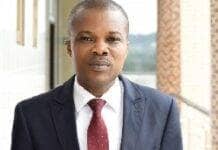
In an exclusive interview, Seth Opoku, Secretary of GNACWO, outlined a multi-faceted approach to addressing chieftaincy disputes.

According to him, GNACWO can spearhead comprehensive education and sensitisation on the Chieftaincy Act and its ancillary laws,” he emphasised, highlighting the importance of high-impact workshops and seminars.
He noted that through this approach, GNACWO can empower traditional leaders and the public with knowledge of their rights and responsibilities, thereby mitigating disputes stemming from ignorance.
Mr. Opoku added that GNACWO can also facilitate constructive dialogue and mediation between disputing parties. “Often, chieftaincy disputes can be resolved amicably through dialogue and mediation,” he observed.
By offering its services as a neutral mediator, GNACWO can help achieve peaceful resolutions and promote social cohesion.
He further argued that GNACWO can champion policy reforms to address the root causes of chieftaincy disputes.
This includes advocating for amendments to the Chieftaincy Act to clarify ambiguous provisions and strengthen the role of Traditional Councils.
The Secretary also mentioned that GNACWO can foster unity and cohesion among traditional leaders by promoting a culture of collaboration and mutual respect.
The National Chairman of GNACWO, Alfred Doodo, added that politics should be kept out of chieftaincy issues.

He urged parties to resolve disputes through mutually beneficial means rather than politicising matters or siding with one faction.
By Ebenezer Atiemo