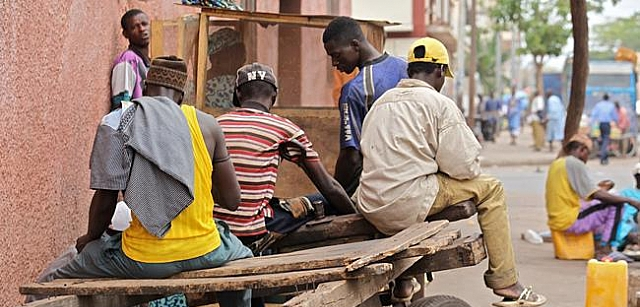

Ghana’s employment challenge deserves a closer examination. Beyond the familiar debate about unemployment figures, job creation and government interventions, there is a more fundamental question we must confront: Are we adequately preparing our young people for the opportunities our economy offers, and are the jobs available aligned with their expectations and aspirations?
The Mindset Transformation Initiative (MTI) believes this question deserves urgent national attention. Our concern is not simply the number of jobs being created, but the growing disconnect between available employment opportunities, the attitudes of prospective workers, our education system and the skills required to sustain a productive economy.
This concern is informed, in part, by a recent personal experience involving the recruitment of security personnel for a private security company.
The company had been struggling to recruit men and women as security guards. In an effort to assist, recruitment advertisements were placed on four radio stations across two regions, including Greater Accra.
The vacancies came with a package that included a monthly salary, SSNIT contributions, accommodation, uniforms, boots and transportation to and from work.
One would expect such an offer to attract considerable interest, particularly in an economy where unemployment remains a major national concern. Applications came in, but the response raised some questions about the attractiveness of the employment package. Some applicants appeared less enthusiastic than anticipated, while others already working in security establishments expressed interest but wanted time to resign before applying.
The more troubling observation, however, came from what one sees almost every day on our streets.
Young men and women weave through traffic selling almost anything imaginable. Dog chains, mosquito coils, toilet rolls, children’s toys, household items and, in some instances, even live dogs.
This raises some important questions. How much do these young people realistically earn from such activities? How organised are these businesses? What risks do they face daily? And what makes this form of informal economic activity more attractive to some than formal employment that offers a regular salary, accommodation, transportation and social security?
There is nothing dishonourable about street trading. Every honest effort to earn a living deserves respect. Many people have built successful businesses through trading, and informal enterprise remains an important part of Ghana’s economy.
Our concern is about understanding the choices being made, the opportunities being overlooked and the factors influencing those choices.
The education system and the expectations we create
Perhaps we need to look beyond the employment market and examine the foundation upon which our young people are being prepared for adulthood. That foundation is our education system.
The introduction of Free Senior High School has undoubtedly widened access to secondary education and removed a financial barrier that previously prevented some children from continuing their education. MTI recognises the importance of expanding educational access.
However, we must also examine whether the expansion of secondary education has been matched by sufficient attention to career guidance, technical education and alternative pathways into productive employment.
In the past, not every JHS graduate proceeded to the conventional academic SHS route. Examination performance, placement opportunities and family circumstances meant that some young people moved directly into apprenticeships, vocational training and practical occupations. Some became vulcanisers, mechanics, carpenters, masons, welders, electricians, plumbers and tailors.
Many developed practical skills, established businesses and became economically independent.
Today, a much larger proportion of young people aspire to proceed through SHS. This is understandable. However, what happens to those who complete SHS but do not obtain the grades required for tertiary education?
Some find themselves at a crossroads. Having spent six years in secondary education, they may consider returning to learn a trade or beginning an apprenticeship beneath their educational status.
There is a perception among some young people that having completed SHS, they have moved beyond the stage of learning a trade under a master craftsman. Becoming an apprentice vulcaniser, mechanic, carpenter or mason may appear to them to be a step backwards.
Have we inadvertently created an education culture in which academic progression is regarded as the principal measure of success, while vocational and technical occupations are seen as alternatives for those who have not performed well academically?
If so, we must rethink this approach.
Education should prepare people for productive and fulfilling lives. Not every young person will become a university graduate, and not every university graduate will necessarily find employment in their chosen field. Equally, a person who does not proceed to tertiary education should not be left feeling that the only worthwhile opportunities have passed them by.
We need an education system that identifies and nurtures different abilities, interests and talents. Some children are academically inclined. Others have natural aptitudes for technical, mechanical, creative and practical work. Both groups deserve structured pathways to success.
Free SHS must therefore be complemented by stronger career guidance and more deliberate investment in technical and vocational education.
The worrying decline in interest in artisanal trades
Another dimension of this challenge is the apparent declining interest among our youth in learning and pursuing artisanal trades.
Walk into many carpentry workshops, welding shops, plumbing businesses, auto repair garages or construction sites, and you will find artisans from neighbouring countries working in these trades.
Their contribution to Ghana’s economy deserves recognition. Labour mobility and the exchange of skills are part of economic development.
However, it raises a legitimate question: Why are we increasingly relying on artisans from other countries to fill spaces that our own young people should be preparing themselves to occupy?
The problem appears to have two sides.
First, there is declining interest in apprenticeship. Many young people do not seem willing to commit themselves to learning trades that require patience, practical training and sustained dedication. Some would rather pursue activities that promise immediate earnings than submit themselves to the demands of apprenticeship.
Second, even among those who venture into apprenticeship, there are concerns about commitment and professional discipline. Learning a trade requires punctuality, consistency, respect for instruction, attention to detail and a willingness to master the basics before attempting more complicated work.
Some apprentices struggle with these demands. Even after acquiring technical knowledge, their workmanship, attention to detail and finishing may fall short of what customers expect.
This is a serious concern for the future of our local industries.
We cannot build a strong construction, manufacturing, furniture, engineering or maintenance sector without a reliable supply of skilled and disciplined artisans.
Technical knowledge alone is not enough. Craftsmanship also demands pride in one’s work, patience, discipline and a commitment to quality.
We must make artisanal careers more attractive, strengthen apprenticeship arrangements, improve supervision and introduce recognised professional standards that allow Ghanaian artisans to compete confidently on quality and reliability.
Agriculture and other productive sectors face similar challenges
The challenge is not limited to artisans. Agriculture presents another example of the apparent disconnect between available employment opportunities and the choices of our young people.
Farm owners and agricultural enterprises need workers. Some are prepared to provide accommodation, feeding and other benefits to attract and retain farmhands. Yet many struggle to find the workforce they need.
Agriculture is no longer simply about the traditional image of a farmer working with basic tools on a piece of land. There are opportunities in mechanised farming, irrigation, livestock production, aquaculture, food processing, packaging, storage, distribution and agricultural technology.
These are areas that can provide employment, create businesses and generate wealth. Yet we have not done enough to make agriculture attractive to the younger generation as a serious career and business opportunity.
The same applies to construction, manufacturing, security and several technical occupations.
We must begin asking whether our young people understand the economic opportunities in these sectors and whether the conditions offered by employers are sufficiently attractive to draw them in.
A question of mindset, expectations and work readiness
For years, much of our national conversation about unemployment has centred on the number of jobs the economy needs to create. Government announces employment programmes, private businesses are encouraged to expand, and young people are urged to acquire skills and become employable.
These are important interventions. However, we must also examine what kind of employment young people are prepared to accept and why.
Some jobs may not meet the expectations of today’s young workforce. Salaries may be unattractive, working hours restrictive, career progression limited or the nature of the work may not command the social recognition they desire.
On the other hand, street trading offers a degree of independence. One can decide when to work, what to sell and how much effort to put into the business. There may also be the possibility of earning more on a good day than a fixed monthly salary would provide, although such earnings are uncertain and come without the safeguards of formal employment.
Apprenticeship presents a different challenge. It requires a young person to accept a period of learning, supervision and sometimes modest earnings before becoming established.
In a society where immediate financial needs are pressing, this can be a difficult proposition.
These are factors we must investigate rather than dismiss.
Mindset transformation must therefore address both sides of the equation. Young people must appreciate the dignity of work, the value of practical skills, the importance of discipline and the need to build competence over time. Employers must also recognise that workers have expectations and that decent working conditions, fair remuneration and opportunities for advancement matter.
What must change?
The Mindset Transformation Initiative believes that the relationship between education, skills development and employment requires a deliberate national rethink.
We propose the following areas for attention:
1. Introduce stronger career guidance at the JHS level.
Students and parents should receive proper guidance on academic, technical, vocational and apprenticeship pathways before students make decisions about their next stage of education.
2. Give vocational and technical education equal dignity.
We must move away from the perception that vocational training is meant for academically unsuccessful students. A competent electrician, carpenter, mechanic, plumber, welder or mason is a valuable professional and potential entrepreneur.
3. Strengthen apprenticeship and artisan development.
Master craftsmen should receive support to improve their training methods. Apprentices should follow structured programmes with clear learning objectives, practical assessments and recognised certification.
4. Promote work discipline and professional standards.
Punctuality, commitment, respect for instructions, attention to detail, quality workmanship and accountability must become essential elements of our education, training and employment culture.
5. Make productive sectors attractive to young people.
Agriculture, construction, manufacturing, security and technical services must offer credible opportunities for training, advancement, entrepreneurship and long-term financial stability.
6. Improve the connection between employers and prospective workers.
Employment agencies, educational institutions, industry associations and private businesses must work together to identify labour requirements and connect available opportunities with people who have the ability and interest to fill them.
7. Re-examine our national employment expectations.
We need research into why vacancies remain difficult to fill, even where employers offer basic benefits, and why some young people prefer informal activities. Policy must be based on a proper understanding of these choices.
The national conversation we need to have
Ghana’s employment challenge cannot be resolved by government creating vacancies alone. Neither can it be resolved by asking young people to change their attitudes without examining the conditions in which they are expected to work.
Our education system must prepare young people for different career pathways. Our employers must provide worthwhile opportunities. Our apprenticeship system must produce competent professionals. Our young people must be willing to learn, work hard, accept instruction and develop the discipline required to succeed.
Families and communities must also change the perception that success can only be measured by securing an office job or obtaining a university qualification.
A young person selling smoked fish in a market may have a business ambition. Another selling mosquito coils in traffic may be saving towards something bigger. We should respect these choices. But we must also ensure that formal employment and skilled professions are sufficiently attractive to draw people who might otherwise pursue less secure livelihoods.
Similarly, we should not regard the presence of artisans from neighbouring countries as a problem in itself. The more important concern is whether Ghana is developing enough competent local artisans to sustain its own industries and compete within the wider regional economy.
There is a difference between creating employment and creating employment that people want to take up. There is also a difference between acquiring a skill and becoming a competent professional who takes pride in delivering quality work.
Ghana must begin to rethink not only how many jobs it creates, but also how it educates its young people, how it prepares them for the opportunities available, and how it develops a workforce that values discipline, skills, productivity and quality.
The question we must confront is simple: Are we preparing our young people for the opportunities our economy offers, or are we creating opportunities without adequately preparing the people to take advantage of them?
The Mindset Transformation Initiative believes that this conversation is central to our national development.
THINK GHANA. ACT GHANA. BUILD GHANA.
Mindset Transformation Initiative (MTI)
www.mindsettransformationinitiative.com | 0504923457