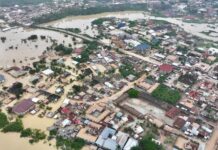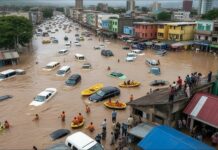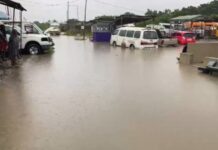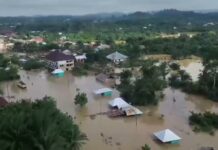

Every time dark clouds gather over Accra, Kumasi, or Takoradi, many Ghanaians brace themselves for more than just rainfall — they prepare for chaos.
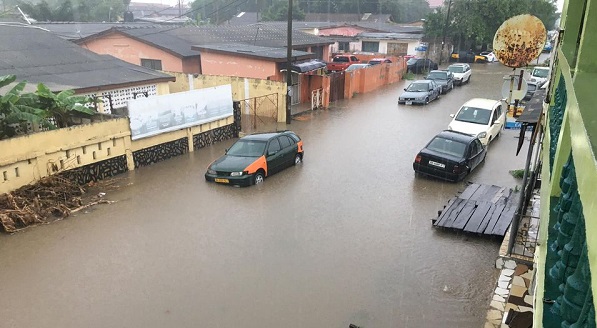
Flooded streets, stranded commuters, faulty vehicles, and hours-long traffic jams have become an all-too-familiar scene whenever it rains.
The country’s poor drainage system has once again come under scrutiny as roads, markets, and even homes turn into temporary rivers after heavy downpours.
A System Overwhelmed
Despite numerous warnings from urban planners and engineers, Ghana’s drainage infrastructure remains outdated and underdeveloped.
Many open drains are either too small to handle modern runoff volumes or are completely choked with refuse. In Accra, for instance, even a brief rain can flood major areas like the Kwame Nkrumah Circle, Kaneshie, and Adabraka stretch — halting traffic for hours and disrupting business.
The problem is not limited to the capital. In cities such as Kumasi and Takoradi, poor planning and inadequate drainage channels have also led to severe flooding, damaging roads and public property.
Human and Economic Toll
Beyond the inconvenience, the consequences are grave. Flooding causes loss of lives and property, weakens road infrastructure, and increases the cost of transport and goods.
For many traders and commuters, each rainfall means lost income and wasted hours in traffic. Businesses near flood-prone areas often have to shut down temporarily, adding to the economic strain.
The Root Causes
Experts point to a combination of factors: poor urban planning, inadequate investment in drainage infrastructure, and widespread indiscriminate dumping of waste.
Rapid urbanization has outpaced drainage expansion, while existing systems are often left unmaintained. Some residents have even built on waterways, obstructing natural runoff paths.
The Road Maintenance Rehabilitation and Pavement Drainage Design published in 2024, highlighted that one of the primary stormwater drainage problems in Ghana is the inadequacy of existing infrastructure.
Many urban areas lack well designed drainage systems capable of handling the intensity of rainfall during storms.
The document further elaborated that, the rapid urbanization and population growth in some regions have outpaced the development of efficient stormwater management systems, leading to increased vulnerability.
The lack of proper stormwater drainage exacerbates wear and tear on infrastructure. Roads, bridges, and other public works are susceptible to damage caused by flooding and erosion.
The cost of repairing and maintaining this infrastructure in the aftermath of storms places a significant burden on municipal budgets.
For experts to come up with such conclusion tells how dire the situation is when it comes to flooding situations in the country.
What Can Be Done
Urban planners and environmentalists say the solution requires both government commitment and citizen responsibility.
- Massive Drainage Investment: Government must prioritize constructing wider, covered, and modern drainage systems across major cities.
- Strict Enforcement of Building Regulations: Structures built on waterways should be removed, no matter who owns them.
- Regular Maintenance and Desilting: Existing drains need frequent cleaning to prevent blockages.
- Public Education: Citizens must be educated on proper waste disposal to prevent clogging drains.
- Green Infrastructure: Adopting eco-friendly solutions like permeable pavements and green belts can reduce surface runoff.
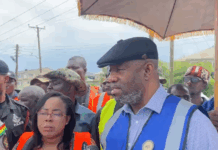
President John Dramani Mahama on unveiling the sweeping, multi-agency initiative to combat the longstanding flooding crisis in the Greater Accra Region, on May 16, 2025 declared that “enough is enough” as he outlined concrete measures to save lives, protect property, and restore public confidence in urban infrastructure planning.
“We can no longer treat flooding as a seasonal inconvenience. It is a national development threat, and we are treating it as such,” President Mahama declared.
The president has declared his stance in the fight to reduce and stop flooding situations in the country. We are currently heading into the dry season (November – February of next year) and there will be less rainfall experiences.
We can consider that as a leeway to escape the havoc flood poses on the lives of Ghanaians but we will face the same cycle and issue after this peaceful period.
What should we do as Ghanaians that can support the interventions government is putting in place to curb this ruthless problem?
A Shared Responsibility
While authorities must lead the way, the public also has a role to play. Dumping refuse into drains or building on waterways only worsens the crisis.
The rainy season should not be synonymous with destruction and gridlock. With a collective effort, from policy enforcement to civic responsibility, Ghana can finally turn the tide against its chronic drainage challenges.
By Gabriel Jackson Ocloo