
The International Monetary Fund (IMF) has explained that Ghana’s request for a new 36-month Policy Coordination Instrument (PCI) is expected to run for three years, with completion projected around the middle of 2029.
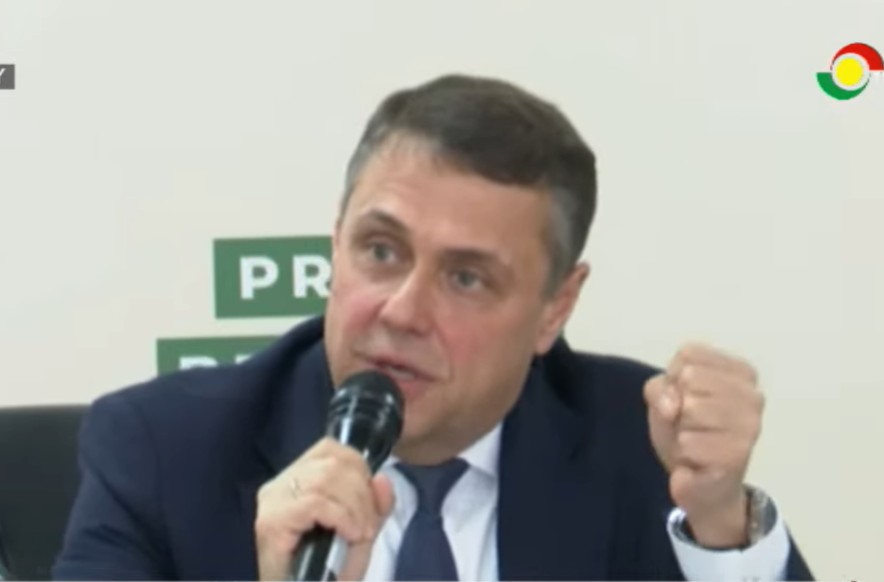
Speaking on the transition from Ghana’s current IMF support programme, IMF Staff Team Lead, Reuben Atoyan indicated that the request for a PCI is expected to considered by the IMF Executive Board by end of July 2026.
“With the time frame for the PCI as explained is a 36-months PCI. We plan to take the request for PCI to the IMF Executive Board at the end of July at the same time with the final review on the ECF,” he stated at a press conference at the Finance Ministry on Friday, May 15, 2026.
“So, the both final review, ECF will be completed and new PCI will be initiated going forward and with 36 months, we hope to complete PCI sometime middle in 2029,” he added.
According to him, the approval process will officially conclude Ghana’s current Extended Credit Facility (ECF) programme while ushering in the new non-financing policy arrangement with the IMF.
Mr Atoyan noted that the arrangement is designed to support Ghana’s ongoing economic reforms through technical assistance, policy guidance and continued engagement with the IMF without direct bailout funding.
The PCI, a form of assistance is also expected to strengthen investor confidence and support Ghana’s broader efforts toward achieving long-term macroeconomic stability and improved credit ratings.
Ghana announced the successful conclusion of its Extended Credit Facility (ECF) programme with the International Monetary Fund (IMF) on Friday, May 15, 2026.
This marks the end of the country’s financial bailout arrangement with the Fund.
According to the government, the development signifies the restoration of macroeconomic stability and debt sustainability ahead of schedule following a series of fiscal and structural reforms implemented by the administration of President John Dramani Mahama.
In a statement issued on Friday, May 15, government said the IMF programme, which had reportedly gone off track by the end of 2024, was recalibrated in 2025 through aggressive fiscal consolidation measures, expenditure rationalisation and reforms aimed at stabilising the economy.
Following the conclusion of the ECF programme, Ghana will now engage the IMF under a Policy Coordination Instrument (PCI), which government described as a non-financing technical assistance arrangement.
“The Government also expresses deep gratitude to its bilateral creditors, the Official Creditor Committee (OCC) and external and domestic investors for their collective sacrifice.
“Going forward, Ghana will engage with the IMF Policy Coordination Instrument (PCI),” the statement added.
Under the PCI, the IMF will provide policy guidance, capacity development and support for economic reforms without offering direct financial bailout funding.
Government explained that the arrangement is expected to boost investor confidence, attract private capital and support Ghana’s efforts to achieve investment-grade credit ratings.