
Ghana has maintained its position as Africa’s fourth-highest borrower from the International Monetary Fund (IMF) at the start of 2026, even as new data show a notable decline in the country’s overall public debt profile.
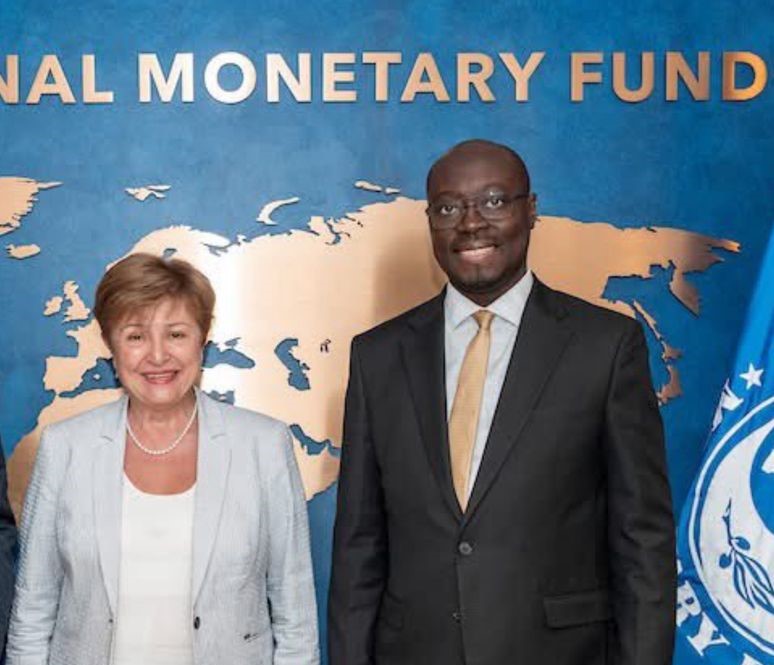
Figures released by The International Monetary Fund on February 19, 2026 indicate that Ghana’s exposure to the IMF stood at 1.96 billion Special Drawing Rights (SDRs), equivalent to approximately 2.84 billion US dollars.
The latest figure reflects a reduction in Ghana’s outstanding obligations to the Washington-based lender, largely driven by ongoing debt repayments under its current economic programme. Despite the decline, Ghana remains fourth on the continent among countries with the highest IMF debt exposure.
Egypt tops the list of African IMF borrowers with 5.88 billion dollars owed to the Fund. It is followed by Côte d’Ivoire with 3.62 billion dollars, and Kenya with 2.93 billion dollars. Angola ranks fifth, holding 2.49 billion dollars in outstanding debt.
However, Ghana’s broader public debt stock recorded a significant reduction in late 2025. Data show that between September and November 2025, the country’s total public debt declined by 40 billion Ghana cedis to 644.6 billion Ghana cedis, representing about 45.5 percent of Gross Domestic Product (GDP).
In dollar terms, however, the trend was mixed. Public debt stood at 57.2 billion dollars in November 2025 — lower than the 57.8 billion dollars recorded in October 2025, but higher than the 55.1 billion dollars posted in September 2025.
Meanwhile, according to the Bank of Ghana, Ghana’s public debt stock was 630.2 billion Ghana cedis as of October 2026.
Government officials have stressed that sustained fiscal consolidation, prudent borrowing and enhanced debt management strategies remain crucial to maintaining the downward trajectory of the country’s debt levels and restoring long-term macroeconomic stability.
By Coffie Mawuedem Noel