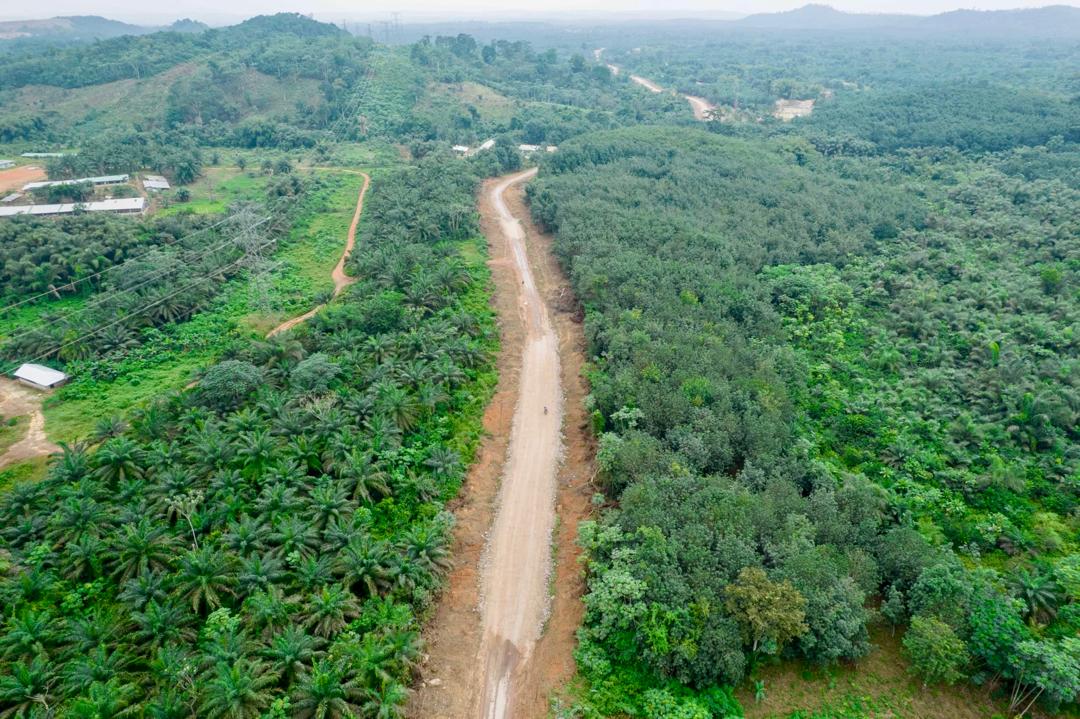

The Gold Fields Ghana Foundation has committed GH¢63 million to rehabilitate the 14.21km Samahu–Pepesa road in the Prestea-Huni Valley Municipality of the Western Region.
It is a goodwill that transcends rhetoric, projecting a mining company whose creed of commitment is not confined to shareholder returns but to shaping daily life in its host communities.
Like many rural municipalities in the country, Prestea-Huni Valley has long battled a network of deteriorating roads. The poor state of its arteries stifles the movement of farm produce, delays access to health facilities, and leaves schoolchildren and traders grappling with journeys that should take minutes but stretch into hours. Among the notorious stretches is the Samahu–Pepesa road, a corridor whose story, for residents, has been one of dust, mud, and frustration.

“All projects ever done by the Gold Fields Ghana Foundation, and will ever do, are determined by the recipient community,” explained Abdel Razak Yakubu, Executive Secretary of the Foundation, at a sod-cutting ceremony for the project.
“To elevate communities in our area of operation, we must help with the provision of essential social amenities, economic empowerment, and other interventions. That is the case with our decision to commit GH¢63 million on the Samahu–Pepesa road,” he said.

The rehabilitation works, expected to take 24 months, will involve double-sealed bitumen surfacing, drains, culverts and related road infrastructure. Once complete, the road will link Samahu, Abekoase, Tebe, Huniso and Pepesa.
For Nana Dr. Adarkwa Bediako III, Gyaasehene of the Apinto Divisional Council, the project is nothing short of transformational: “We appreciate the significant investment and the continuous quest to respond to development challenges facing host communities, and our solidarity with you Goldfields will remain unwavering.”
Member of Parliament Wisdom Cudjoe and the Municipal Chief Executive, Dr. Matthew Kofi Ayeh, are equally happy and described the road as a “critical intervention” that will cut travel times, enhance safety, and stimulate local economic activity. They pledged to work with the Foundation to ensure its timely delivery.

The contractor, Classic Cristken Ltd., and consultant De-Hawk Ventures Ltd., are wholly Ghanaian-owned firms, a deliberate choice by Gold Fields to reflect its policy of supporting local content and empowering indigenous businesses. This is not the Foundation’s first foray into transformative infrastructure.
Over the years, its investments in roads, bridges and other infrastructure projects alone have totalled some US$71.4 million. Notable among them are the 33km Tarkwa–Damang road, the Nana Angu bypass, internal roads in New Atuabo, the Brahabobom and Awudua roads, and the Awudua–Prestea bridges. Collectively, these projects have improved access, cut travel costs, and given rural communities a fighting chance to link with larger markets and services in Prestea – Huni Valley, Tarkwa Nsuaem and beyond.
“Some of these roads were near impassable,” recalled Robert Siaw, Lead Specialist for Community Relations at Gold Fields. He assured that, “As long as the mine remains operational, we will continue to support our host communities.”

Yet this latest intervention comes at a delicate time. The government will take over operations of the Damang Mine, a key asset in Gold Fields’ local portfolio. For community members and analysts alike, the question is whether the rhythm of social investments, from scholarships to health facilities and roads, can be sustained under state management.
The Gold Fields Ghana Foundation has, since its establishment in 2002, committed over US$106 million to health, education, water, sanitation, agriculture, and infrastructure in its host districts. Its approach, which is earmarking 1.5% of annual pre-tax profits and US$1 per ounce of gold produced, has been lauded as one of the most consistent examples of mining-led community development in the country.
The government’s takeover of the Damang Mine could reshape this landscape. While state control might open new avenues for directing mining revenues into national coffers, analysts caution that community-focused interventions risk becoming less predictable.
“What Gold Fields has done is create a model where host communities see tangible, ring-fenced benefits,” one mining governance expert told ConnectNews. “The concern is whether a government-led management can replicate that at the same scale or consistency.”