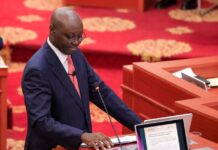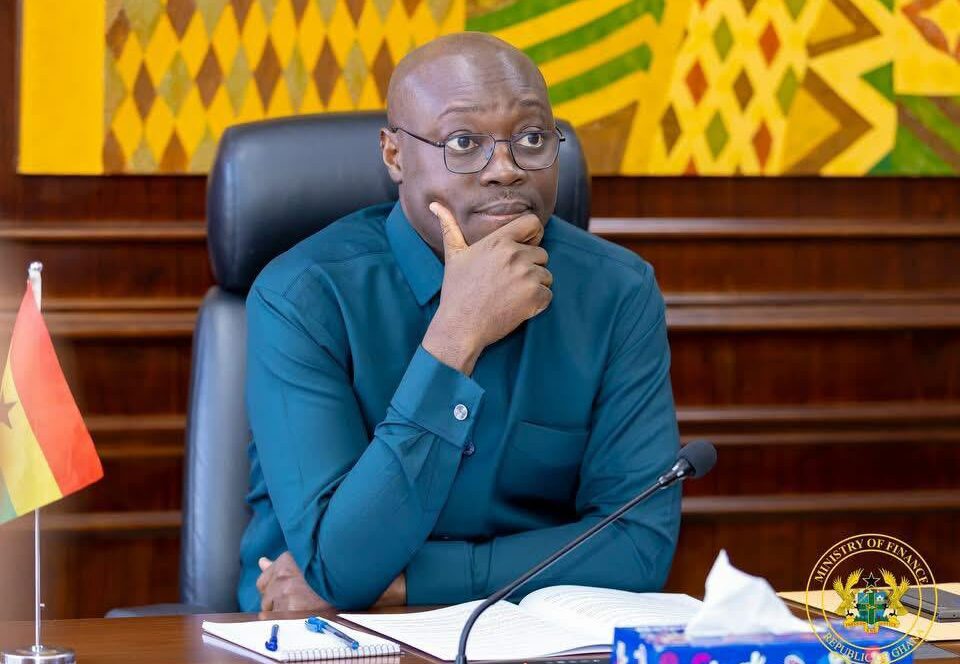

The Finance Minister Dr. Cassiel Ato Forson says Ghana’s economy is beginning to recover following difficult fiscal reforms introduced by the government to address what he described as severe economic challenges inherited in January 2025.
Speaking during a working visit by Vice President Professor Naana Jane Opoku-Agyemang to the Ministry of Finance in Accra, on Thursday July 9, 2026, Dr. Forson said the government had no choice but to implement painful but necessary measures to restore fiscal discipline and stabilize the economy.
“We inherited a country with considerable fiscal strain, where the fiscal policy of the state had largely been distorted, and so we required fiscal correction,” he said.
According to the Finance Minister, the reforms, though unpopular, have started yielding positive results.
“Our prognosis was just right, and our medication was also good. We can see that the economy is responding to the treatment that we prescribed,” he stated.
Dr. Forson highlighted the government’s efforts to meet its debt obligations despite significant financial pressures. He disclosed that Ghana had successfully repaid about US$1.4 billion in Eurobond debt this year, including a payment made ahead of schedule before the end of December to ease pressure on the 2026 fiscal year.
He also revealed that the government had honoured a GH¢10 billion GDP-linked bond payment in February and is fully prepared to settle another GH¢10 billion obligation due in the first week of August after building sufficient financial buffers.
Looking ahead, the Finance Minister warned that 2027 would present even greater debt servicing challenges, with the government expected to repay about GH¢54 billion, including GH¢39 billion in February alone.
He stressed the importance of prudent fiscal management, saying the country could not afford another debt crisis.
“We all know the repercussions of not servicing your debts and going into debt default, and we’ve seen it recently in 2022,” he said.
Using an analogy, Dr. Forson likened excessive government borrowing to alcoholism.
“The good effect comes early, and the hangover comes later. You borrow, you spend, you’re happy for a while, but afterwards the hangover will be there for a long time, and everybody else will pay for that,” he remarked.
He said the government had always anticipated that restoring the economy would require two years of strict fiscal consolidation, noting that after 18 months of implementing tough measures, only six months remained before the administration shifts its focus towards stimulating economic growth and creating jobs.
“We will move from shock therapy to what I call the new economy, where growth and jobs will drive the new order,” Dr. Forson announced, adding that the government plans to relax fiscal adjustment by one percent of GDP from 2027.
The Finance Minister also underscored the strategic importance of the Ministry of Finance to the success of the Mahama administration, saying the Ministry’s performance would significantly influence the government’s overall achievements.
“For a government to do well, the Ministry of Finance must definitely do well. If we do not do well, you will mean so well, but we will mess you up,” he said.
He assured the Vice President that the Ministry remained committed to supporting the government’s development agenda.
“Our assurance to you is that your reign will be good because this Ministry will support you to perform,” he added.
Dr. Forson further disclosed plans to expand the Ministry of Finance’s operational base by bringing the Ghana Revenue Authority (GRA) and the Controller and Accountant-General’s Department onto what he described as the Ministry of Finance Campus, located behind the Office of the President to facilitate closer coordination in government operations.
The Vice President’s visit formed part of her engagements with key government institutions to assess their operations and discuss strategies for advancing the administration’s economic and governance priorities.
By Evelyn Tengmaa