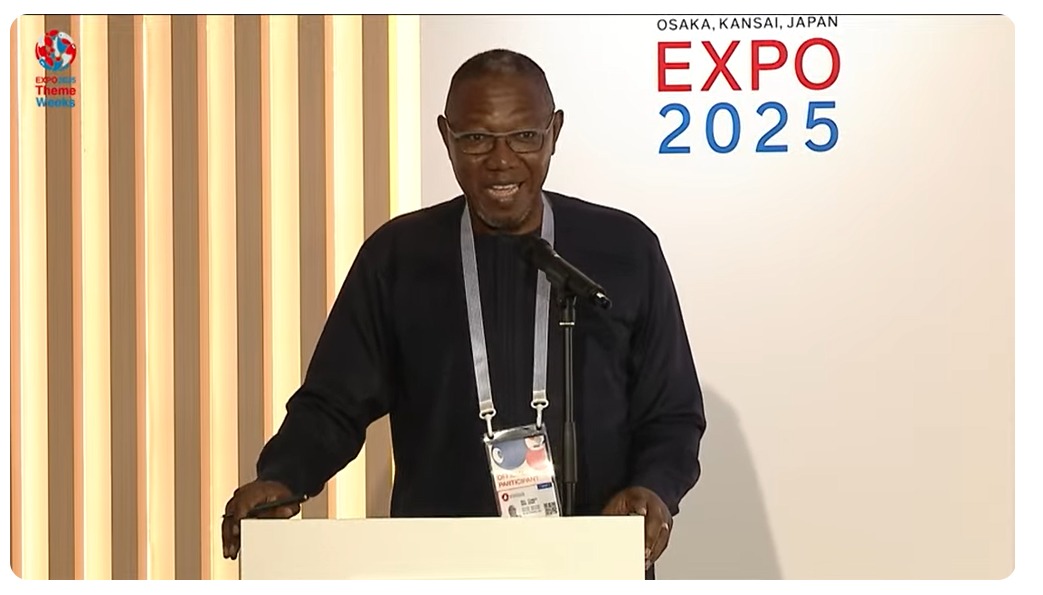

Ghana is undergoing a major transformation of its education curriculum to align with global trends and stimulate economic growth, Deputy Education Minister Dr. Clement Abas Apaak announced at the Japan Expo 2025.
Speaking at the international exhibition on July 25, Dr. Apaak emphasized the government’s commitment to laying a strong foundation for Technical and Vocational Education and Training (TVET) and Science, Technology, Engineering, and Mathematics (STEM) disciplines.
“Our government, the NDC government, recognizes that STEM and TVET are essential to driving innovation, fostering economic growth, and addressing the complex challenges of the 21st century,” Dr. Apaak said.
He explained that the reforms are anchored in Sustainable Development Goal 4, which aims to “ensure inclusive and equitable quality education and promote lifelong learning opportunities for all.”
According to the deputy minister, Ghana’s new education agenda focuses heavily on transforming TVET to meet the needs of a rapidly changing global economy.
“We are strategically transforming and reforming our curriculum,” he stated. “We are initiating what we call the SMART curriculum, and this is designed to integrate seamlessly STEM, coding, and digital literacy into the basic school system.”
Dr. Apaak said introducing STEM at the basic level will help students grasp essential concepts early in their academic journey. This, he noted, would prepare them not only for academic success but also equip them with skills needed for employment and entrepreneurship.
“Reforming the curriculum is not just about classroom learning,” he added. “It’s about preparing our young people to meet real-world demands and seize opportunities in the global economy.”
On investments in TVET, Dr. Apaak noted that the government’s intention is to elevate vocational education as a mainstream option, rather than a fallback for students who struggle academically.
“To achieve this, we’re integrating artificial intelligence tools to align vocational training with the evolving demands of industry,” he said.
He also highlighted several initiatives under the government’s broader education transformation agenda, including One Tech, One Teacher, the One Laptop Initiative, the Smart Schools Project, I-Campus Ghana, and the Learning Management System.
“These interventions are not isolated,” Dr. Apaak said. “They form part of a comprehensive strategy to modernize and digitize education delivery, particularly in TVET.”
Dr. Apaak concluded by reaffirming the government’s plans to expand ICT infrastructure, saying this would be critical to delivering quality STEM education across the country.