
Heads of special schools are calling for urgent expansion of infrastructure to accommodate the rapidly growing population of children with special needs.
They warn that congestion in existing schools is denying these children access to education and are urging authorities to take immediate action to address this pressing issue.
Over 2 million Ghanaians aged 5 and above (8% of the population) live with some form of disability, with females more affected than males.
The most common disability is visual impairment. Many individuals with disabilities face significant challenges, including limited access to education, with 35,609 individuals with disabilities never having attended school.

These statistics highlight the need for targeted support and inclusive policies to improve the lives of people with disabilities in Ghana.
While over 150,000 Ghanaians aged 5 and above live with severe to profound disabilities. Alarmingly, five regions in Ghana – North East, Bono, Western North, Savanna, and Oti – lack special education facilities, leaving children with disabilities in these areas without access to critical support services.
Four districts in Ghana – Gushiegu, North Gonja, Central Gonja, and Karaga, have alarmingly high rates of children aged 5 to 15 who have never attended school, with over half of children in these areas lacking access to education.
Additionally, 42 districts, mostly in northern Ghana, are home to over a quarter of children with disabilities who have never been to school.
Meanwhile, over 150,000 Ghanaians live with severe to profound disabilities, highlighting the need for targeted interventions to address these disparities.
This highlights a significant gap in the country’s efforts to support people with disabilities.
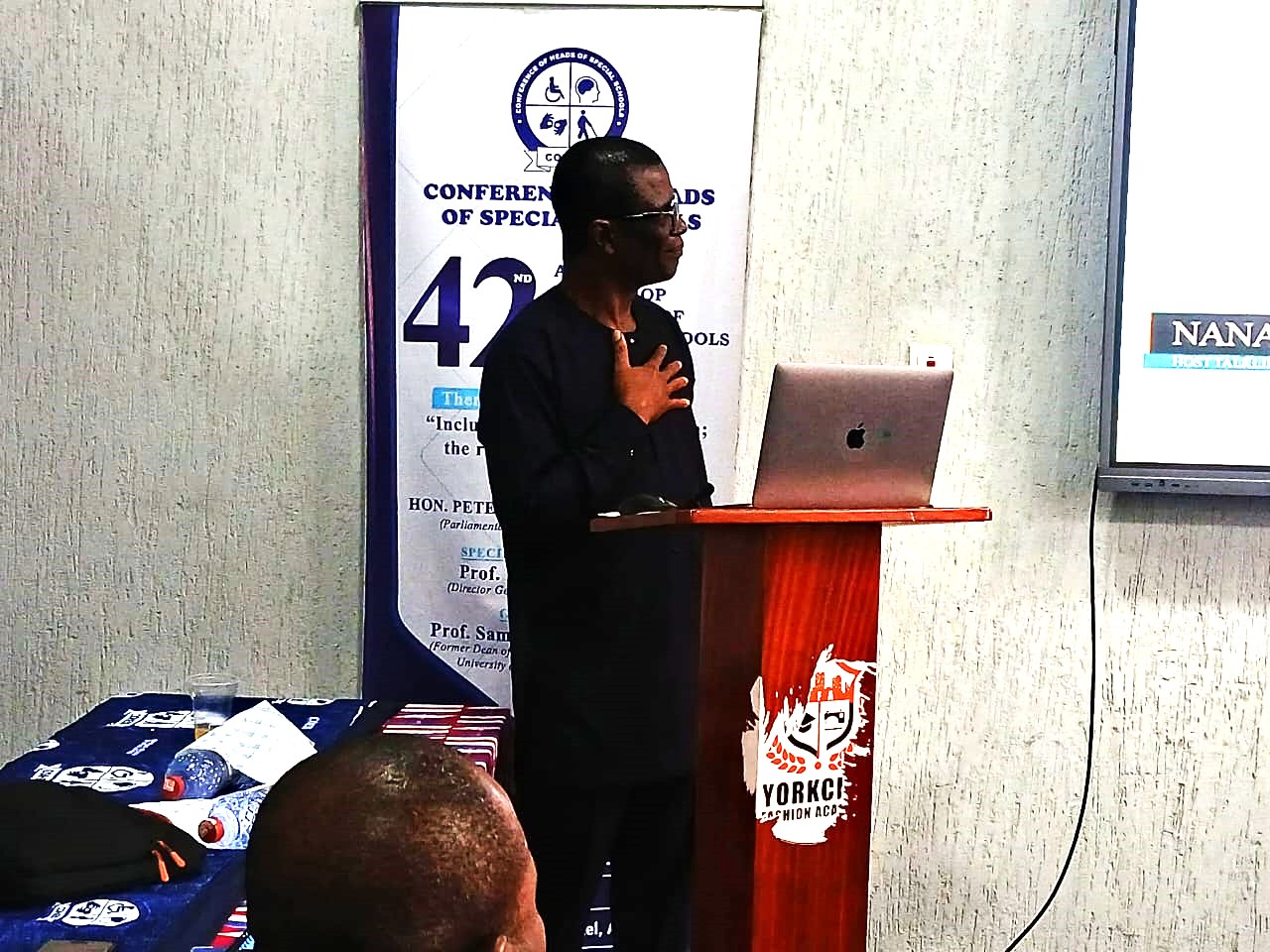
The Conference of Heads of Special Schools is gathering for their 42nd Annual Workshop to address pressing challenges facing special needs education.

Chairperson Rosaline Frimpomaa Adjepong highlights the urgent need to resolve infrastructure issues, which are limiting access to special schools.

The Director, Special Education Division Ghana Education Service Helena Mensah called on the various heads to increase awareness to eliminate stigma.
She said the GES will continue to support the various schools to help increase inclusiveness in bringing everyone on board.
Professor Samuel Hayford, a former Dean of the University of Education, Winneba, emphasizes the importance of inclusivity in educating children with special needs, calling for a more comprehensive approach to support these students.
As a special needs education expert, I firmly believe that special schools will remain essential for years to come, he said.

Just as hospitals have intensive care units and isolation wards for critical cases, special schools provide specialized services for children with profound, extensive, and pervasive needs, he said.
He added that these institutions will continue to play a vital role in supporting students with unique requirements, ensuring they receive the care and education they deserve.
The Conference of Heads of Special Schools is urging the Minister of Education to expedite the endorsement of the inclusive education policy document by Cabinet.
They believe this policy will significantly enhance the operations of special schools and support the education of children with special needs.
The heads are pressing for urgent action.