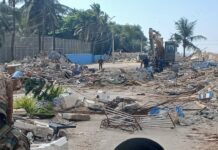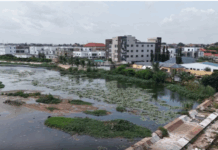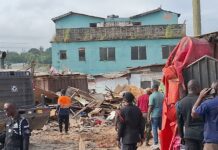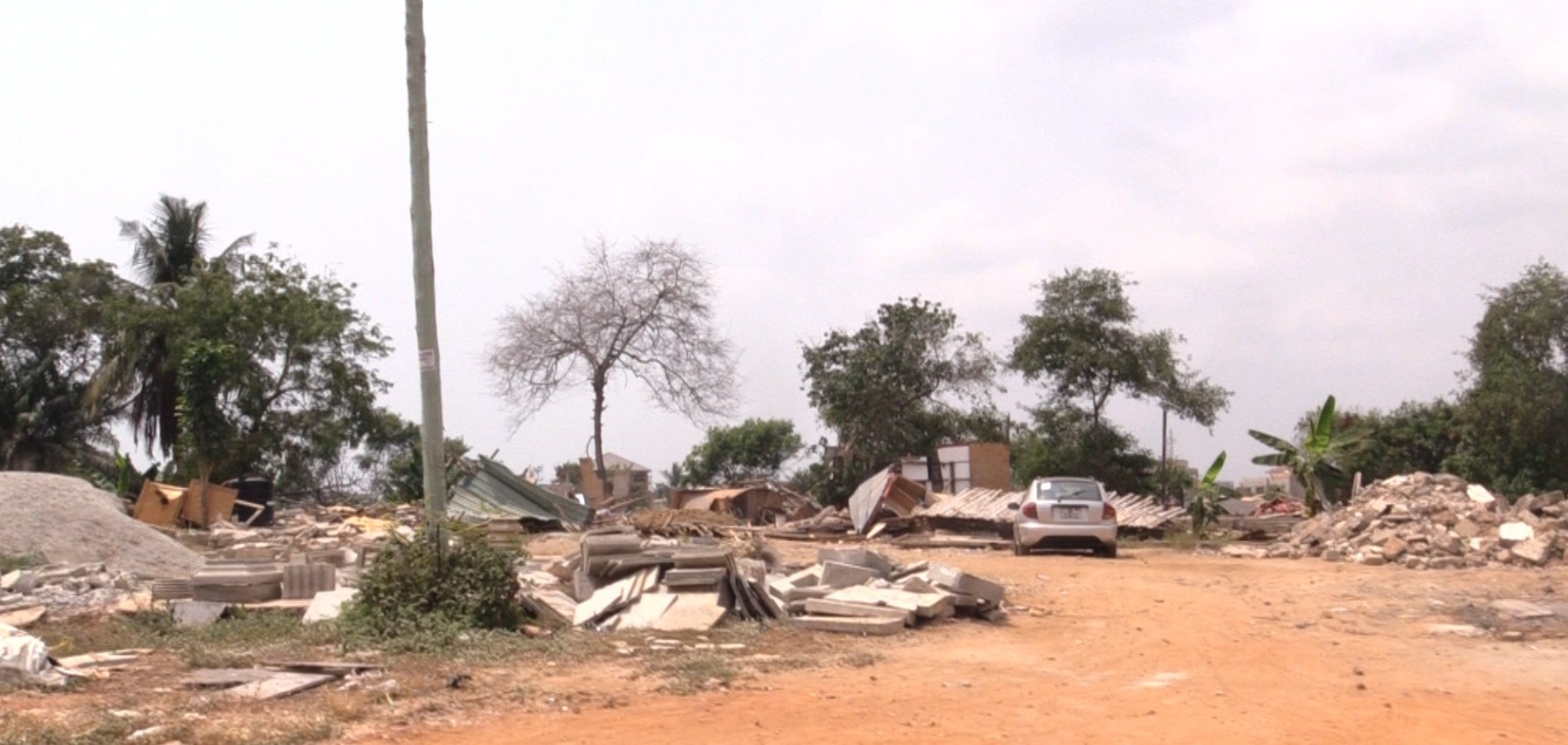

Monday, January 26, saw heavy machinery moved in as security agencies and city officials pulled down illegal structures along the Tse Addo–Kpeshie Lagoon.
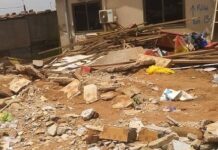
When the exercise ended, homes had been reduced to ruins, leaving residents with no option but to vacate the area.
What now remains along the banks of the Kpeshie Lagoon is silence and scattered debris telling a quieter story of broken walls and abandoned belongings.
Underscoring the importance of lagoons to environmental protection, the Deputy National Director of A Rocha Ghana, Daryl Bosu, said development along lagoons and wetland areas should be discouraged.
“All over the world, lagoons are considered very critical zones where we have to maintain the vegetation, the coastal, and also the freshwater ecosystem that is found around these areas. It helps to regulate the flow of water and between freshwater and marine ecosystems coming into the land and also back into the sea. So, without this interaction happening, we are likely to have issues of coastal flash floods around some of these communities, those that are particularly along our coastal areas,” he said in an interview with 3news.

According to him, the government must prioritise proper architectural planning.
He said, “our planning architecture as a country, regulation, monitoring and enforcement has been very terrible and it’s the reason why we have these issues developing. Somebody should also be blamed, I mean people at assemblies, law enforcement agencies. I don’t know why you sit down for people to develop to that extent and then let them come and then destroy their property.”

Acknowledging the tendency for authorities to act only after danger zones have been encroached upon, the Director for Man-Made Disasters at NADMO, Maxwell Emmanuel Niber, explained the rationale behind the demolition exercises.
“We have a satellite image that actually tells us exactly the wetlands and gives us a historical imagery of that. So, if you build behind the red line, that structure is not appropriate to be standing in there. We are not happy demolishing people’s homes, but we are interested in saving lives and properties that will be affected,” he said.

He cautioned the general public, especially those who have put up unauthorised structures on waterways, to watch out for subsequent demolition exercises.
“We are looking at Kasoa, Adenta and some areas that are getting the city flooded. Once your building is behind a red line, and we are going to use satellite images to check those things. We need to put Accra back to its natural state so that we can all live in peace and save our lives and property.”
He further explained that the authority will work closely with security agencies to ensure that encroachers do not return.

“We are working in collaboration with a lot of institutions and involving the security agencies to have a plan as to how to coordinate the areas before the necessary excavation of the sand is taken away and the reclamation of the area is done. If there is the need to be tree planting, we engage forestry so that we can keep the place away from it being sold. We are going to engage the chiefs and people to also appreciate it,” he said.
While the operation has displaced many, authorities say the move is necessary to reclaim and rehabilitate the lagoon and other wetland areas in preparation for the rainy season, to ensure that flood-prone areas are cleared.