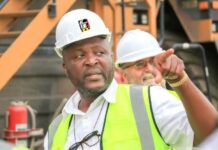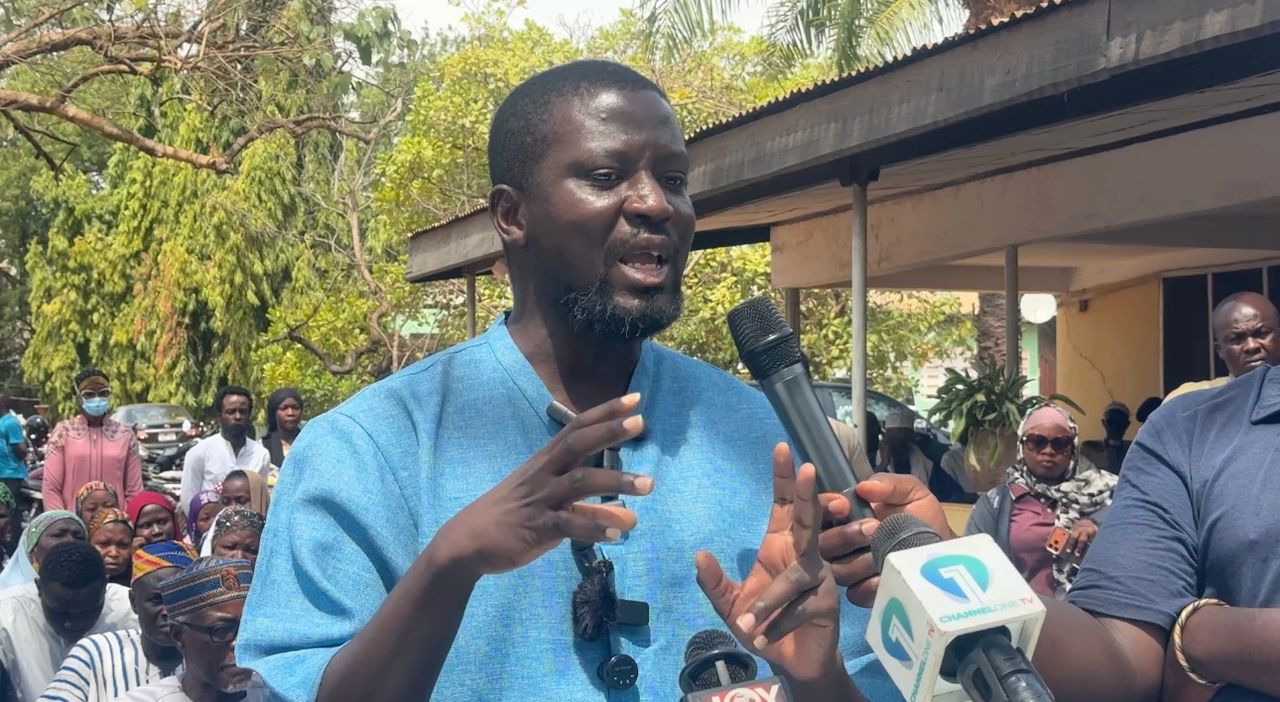

Renowned Ghanaian artist and founder of the Savannah Centre for Contemporary Art (SCCA) and Red Clay Studio in Tamale, Ibrahim Mahama, says his life has been abruptly put on hold following what he describes as a violent encounter with a police team in Tamale on Saturday, March 21.
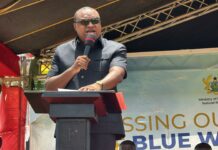
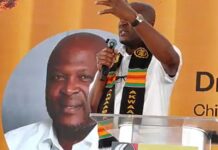
Fighting back emotion at a press conference, Mahama recounted how what began as a routine family outing to pray at the Ambariyah Mosque ended in what he alleges was a physical assault by officers from a police unit reportedly led by DSP Jalil.
Mahama said he had left home with his family in a bus branded with the names of his cultural institutions. After prayers, heavy traffic forced them to divert through a narrow back road near Mariam Hotel. At a congested T-junction, vehicles were gridlocked, and movement was almost impossible.

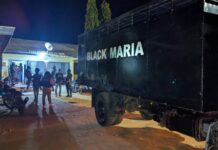
According to him, a police vehicle commonly referred to as a “Black Maria” arrived at the scene attempting to clear the road. He alleged that tensions rose when officers began shouting at drivers and banging on vehicles, including the one his uncle was driving.
“They kept hitting the car very hard,” Mahama said. “They were shouting and insulting.”
He alleged that officers reached through the vehicle window and began punching his uncle during a heated exchange. When he pulled out his phone to record the incident, he said the officers turned their attention to him, questioning why he was filming.

What followed, he says, has left him physically injured and emotionally shaken.
Mahama revealed that he sustained bruises to his lips and mouth and suffered three broken teeth. The injuries, he explained, have made it difficult for him to eat solid food for days.

“I was meant to travel to the UK to give lectures from Cambridge to Oxford, then to Helsinki, Amsterdam, and South Africa,” he said. “All those trips have been cancelled. I don’t think I can even travel for the next month.”
For Mahama whose work has placed Tamale firmly on the global contemporary art map, the incident is not just about personal pain. It is about what he describes as a troubling pattern.
“If this could happen to me, as known as I am, then what about the people on the streets?” he asked. “If someone is beaten during an operation and dies later from internal injuries, who speaks for them?” He queried.

He said he and his family are considering legal action, not only for accountability but, in his words, “for the benefit of the collective society.”
The artist, who has invested heavily in cultural infrastructure in Tamale, said he chose to build and remain in Ghana because he believed he had something to contribute to the country.
“If through actions like this, young people begin to feel they cannot stay and contribute to this country, then it becomes a loss for all of us,” he said.
By Nadra Mohammed