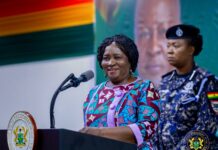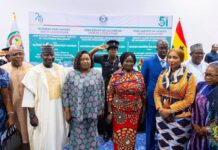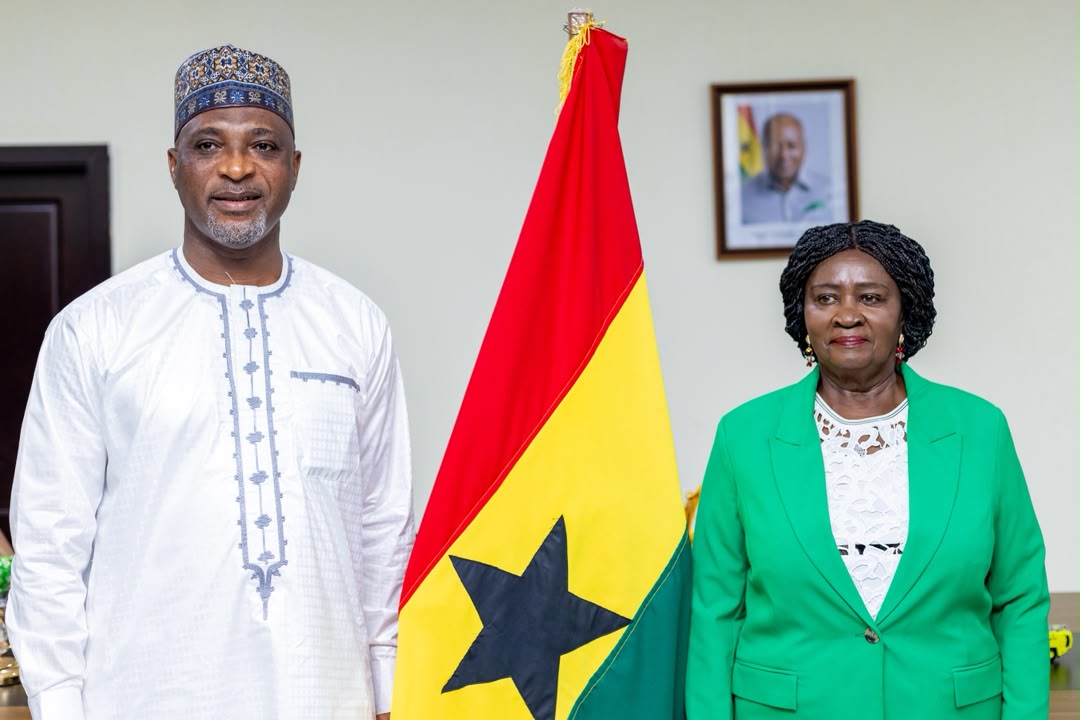

The Minister for the Interior, Muntaka Mohammed-Mubarak, has highlighted significant reforms, legislative achievements, and operational improvements within Ghana’s internal security sector during a working visit by Vice President Professor Naana Jane Opoku-Agyemang to the Ministry of the Interior.
Welcoming the Vice President, the Minister described the visit as an important opportunity to present the Ministry’s strategic direction, showcase key reforms and achievements, discuss challenges confronting the sector, and outline priorities for the future.
He noted that the Ministry of the Interior plays a central role in maintaining law and order, coordinating national security institutions, managing disasters, regulating migration, promoting peaceful coexistence, and creating a secure environment to support economic growth and national development.
“The Ministry’s work is closely aligned with government’s national transformation agenda. Effective internal security is fundamental to sustainable development, investor confidence, social cohesion, and the successful delivery of public services,” he said.
Mohammed-Mubarak announced that the government had secured the passage of several key pieces of legislation aimed at strengthening the country’s security architecture.
Among them is the Security and Intelligence Agencies Act, while the Ghana Prisons Service Bill has also been passed by Parliament and is awaiting presidential assent.
He described the passage of the Prisons Service Bill as a historic milestone, noting that the legislation had been under discussion since the return to constitutional rule in 1992.
The Minister also disclosed that the Parole Regulations are nearing completion after parliamentary consideration. He expressed confidence that the regulations would transform Ghana’s correctional system by easing prison congestion through the introduction of community service and parole mechanisms.
In addition, he cited the amendment of the Public Holidays Act, which allows holidays that fall on weekends to be observed in a manner that supports tourism and economic activity.
The Interior Minister said the Ministry has made significant progress in digitising its services, revealing that 18 services are now available online.
According to him, members of the public no longer need to visit ministry offices physically for several services, including the registration of private security organisations and other administrative processes.
He said efforts are ongoing to integrate digital platforms across all agencies under the Ministry to reduce paperwork and improve service delivery.
The Ghana Immigration Service, he noted, has successfully introduced an electronic visa (e-Visa) system, which has already attracted nearly 1,500 visa applications from 78 countries shortly after its launch.
The Narcotics Control Commission has also digitised its licensing processes, including applications relating to industrial canabis.
The Minister said security agencies have received substantial logistical support over the past year to strengthen their operational capacity.
He disclosed that the Ghana Police Service has acquired 160 pickup vehicles and 50 armoured vehicles, while the Ghana Prisons Service has received 25 pickups and buses.
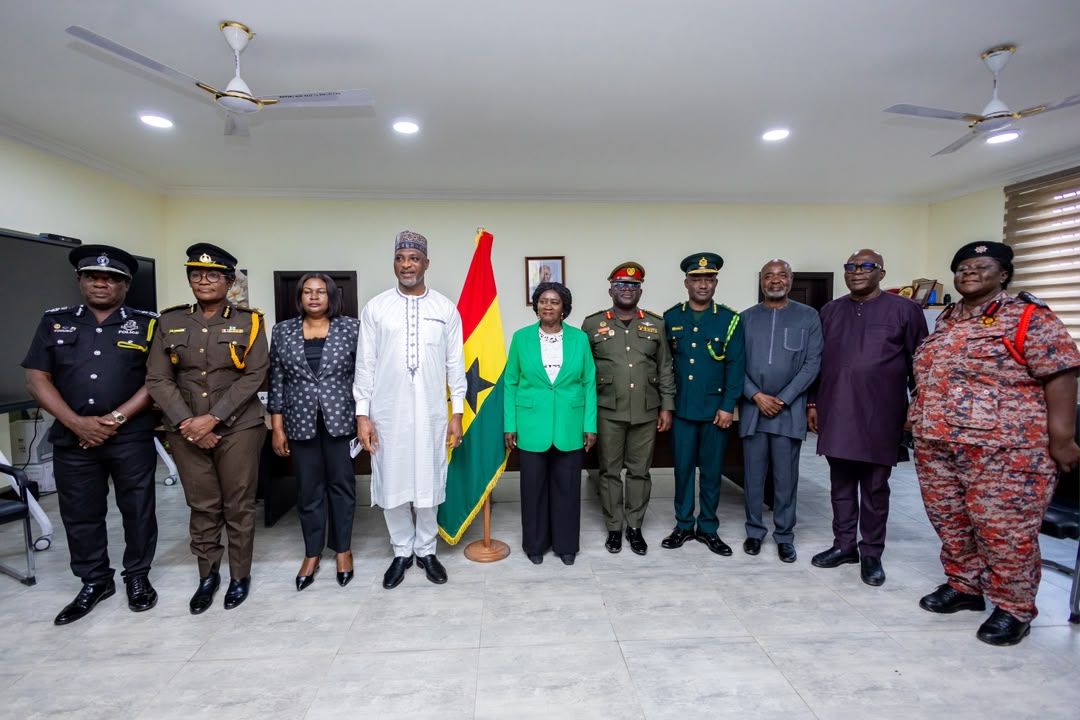
The Ghana National Fire Service has also taken delivery of about 20 pickups, with the Ghana Immigration Service receiving approximately 25 additional vehicles.
He further revealed that the Narcotics Control Commission, which had reportedly gone nearly a decade without receiving new operational vehicles, has now been equipped with 22 vehicles to strengthen its fight against drug trafficking.
Mr. Mohammed-Mubarak said the government’s anti-narcotics strategy has shifted from targeting drug users to dismantling trafficking networks and seizing the assets of drug kingpins.
He disclosed that authorities have confiscated several assets linked to suspected drug traffickers.
He also announced that a dedicated court has been established to handle narcotics-related offences, while the Narcotics Control Commission has been granted prosecutorial powers, enabling it to prosecute cases directly instead of relying solely on the Office of the Attorney-General.
According to him, lawyers are currently being trained to strengthen prosecutions and improve conviction rates.
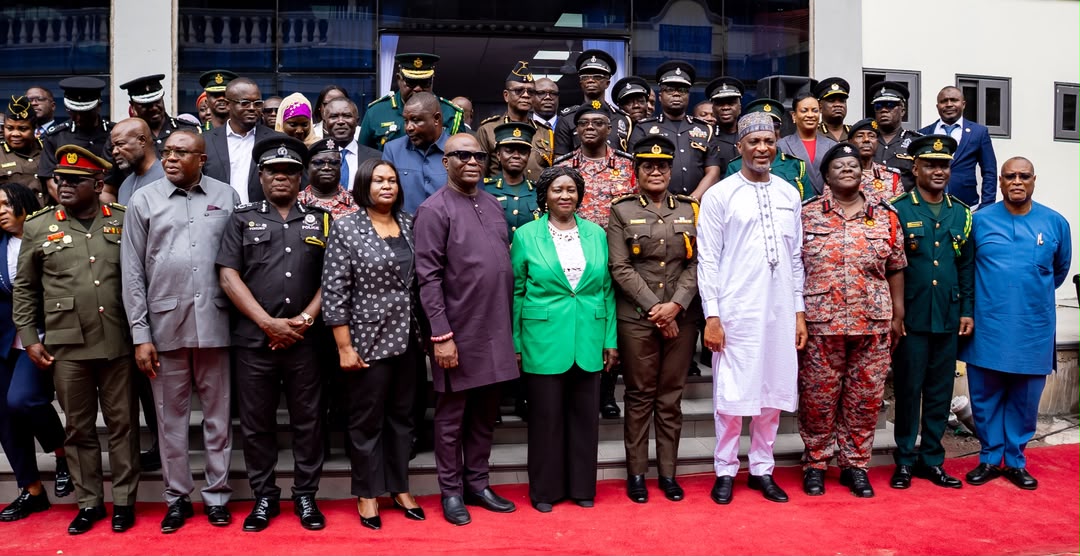
Beyond enforcement, the minister said public education remains a critical component of the anti-drug campaign.
He disclosed that in 2025 alone, the commission conducted 217 community outreach programmes, reaching nearly half a million students across the country with education on the dangers of narcotic drug abuse.
Addressing the proliferation of small arms and light weapons, the minister described illegal firearms as one of the country’s major security concerns.
He said an arms amnesty programme organised in collaboration with the National Commission on Small Arms and Light Weapons and the Criminal Investigations Department led to the voluntary surrender of more than 4,000 firearms.
He added that the recovered weapons, together with illegally seized firearms, were publicly destroyed last week as part of efforts to reduce the circulation of illicit weapons.
Despite the progress made, Mr. Mohammed-Mubarak acknowledged that inadequate resources remain a significant challenge for the ministry and its agencies.
He, however, expressed appreciation to President John Dramani Mahama for the government’s continued support, particularly towards completing the ministry’s new office complex.
He thanked Vice President Professor Naana Jane Opoku-Agyemang for taking time from her schedule to engage with the ministry’s leadership and staff, describing her visit as a demonstration of government’s confidence in the country’s security institutions.
By Evelyn Tengmaa