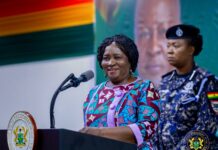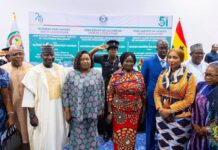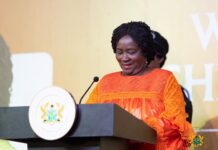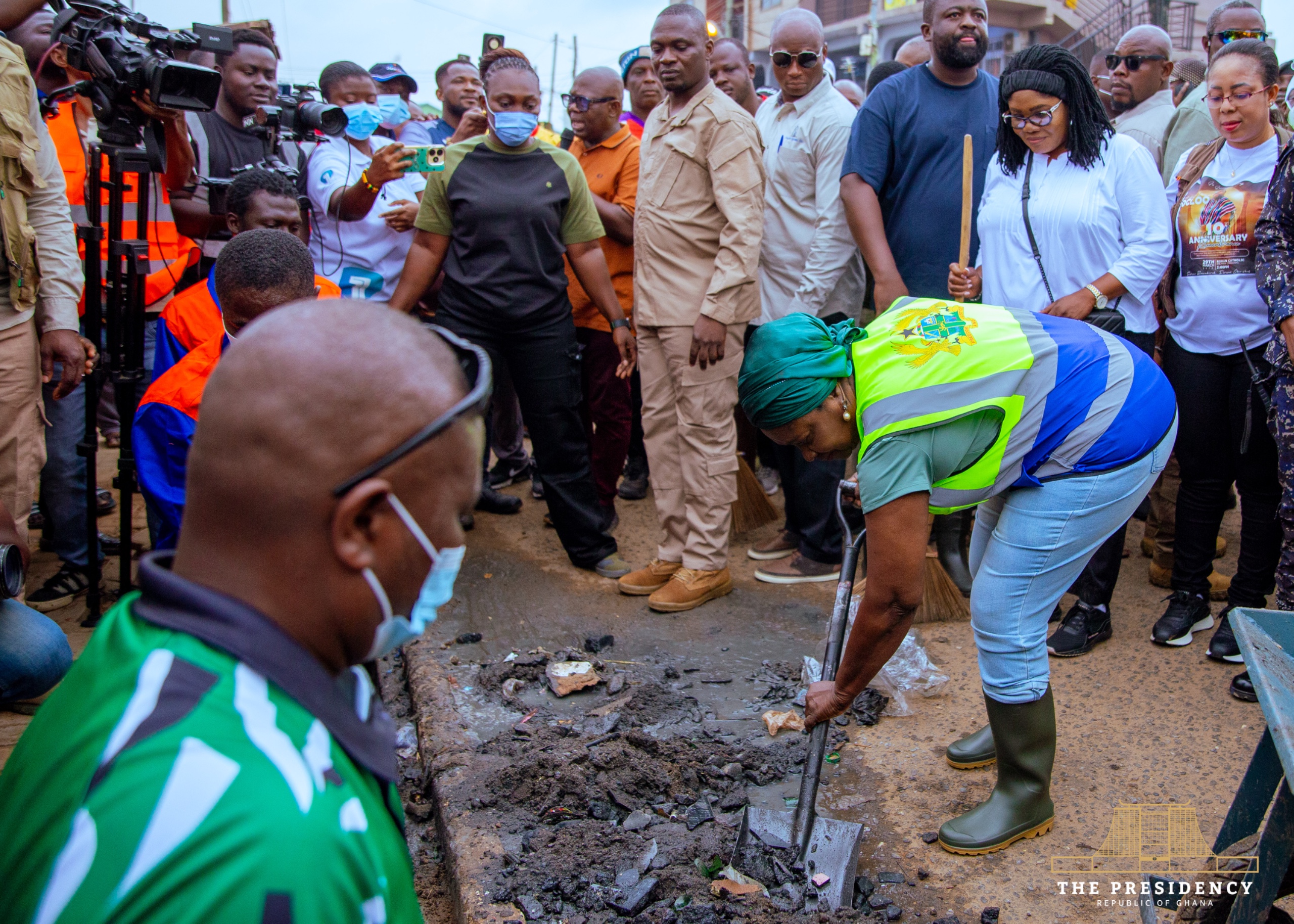

The Vice President, Professor Naana Jane Opoku-Agyemang on Friday July 10 joined residents and traders at the Nungua Market in Accra to participate in the first day of the National General Cleaning Exercise.
She urged Ghanaians to make environmental cleanliness a regular habit to help prevent flooding and the outbreak of diseases.
The exercise, which forms part of a nationwide san itation campaign, began with personnel of the Ghana Armed Forces leading the cleanup before the Vice President arrived at the market.
Demonstrating her commitment to the initiative, Prof. Opoku-Agyemang actively participated by picking up debris from the shoulders of the road and loading it into a wheelbarrow alongside other participants.
Addressing residents and traders, the Vice President stressed the importance of maintaining clean surroundings at all times rather than only during organised exercises. She urged the public to avoid dumping refuse into gutters, noting that such practices contribute significantly to flooding during the rainy season and increase the risk of disease outbreaks.
She expressed the hope that the nationwide cleanup exercise would become a frequent undertaking, saying regular community participation would help build a cleaner, healthier and more resilient Ghana.
After the Nungua exercise, the Vice President proceeded to Jubilee House, where staff and government officials also took part in cleaning their work environment. She joined the staff in the exercise, reaffirming the government’s commitment to promoting sanitation across all public institutions.
Prof. Opoku-Agyemang was accompanied at Nungua by the Minister for Local Government, Chieftaincy and Religious Affairs, Ahmed Ibrahim, the Minister for Gender, Children and Social Protection, Dr. Agnes Naa Momo Lartey, the Greater Accra Regional Minister, Linda Ocloo; as well as other government officials and local authorities.
The National General Cleaning Exercise is being undertaken simultaneously across the country, with participation from the security services, Metropolitan, Municipal and District Chief Executives (MMDCEs), heads of public institutions, local assemblies and members of the public.
The initiative is aimed at improving sanitation, reducing indiscriminate waste disposal and fostering a culture of environmental responsibility among Ghanaians.
By Evelyn Tengmaa