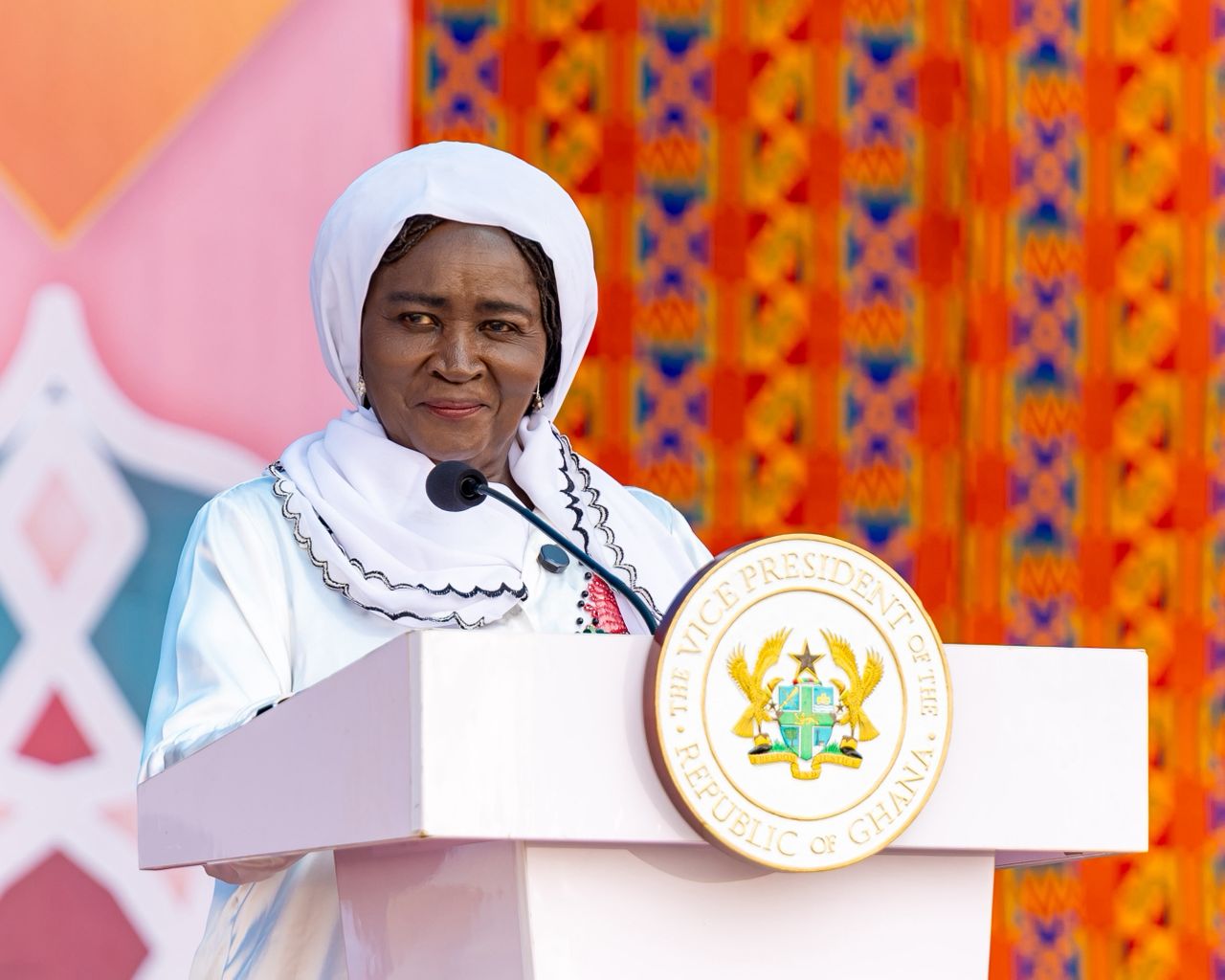

The Vice President, Professor Naana Jane Opoku-Agyemang has officially launched Ghana’s National Cultural Policy, describing culture as a powerful instrument for inclusive development, job creation, social cohesion, and national identity.
Speaking at the launch at the National Theatre in Accra, on June 9, 2026, the Vice President said the policy marks a significant milestone in Ghana’s efforts to preserve its cultural heritage while strengthening the country’s creative and cultural industries.
She noted that the policy aligns with the government’s broader development agenda by promoting inclusive growth, creating decent jobs, enhancing education, and reducing inequalities.
“By safeguarding our traditions and empowering our creative sector, we are fostering inclusive growth, creating decent jobs, enhancing education and reducing inequalities,” she stated.
The Vice President emphasized that the policy also supports the achievement of the United Nations Sustainable Development Goals (SDGs) and aligns with the African Union’s Agenda 2063, which envisions an Africa with a strong cultural identity, common heritage, shared values, and ethics.
Prof. Opoku-Agyemang highlighted Ghana’s growing international leadership in cultural diplomacy, citing the country’s role at the United Nations in advancing recognition of the transatlantic slave trade and its enduring impact on African societies.
According to her, Ghana’s historic forts, castles, and slave dungeons remain important reminders of a painful past and reinforce the need for continued global conversations on restitution, reparations, justice, and dignity.
“Culture is not only about celebration; it is also about justice, dignity and our collective responsibility to confront the painful legacies of slavery and colonialism,” she said.
The Vice President also celebrated recent achievements in promoting Ghanaian culture on the global stage, including international recognition for Ghanaian cultural products and heritage.
She pointed to the protection of authentic Ghanaian products through geographical indication status and the growing global recognition of Ghana’s cultural expressions, including highlife music, as evidence of the country’s rich cultural influence.
“Our cultural expressions are not only treasures of Ghana; they are gifts to the world,” she remarked.
Prof. Opoku-Agyemang further stressed the importance of multilingualism and cultural intelligence in an increasingly interconnected world. She encouraged Ghanaians to embrace language learning and cultural exchange as tools for strengthening social cohesion and promoting Ghanaian perspectives internationally.
On technology and innovation, she said emerging technologies, including artificial intelligence, offer new opportunities to digitize Ghana’s cultural heritage, preserve indigenous languages, and expand the reach of Ghanaian artists and creatives.
She however, cautioned that technological advancement must remain rooted in Ghanaian values and be used in ways that create jobs and benefit citizens.
The Vice President acknowledged the contributions of international development partners, including UNESCO, the European Union, civil society organizations, and the private sector in supporting Ghana’s cultural development efforts.
She also recognized the vital role of the Ghanaian diaspora, describing their investments, expertise, and advocacy as critical components of the country’s creative economy.
Prof. Opoku-Agyemang revealed that Ghana has made significant progress in implementing UNESCO’s Culture 2030 Indicators framework, which will provide data-driven evidence on culture’s contribution to national development and support more effective policymaking.
She further announced that Ghana’s film industry is expected to receive a major boost through a Film Development Fund, which has already secured seed funding to support the growth of the sector, including documentary filmmaking and other creative productions.
Calling for collective action, the Vice President urged government institutions, traditional authorities, religious bodies, young people, the private sector, and the diaspora to work together to unlock the full potential of Ghana’s cultural and creative industries.
“We must build a nation that draws strength from its heritage, creates opportunities through innovation, and projects its voice with confidence and influence on the global stage,” she said.
The launch of the National Cultural Policy marks the beginning of a new chapter in Ghana’s cultural development agenda, positioning culture as a strategic pillar for sustainable national development and economic transformation.
By Evelyn Tengmaa