
A factory built to reduce Ghana’s dependence on imported sugar is now at the centre of a proposal to protect it from the imports it was meant to replace.
That is the difficult irony of the Komenda Sugar Factory.
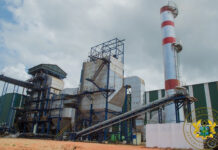
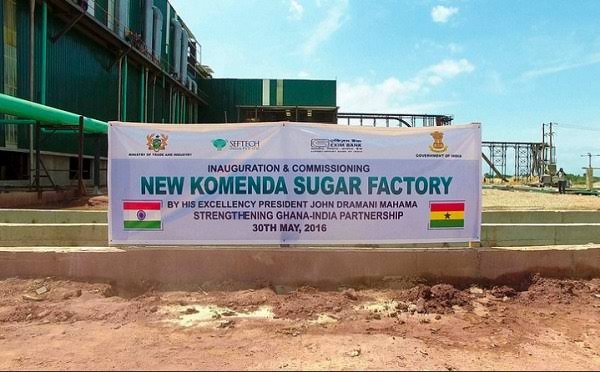
Komenda is not a new promise. The original factory dates back to 1964. The revived factory was commissioned in 2016, meaning Ghana has spent about 62 years around the Komenda sugar dream, and about 10 years around the modern revival.
It was expected to crush about 1,200 to 1,250 tonnes of sugarcane a day, produce about 125 tonnes of sugar daily, create about 7,300 direct and indirect jobs, support farmers in the Central Region and reduce Ghana’s sugar import bill.
But the numbers tell a more painful story. If Komenda produced 125 tonnes of sugar every day for a full year, it would produce about 45,625 tonnes annually.
Ghana’s projected sugar imports for 2026 are around 351,000 tonnes. That means even if Komenda worked at full theoretical daily output throughout the year, it would meet only about 13 percent of Ghana’s projected sugar import needs. So the factory matters, but Komenda alone cannot replace Ghana’s sugar imports.
That is why the current conversation around an import restriction is so important. President Mahama has said government is engaging an investor interested in reviving the factory.
But the investor wants protection from imported refined sugar to secure the local market. The investor is also expected to import unrefined sugar for processing locally because the sugarcane supply needed to feed the factory is still not fully ready.
This changes the real question. Ghana is no longer only asking whether Komenda can be revived. Ghana must now ask whether consumers should carry the risk of protecting a factory that has not yet proven it can produce enough sugar.
The factory has gone through several revival attempts. There was the 2016 reconstruction and commissioning. Then came the plantation and outgrower plans meant to solve the sugarcane problem.
There was the Park Agrotech investor attempt, with a proposed US$28 million investment covering sugarcane cultivation, plant upgrade and working capital. There was the WAATCO or 1D1F linked attempt.
There was also the 2024 lease proposal to West African Agro Limited for 15 to 20 years. Now, under the current administration, there is an Interim Management Committee, a transaction advisor plan and a new strategic investor conversation.
In simple terms, Komenda has not lacked announcements. It has lacked sustained production.
The core failure has always been bigger than the factory building. A sugar factory does not run on political commissioning. It runs on sugarcane, water, power, spare parts, engineers, farmers, transport, working capital and a guaranteed market.
Komenda was built as a factory, but the full sugar economy around it was never secured strongly enough. At one point, assessments showed the factory needed close to 300,000 tonnes of sugarcane to operate fully, but only about 16,000 tonnes could be mobilised within the recommended catchment area.
That was barely five percent of what was required. Without cane, the factory becomes a monument, not an industry.
Today, the problem is even more serious because the factory is not simply waiting to be switched on. The Trade Ministry has disclosed that it has been disconnected from ECG power and Ghana Water supply over unpaid bills.
Its machinery has reportedly not been refurbished since construction. Generators and motors need maintenance. Parts of the boiler system need replacement.
The factory has accumulated significant debt, but the full figure has not been publicly disclosed. There is also no clear public figure yet on the total cost required to rehabilitate the plant and return it to reliable commercial operation.
Meanwhile, Ghana still needs sugar. In 2023, the country imported about US$184.44 million worth of sugars and sugar confectionery. Brazil alone supplied about US$83 million, while India supplied about US$27 million.
Sugar is not only used in homes. It feeds bakeries, beverage companies, confectionery producers, food processors and other industries. So if imports are restricted before Komenda can produce enough, the risk is not abstract. It could show up in prices, shortages and pressure on businesses that depend on sugar.
This is why the current plan must be tested with data, not politics. Who is the investor? How much money is being brought in? What is the exact debt on the factory? How much will rehabilitation cost? How much sugar will be produced in year one?
How much will come from local cane, and how much from imported unrefined sugar? How many farmers have signed supply contracts? How many acres have actually been planted? What happens if the investor gets market protection but fails to produce enough sugar?
Komenda Sugar Factory should be revived. Ghana needs local production, jobs and a serious agro industrial base. But the country must not confuse protection with production.
Banning or restricting imported refined sugar may help an investor, but unless Komenda proves capacity, it may also punish consumers.
The real story is simple. Ghana built the factory, but did not build the full industrial chain strongly enough to sustain it. Now the country is being asked to believe in another revival.
This time, the test should not be another speech, another investor announcement or another promise. The test should be cane on the farms, machines working, utilities restored, debts disclosed, production targets published and consumers protected.
Until then, Komenda remains a sweet promise with bitter math.
By Wisdom Sarfo