
Burn injuries remain a major public health concern in Ghana, particularly among children, with unsafe living conditions, poor supervision and limited awareness contributing to the growing number of cases.
At the Korle Bu Teaching Hospital alone, more than 1,000 childhood burn cases are recorded each year, with spikes often occurring during festive seasons. Health professionals say most of the victims are children under five, and the majority of injuries are caused by hot water and cooking-related accidents.
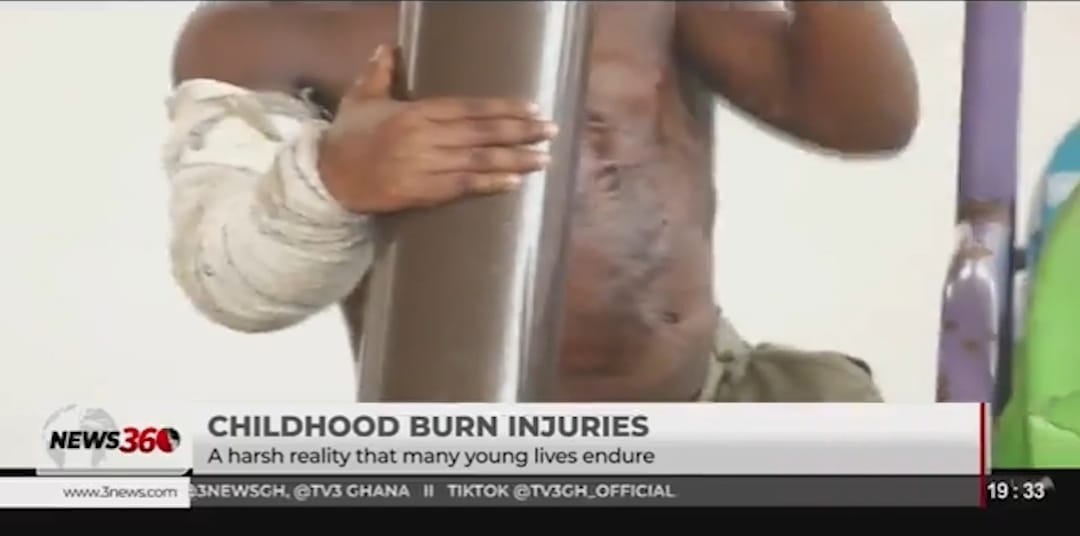
One such victim is four-year-old Enoch, whose life changed after he accidentally fell into a pot of boiling palm nut soup while playing at home. He suffered severe burns to parts of his body and has endured months of painful treatment.
His mother says the incident has not only affected her son’s health but also disrupted her livelihood as a petty trader, while the cost of medical care has placed a heavy financial burden on the family.
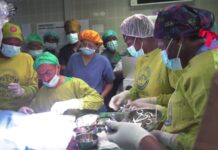
 ‘‘Two weeks ago, he underwent surgery on his right arm as part of his recovery.’’ It hasn’t been easy on the family she narrated.
Health workers at the Burns Unit of the Korle Bu Teaching Hospital say that many of these injuries are preventable.
According to the Deputy Chief Nursing Officer at the Unit, Sarfoa Ampong, poor kitchen safety practices and lack of child supervision are major risk factors in burn incidents involving children.

‘‘I would say negligence on the part of the parents. Most of them are unable to say what exactly happened to the child. We only get to find out the actual cause during investigation before they come clean. They are always not around when it happens. And most of the burns are hot water burns. Which can be prevented. We need to also look at the cost of treatment. Everyone comes to Korle Bu and it’s not cheap to get treatment here.’’ She noted.
Adults are not spared either. Dorothy Quartey, a 38-year-old caterer, sustained serious burns while attempting to light a fire using an expired hand sanitizer at her workplace. She says the experience has discouraged her and her colleagues from engaging in such dangerous practices.
“We were using kerosene until a colleague advised we used the EXPIRED SANITIZER which was faster. Now I can’t even go near a coal pot not to talk of gas stove.’’ She said.
Ghana currently has only three major burn centres at the Korle Bu Teaching Hospital, Komfo Anokye Teaching Hospital and Tamale Teaching Hospital a situation experts say puts pressure on the country’s ability to adequately manage burn injuries.
Globally, the World Health Organization estimates that burn injuries cause about 180,000 deaths each year and rank as the fifth leading cause of non-fatal injuries among children, underscoring the need for stronger prevention measures and improved access to specialized care.
By Sarah Apenkroh