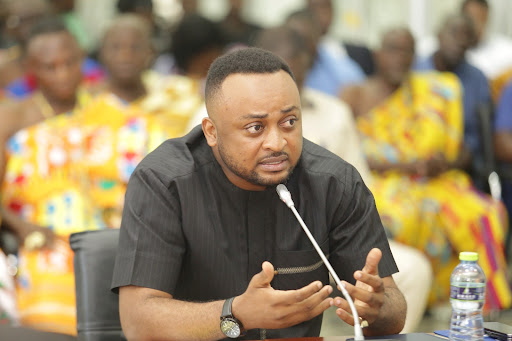

Member of Parliament for Old Tafo, Vincent Ekow Assafuah, has raised alarm over what he describes as growing instances of luxury expenditure within Ghana’s pension administration system, warning that such practices threaten the financial security of contributors.
He cited the reported procurement of seven Land Cruiser vehicles at GH¢15 million as a key example, questioning whether such expenditure aligns with the core mandate of protecting pension funds.
“Pension funds are not instruments for prestige projects or executive comfort,” he stressed, adding that every cedi spent must directly contribute to improving retirement outcomes for Ghanaian workers.
Mr Assafuah argued that decisions of this nature must be subjected to strict scrutiny, including verification of procurement processes, board approvals and demonstrated necessity.
He warned that failure to uphold these standards risks weakening public confidence in the system.
He is therefore calling on oversight institutions, including the Auditor-General and anti-corruption bodies, to examine such expenditures and ensure full accountability.
Find below the full statement:
A CALL FOR PRUDENCE, TRANSPARENCY AND ACCOUNTABILITY IN THE MANAGEMENT OF GHANA’S PENSION FUNDS
Fellow Ghanaians, Members of the Media, Pension funds are not ordinary pools of capital. They are the deferred wages, future dignity, and economic security of Ghanaian workers built painstakingly over decades of honest labor, sacrifice, and trust in the State. Every cedi contributed represents a teacher’s years in the classroom, a nurse’s long night shifts, a civil servant’s lifetime of public duty, and the private sector worker’s hope for stability after active service. These funds exist for one sacred purpose: to guarantee decent retirement income, preserve dignity in old age, and protect contributors from vulnerability when their working years are over.
For millions of Ghanaian workers, pension savings are the only assurance that after years of national service, they will not retire into hardship, dependency, or uncertainty. It is, therefore, imperative that every decision touching these funds is guided by prudence, transparency, fiduciary discipline, and an uncompromising commitment to value maximization. Any governance failure, below-market investment structure, avoidable administrative luxury, or prestige-driven expenditure is not merely an institutional lapse; it is a direct threat to the future wellbeing of contributors and their families.
I address you today with a profound sense of duty to the Ghanaian worker whose pension contribution represents deferred wages earned through years of sacrifice, discipline, and trust in the Republic. That trust is sacred, and it must never be weakened by opacity, questionable expenditure priorities, weak governance, or institutional decisions that place comfort and expansion above decent retirement income security of ordinary workers.
Pursuant to my request under the Right to Information Act, 2019 (Act 989), the National Pensions Regulatory Authority has responded by letter dated 27th March 2026. While I acknowledge receipt of their response, what has emerged is a troubling pattern of partial disclosure, deferred accountability, and unresolved governance concerns that require urgent national attention.
The Authority has indicated that key aspects of the request are being deferred pending consultation with the Office of the Attorney-General and Ministry of Justice under Section 22(1)(b) of Act 989. While consultation is permissible under law, it must not become a substitute for timely disclosure. The Right to Information Act exists to strengthen transparency, not to postpone it.
In this context, a serious governance concern arises. It is a matter of public record that Mr. Chris Boadi-Mensah, the Acting Chief Executive Officer of NPRA, also serves as the Board Chairman of the National Insurance Commission. This dual responsibility across two strategic financial regulatory institutions raises legitimate concerns about the concentration of regulatory authority, divided institutional focus, and the effective discharge of fiduciary duties in two highly sensitive sectors simultaneously.
More significantly, within the consultative chain involving the Office of the Attorney-General, it has emerged that the Deputy Attorney-General, Justice Srem Sai was part of the same foreign training programme undertaken by NPRA in February 2026 at Bentley University in Boston, United States of America. While no allegation of wrongdoing is made, this convergence of regulator, legal supervisory authority, and institutional participation within the same accountability ecosystem raises legitimate questions of institutional distance, perception of independence, and public confidence in the integrity of the deferment process.
The NPRA has further relied on the International Organization of Pension Supervisors Principles of Pension Supervision, particularly those relating to independence and confidentiality. It must be clearly stated that these principles are non-binding guidelines. They do not override Ghana’s Right to Information Act, nor do they justify delays in disclosure. Indeed, the spirit of IOPS is rooted in transparency, accountability, and strong governance in pension supervision.
Against this backdrop, the substantive issues before the nation remain deeply concerning.
It has been confirmed that NPRA undertook a two-week foreign training programme at Bentley University in Boston involving eleven board members, six directors, and senior management staff. Preliminary estimates place the cost at approximately GHS 2.38 million for business class air travel alone, while accommodation and per diem allowances hang around GHS 3.96Million cedis, translating to well over GHS 6 million, excluding tuition, logistics, and incidental expenses which remain undisclosed. These are substantial expenditures within a pension system funded by Ghanaian workers and must be subjected to full transparency and value-for-money scrutiny.
We are also informed that eleven staff transfers have been executed within a short period, each reportedly costing approximately GHS 90,000, amounting to close to GHS 1 million in transfer-related expenses alone. Pension contributors are entitled to ask whether repeated internal movements of staff at such cost represent the best use of scarce pension administration resources.
There are also concerns regarding internal administrative decisions, including rapid promotions and appointments. Reports indicate the appointment of a personal aide, reportedly a veterinary doctor, who has been elevated to the position of Assistant Manager. While administrative discretion exists, public institutions must ensure that all appointments are grounded on merit, relevance, and institutional need.
A further governance issue requiring urgent scrutiny relates to the creation of a new Directorate for Micro Pensions under the administration of Mr. Chris Boadi-Mensah. We are informed that this new directorate has been established with the appointment of one “Mr. Daganu” as Director, a position reportedly carrying an estimated monthly salary burden of approximately GHS 100,000 to the pension contributor.
What makes this development particularly troubling is the apparent duplication of roles and cost centers within the same policy space. Despite the establishment of a fully-fledged Directorate for Micro Pensions, Mr. Chris Boadi-Mensah is also reported to have appointed the former Chief Executive Officer of the NPRA, Kofi Anokye, who served during the first administration of John Dramani Mahama, as a Consultant on Micro Pensions at a reported cost of GHS 4 million.
This raises immediate questions of necessity, duplication, and value for money. If a dedicated directorate has already been created and a substantive Director appointed at significant recurring cost, why should pension contributors again bear an additional GHS 4 million consultancy fee for the same micro pensions function? The Ghanaian worker deserves clarity on the scope of the consultancy, the procurement basis of the appointment, the deliverables attached to the fee, and why existing internal structures were deemed insufficient.
On remuneration, a particularly disturbing issue has emerged. We are informed that Mr. Chris Boadi-Mensah doubled his salary immediately upon assumption of office in February 2025 without board approval. It must be recalled that while he assumed office in February, the governing Board of NPRA was only inaugurated several months later. This raises grave governance questions about the authority under which such a salary adjustment was made, the legal basis for the increment, and whether pension contributors’ resources were used to finance executive remuneration outside approved governance structures.
In addition, we are informed that in December 2025, Mr. Chris Boadi-Mensah authorized the expenditure of GHS 15 million on seven Land Cruiser vehicles, funded from pension contributors’ resources. We are compelled to ask whether such expenditure was a genuine institutional priority in the interest of pension contributors, especially at a time when contributors expect prudence, sustainability, and improved retirement outcomes.
We are also observing broader patterns within the pension and insurance ecosystem involving significant movements of pension assets across institutions. While market competition is expected, any perception that regulatory influence may be shaping fund flows must be treated with utmost seriousness, as pension assets are held in trust for contributors and must always be guided strictly by fiduciary duty.
At the center of this national conversation is a critical policy issue that requires strategic reflection: the proposed GHS 700 million loan or bond financing arrangement for the Phase Two expansion of the NPRA headquarters.
The first phase of the NPRA headquarters, a state-of-the-art facility along the N1 Highway, also known as the George W. Bush Highway was financed through Internally Generated Funds derived from approximately 0.33 percent of the 2.5 percent pension administration fees. That gradual and prudent financing model was pursued over time, yet the facility remains uncommissioned to this day.
It is therefore deeply troubling that under the leadership of Mr. Chris Boadi-Mensah, there is now a proposal to commit approximately GHS 700 million from Tier 2 and Tier 3 pension funds toward as loan to the second phase of the same headquarters project.
The Ghanaian worker is entitled to ask: why is Mr. Chris Boadi-Mensah pursuing a Phase Two facility when Phase One remains uncommissioned? What is the urgency? What is the necessity? And why should retirement savings be drawn into such a large-scale infrastructure expansion at this point?
Even more concerning is the reported pricing structure of the facility. Under prevailing market conditions, these same pension assets, if placed with professional fund managers, could generate returns in the region of about 20 percent per annum. Yet the facility being advanced under Mr. Chris Boadi-Mensah’s leadership is reportedly priced at a little above 5 percent per annum.
This raises a major contributor-protection issue.
Why should Mr. Chris Boadi-Mensah seek to lock pension contributors into a facility yielding a little above 5 percent when the market may offer significantly stronger returns? Over what repayment period does Mr. Chris Boadi-Mensah expect this GHS 700 million facility to be amortized, and what is the cumulative opportunity cost to contributors over that horizon?
These are not abstract policy questions. They go to the heart of fiduciary duty.
The unavoidable issue before the nation is whether Mr. Chris Boadi-Mensah’s proposed GHS 700 million Phase Two financing model is genuinely in the best interest of pension contributors, or whether contributors are being asked to absorb a below-market financing burden for an expansion project whose first phase is still awaiting commissioning.
For this reason, we call for the immediate suspension and independent review of the GHS 700 million Phase Two facility proposal associated with Mr. Chris Boadi-Mensah’s administration, including the necessity, repayment terms, pricing basis, and long-term impact on contributors’ returns. We MUST always remember that new pension reforms (Act 766 of 2008) promised Ghanaian workers of decent retirement income security.
For clarity and national accountability, the issues requiring immediate investigation are as follows:
QUESTIONS DEMANDING IMMEDIATE PUBLIC ANSWERS.
In addition to the foregoing, the following specific questions now arise and require immediate public answers from the NPRA, its leadership under Mr. Chris Boadi-Mensah, and all institutions involved in the relevant approvals, transactions, and oversight processes.
On the Proposed GHS 700 million Loan/Bond Facility from Tier 2 and Tier 3 Pension Funds
- I) Who is the loan or bond transaction advisors engaged on the proposed GHS 700 million Phase Two headquarters financing arrangement?
- II) Was the appointment of the special loan or bond transaction advisors subjected to competitive tendering, and if so, what procurement method was used and who approved it?
III) Over what repayment horizon does Mr. Chris Boadi-Mensah intend for pension contributors, through the NPRA, to finish paying for this bond or loan facility?
- IV) How does this project in any way assist in securing good retirement incomes for Ghanaian workers, whose deferred wages constitute the underlying pension assets?
- V) Why is Mr. Chris Boadi-Mensah pursuing a non-urgent GHS 700 million Phase Two expansion when the first phase remains uncommissioned?
- VI) Why should contributors be tied to a facility yielding a little above 5 percent when prevailing market returns may be significantly stronger?
On the Bentley University, USA Training Programme
- I) What was the content, scope, curriculum, and measurable learning outcomes of the two-week Bentley University programme undertaken by the 21-member delegation?
- II) Does Bentley University, USA, offer any specialized course specifically on Ghana’s National Pensions Act, 2008 (Act 766) and its implementation architecture?
III) What was the total cost of the training programme, including tuition, flights, accommodation, per diem, and logistics?
- IV) What institutional performance gap justified this scale of expenditure?
On the GHS 15 million SUV Procurement
- I) What procurement process led to the expenditure of GHS 15 million on seven Land Cruiser vehicles in December 2025?
- II) Was the procurement approved by the Board, and what necessity justified this expense from pension resources?
On the Salary Doubling and New Management Decisions
- I) Under what legal authority did Mr. Chris Boadi-Mensah double his salary and effect management restructuring in February 2025 without board approval?
- II) Who authorized the increment and what documentary approvals support it?
On the IOPS Principles
With regards to the IOPS Principles of Pension Supervision cited by the NPRA, we welcome the Authority’s invitation to share both our original request and the NPRA’s response with the IOPS and OECD, so the international supervisory community may independently appreciate the governance and disclosure concerns arising.
Fellow citizens, pension funds are not instruments for prestige projects, executive comfort, or avoidable administrative luxury. They are the deferred wages of Ghanaian workers and must be treated with the utmost fiduciary discipline.
We will continue to pursue accountability firmly, responsibly, and within the law, not to weaken institutions, but to strengthen them, and not for political theatre, but for the protection of Ghana’s pension contributors.
Because when pension governance is weakened, it is the ordinary Ghanaian worker who ultimately bears the cost.
I therefore call on His Excellency the President of the Republic, the Minister for Finance ( as current supervising Minister), the Secretary General of the Trades Union Congress, the Executive Secretary of CLOGSAG, the General Secretary of GNAT, the General Secretary of NAGRAT, the Chief Executive Officer of the Chamber of Corporate Trustees, the Chairperson and Members of the Forum for Public Sector Pension Schemes, the Office of the Special Prosecutor, Civil Society Organizations, and the Auditor-General to take an immediate interest in these matters and ensure that the hard-earned pension contributions of Ghanaian workers are protected from waste, weak governance, and below-market financial commitments.
In particular, I urge these institutions and stakeholders to demand a full independent review of Mr. Chris Boadi-Mensah’s proposed non-urgent GHS 700 million Phase Two headquarters loan facility, including its necessity, pricing structure at a little above 5 percent, repayment horizon, and the long-term opportunity cost to contributors when compared to prevailing market returns.
The future dignity of Ghanaian pensioners must never be mortgaged for avoidable prestige projects.
I thank you.
Signed
Hon. Vincent Ekow Assafuah Esq.
MP, Old Tafo Constituency.
Minority Spokesperson on Proper Governance and Accountability.
TUC urges workers to prioritize SSNIT contributions for secure retirement