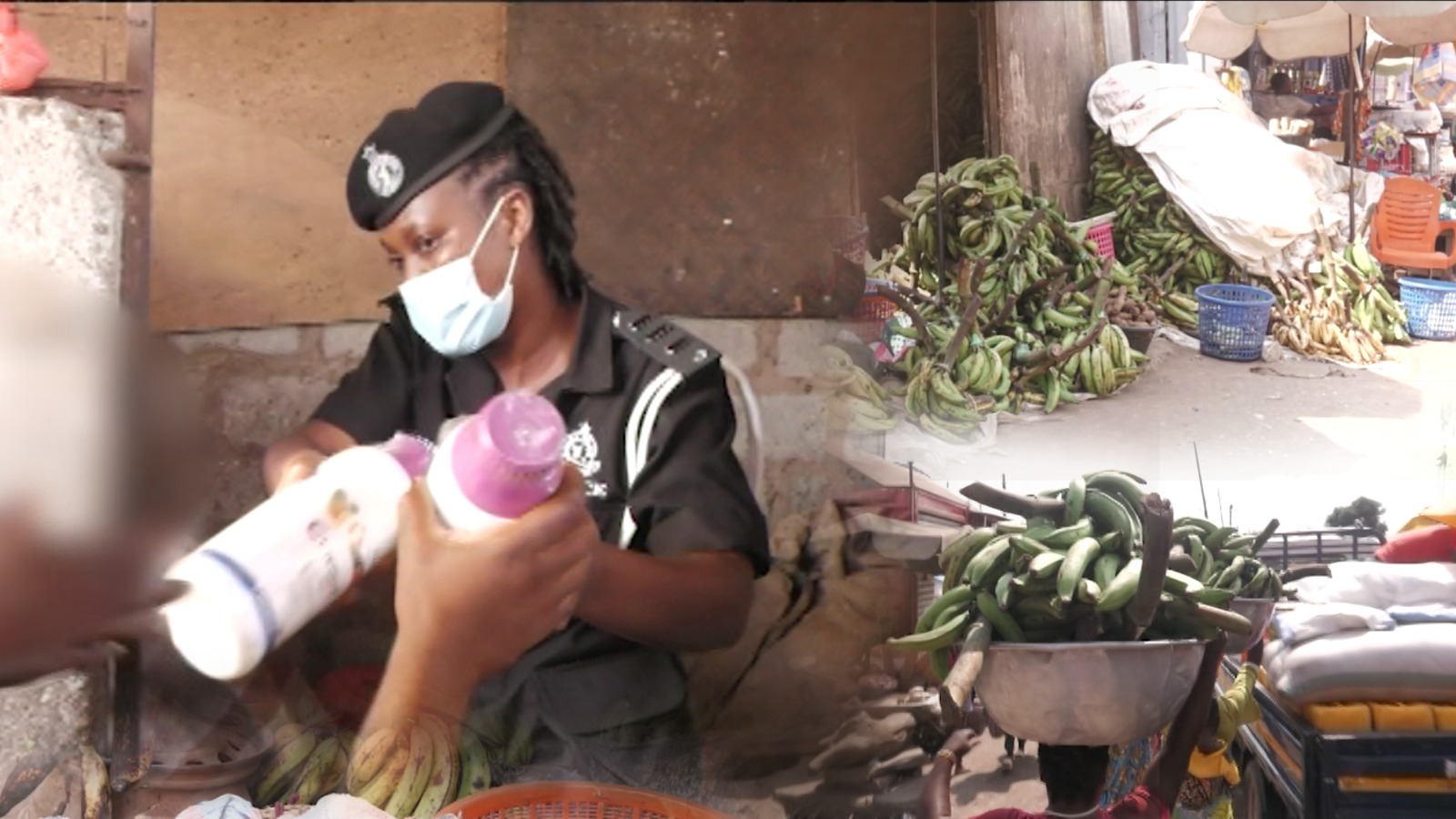

A woman has been arrested at the Madina Market in Accra for allegedly selling a chemical used to speed up the ripening of bananas and plantains, after investigations identified the product as an approved ripening agent that was allegedly being sold and used without following its authorised guidelines.
The arrest was carried out on Tuesday, 18 August 2026, by a taskforce from the La Nkwantanang-Madina Municipal Assembly, working with the Madina Police and the Assembly’s Environmental Health Unit. The operation followed complaints from traders that some of their colleagues were using chemicals to accelerate ripening ahead of sale.
Investigating the concerns, it was established that the product is registered and carries a “harmful” hazard warning, meaning it must be applied at specific, approved dosages.
The FDA said the authority was focused on educating traders on correct use rather than banning the product outright, distinguishing it from unapproved substances such as calcium carbide, which produces toxic acetylene gas. “If it will be used, or if it must be done, then it must be done right,” he said, noting that the FDA had begun training market women on proper dosage.
The Municipal Chief Executive (MCE), Ibrahim Fialla, said the Assembly would intensify monitoring of the market and conduct a wider search “to identify and deal with anyone found selling or using substances” — a reference, officials say, to the unauthorised sale and improper application of the product rather than to its status as a regulated agent.
He said the exercise would combine enforcement with education for traders, and appealed for calm, stressing the need for cooperation between traders, environmental health officers, the police and the FDA.
The concerns first surfaced when the Assembly engaged traders at the market on Wednesday, 12 August, to discuss challenges affecting their businesses. Some traders raised the ripening issue during that meeting, and one trader alleged her son had fallen ill after eating bananas she suspected had been treated with the chemical; the child has since received treatment and been discharged, though there is no confirmed scientific link between the illness and the product.
Traders have also called for surveillance to be extended to other fruit markets.
By Joseph Armstrong Gold-Alorgbey