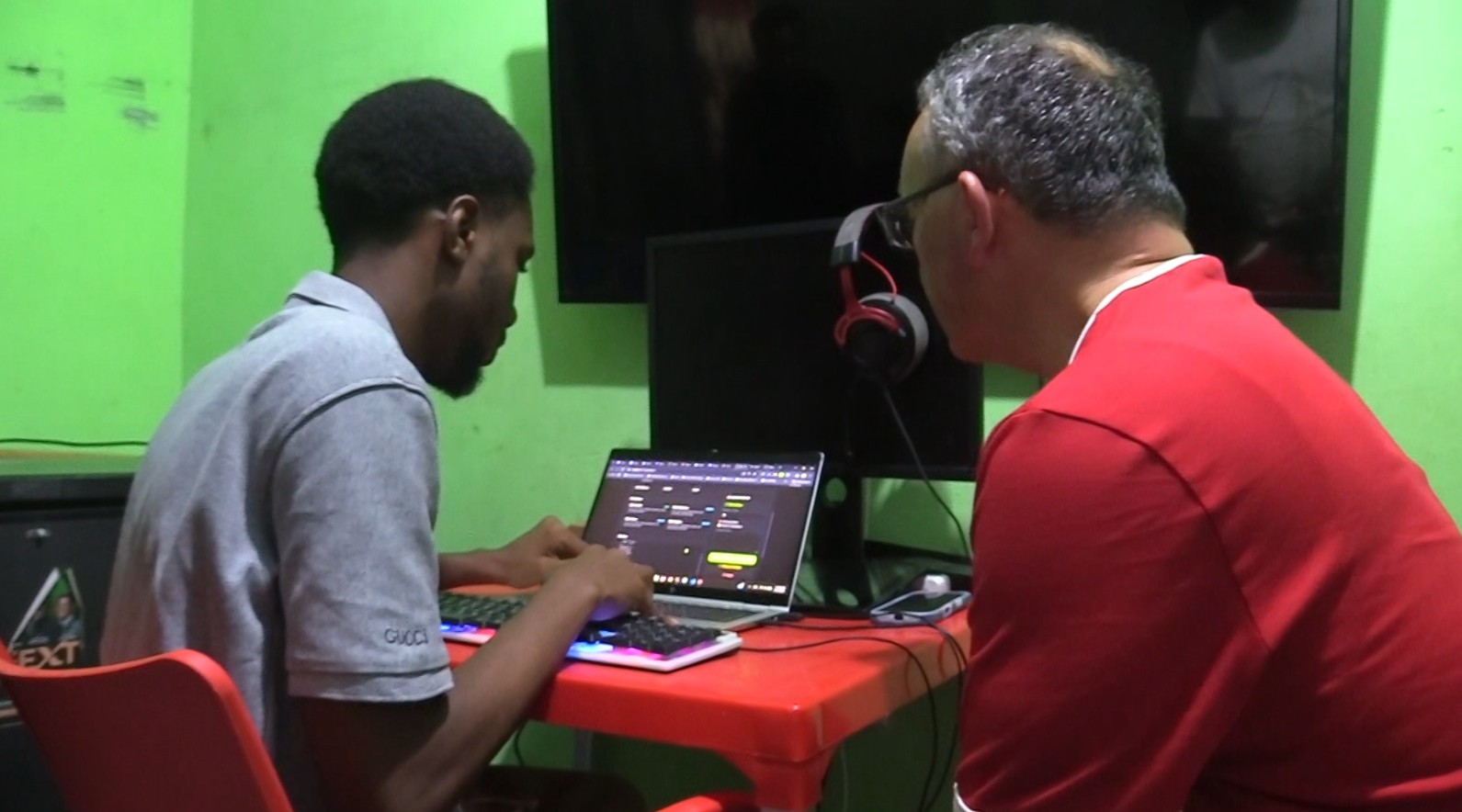

At 19, Frederick Abila built Buzzchat. A social media platform akin to Facebook with over 13,000 users, mostly students and young professionals in Ghana.
But before that, he was just a young boy who thought he had no talent.
“When I was younger, I think I tried singing, it didn’t work I tried doing choreography, it was too difficult for me. So, I tried doing a whole lot of things, but the biggest talent I had back then was to write. Because I’ve always been getting ideas, even from infancy.”
Overtime, his passion for writing led him to write his own book at 14 years, publishing a new edition in later years.
Now a level 300 student of the University of Mines and Natural Resources, Tarkwa, Frederick has built in addition other AI-powered platforms including Study Graph, and Legalyse, each tackling a problem he believes has little or no attention in the society.
Recounting the strides he has made, he said, “The very first platform I built was an e-commerce platform, so I just wanted to learn how digital marketplaces work, and try and find a way to help sellers sell their products online.
I got interested in more ideas, and one of them had to do with social media, and that was during COVID-19. During that period, I started to learn more and more, and I started to build a social media platform. So, I was just thinking, what other services might we be lacking in terms of availability to the internet? And I realised social media was one of them.”
However, he says young tech innovators like himself face a lot of challenges with funding.
“A lot of work is going on, and no one is taking notice of what is going on. And it makes it very difficult to build in Ghana, because I feel like a lot of youth have the ideas and they have the solutions available. But if the government doesn’t adopt these solutions, everyone would want to go and seek greener pastures elsewhere.”
Fortunately for him, he met Andrew Childs, a UK-based market researcher who found what he does fascinating and has since supported his ideas.
“I came across Fred in November 2022, when I was browsing through Facebook randomly, and all of a sudden, an article popped up that said 18-year-old African builds a social network for Africans. And I was intrigued and impressed by how a student will be building this by himself,” he added.
For Childs, young tech enthusiasts like Frederick must be given all the support they need.
“You just need to pay attention to young Africans. And I think even older Africans in Ghana, maybe other countries, are guilty of ignoring the youth. And the common thread is they just haven’t got the resources to do what they need to do. They’ve got wonderful ideas.”
In April this year, Ghana launched a National AI Strategy.
At the launch, President Mahama highlighted the need for young people to be supported in such ecosystem.
He said, “Youthful potentials must be matched by structured opportunities and that is why education and workforce development are among the core pillars of this strategy. At the heart of all these pillars is one imperative, capacity.
Without skilled people, strong institutions, proper infrastructure, sound governance, no AI strategy can succeed. And that is why this strategy places equal weight and opportunities on ambitions and safe guards on investments and inclusion.”
With the one million coders initiative by the Ministry of Communication in force, conversations are emerging on what is in for the already existing Web developers, Digital builders and AI innovators like Frederick.
But President Mahama says government is putting things in place to ensure their future in the space is secured.
“Data, computing power, connectivity, and energy are now as strategic to the digital age as roads, ports, railways, and power plants were to the earlier eras of development. The government is therefore taking steps to strengthen our national data centre and ensure that our digital backbone is secure, resilient, and capable of supporting the growing demands of the AI systems.”
For Frederick, young innovators must be supported with all the resources to prevent them from seeking greener pastures outside the country with their knowledge that could have been useful to their home country.
“Private institutions should also look into solutions built by young Ghanaians that they could probably fund or put money into, to help them scale their products also. Because there are a lot of ideas out there which would flourish if they had the available resources to them.”
Frederick is set to organize a build weekend in his school come July, bringing together other young tech innovators and other tech enthusiasts to showcase their talent to the world. He also plan to produce a podcast that will prioritise mental health.
By Samuel Yeboah Adams