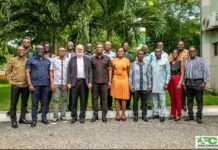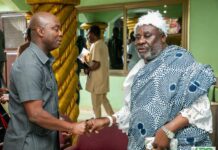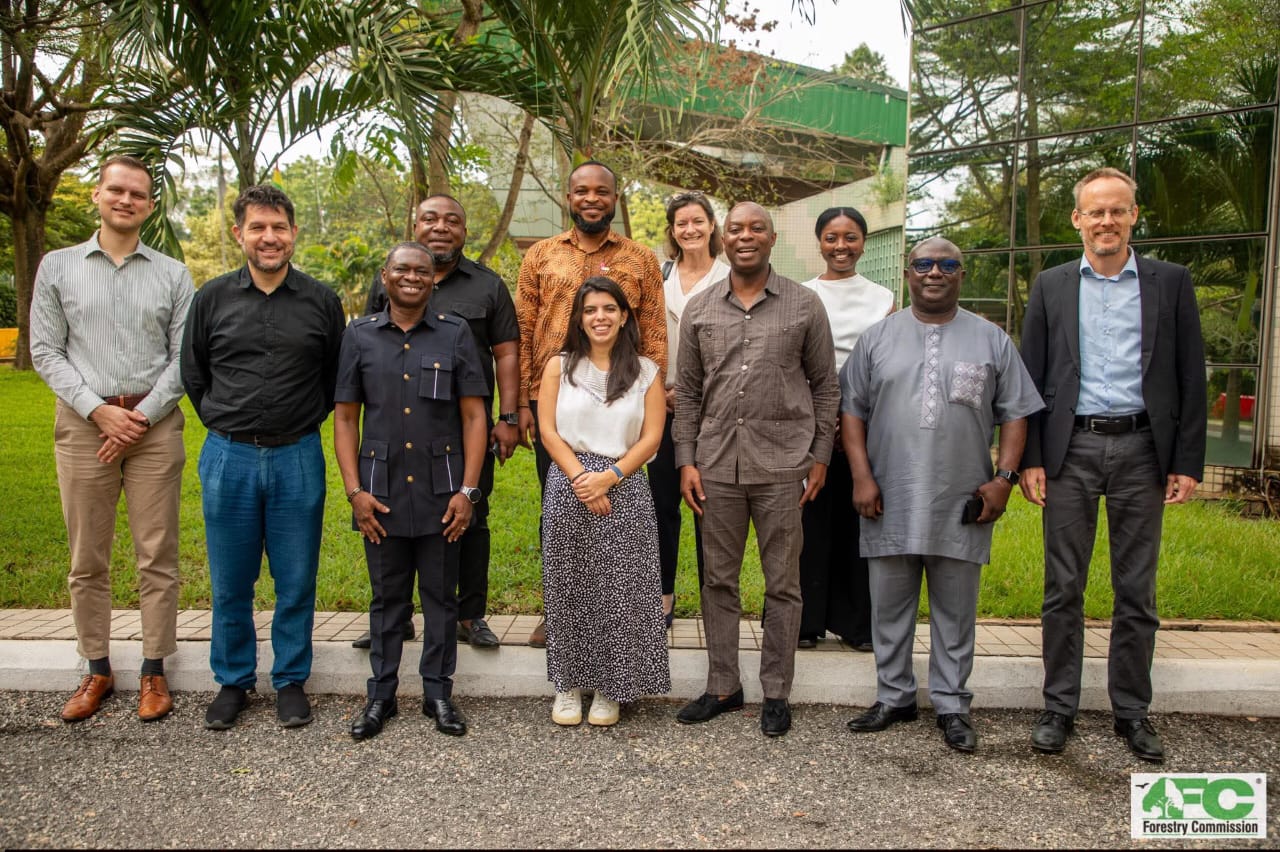

The Forestry Commission (FC) has hosted Ms. Catarina Vieira, a Member of the European Parliament and Standing Rapporteur for Trade Relations with West Africa, as part of a working visit aimed at strengthening cooperation between Ghana and the European Union (EU) in the forestry sector.
The visit formed part of efforts to deepen the European Parliament’s understanding of Ghana’s forestry sector, gain insight into the key challenges confronting the sector, and explore how Ghana plans to harness the opportunities arising from the Forest Law Enforcement, Governance and Trade (FLEGT) Licensing scheme with the EU.
Mr. Kwabena Acheampong Boakye Esq, Director, Timber Validation Department (TVD) in delivering his remarks welcomed Ms. Vieira and her delegation on behalf of the Forestry Commission.
He expressed the Commission’s appreciation to Ms. Vieira and her team for taking the time to familiarise themselves with the work of the Commission and for their continued interest in Ghana’s forestry governance and trade reforms.

In his remarks, Dr. Hugh Brown, Chief Executive of the Forestry Commission, highlighted the Commission’s long-standing relationship with the European Union, describing it as one built on mutual trust, technical cooperation, and shared values in sustainable forest management.
He emphasised the recent milestone achievement of Ghana’s launch of FLEGT licence issuance, in full accordance with EU laws, noting that this development positions Ghana as a key partner in promoting legal and sustainable timber trade to the EU market.

Dr. Brown further indicated that the FLEGT licensing initiative reflects years of collaboration, institutional reforms, and stakeholder engagement, and represents Ghana’s commitment to strengthening forest governance while ensuring access to international markets for legally produced timber.
A detailed presentation was delivered by Dr. Richard Gyimah, Executive Director of the Timber Industry Development Division (TIDD) who outlined the core mandate of the Forestry Commission, the roles and responsibilities of its various divisions, and their contributions to sustainable forest and wildlife resource management.
He also provided an in-depth overview of the implementation of the FLEGT licensing scheme, explaining its processes, compliance requirements, and what the initiative means for Ghana in terms of improved forest governance, enhanced credibility of Ghanaian timber, and increased trade opportunities with the European Union.
The engagement provided a platform for open dialogue on sector challenges, opportunities, and future collaboration, reinforcing the shared commitment of Ghana and the EU to sustainable forestry, good governance, and responsible trade.
By Benjamin Aidoo