
The National Commission for Civic Education (NCCE) has called for stronger collaboration with media organisations to help the Commission effectively deliver its constitutional mandate and deepen civic education across Ghana.
The Commission says the media have a critical role to play in educating the public on their civic responsibilities, promoting democratic values and encouraging citizens to participate meaningfully in national development.
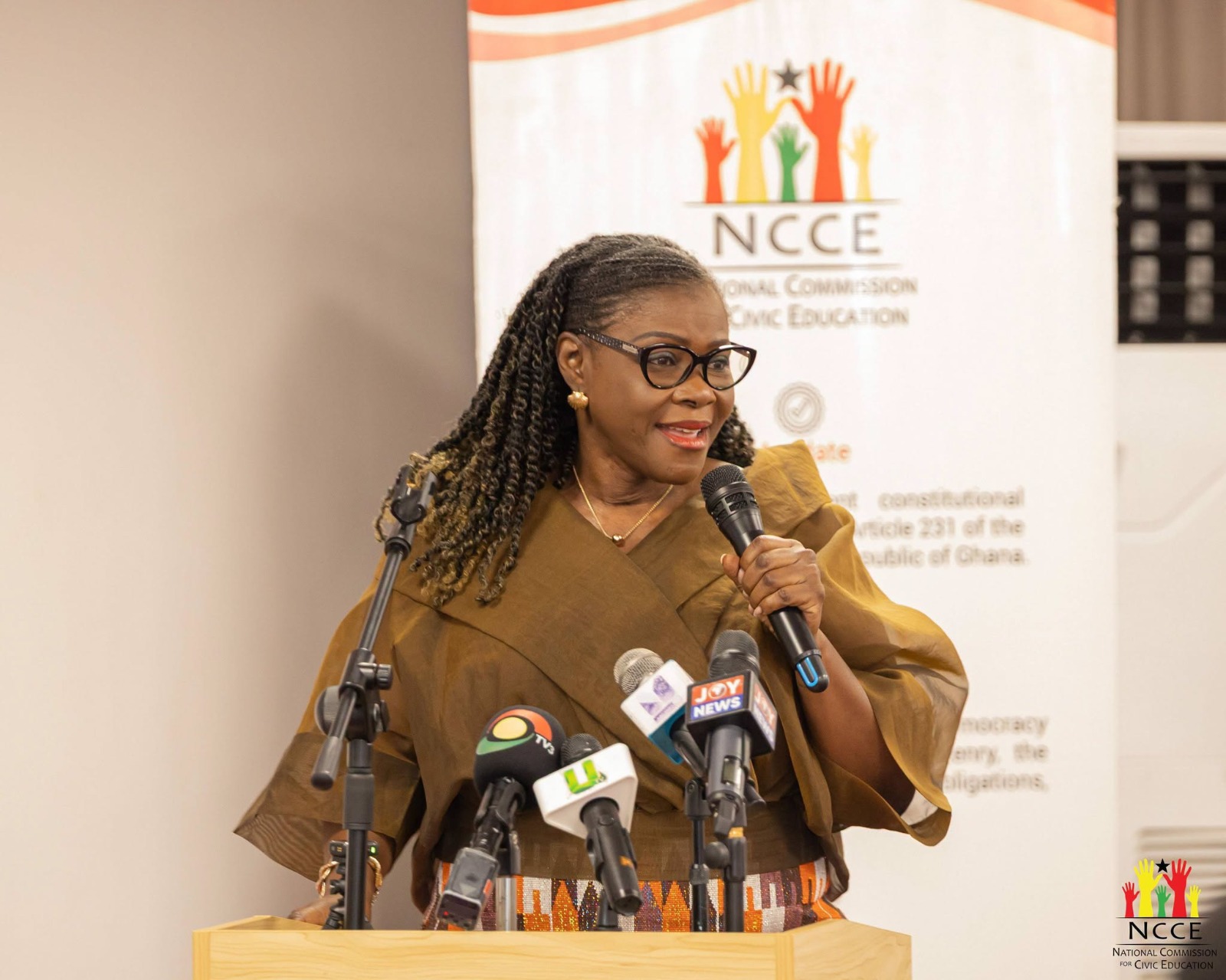
Speaking at an engagement with news editors and journalists on the role and mandate of the NCCE on August 27, the Chairperson of the Commission, Kathleen Addy said the success of civic education efforts depends largely on sustained support and collaboration from the media.
The NCCE is mandated by the 1992 Constitution to educate and encourage the public to understand their civic responsibilities and obligations, as well as the importance of exercising their rights and freedoms responsibly.
The Commission is also expected to promote knowledge of the Constitution and foster a sense of patriotism and national consciousness among Ghanaians.
However, concerns have been raised over the extent to which the Commission’s civic education programmes and activities reach the wider population, particularly communities outside the major urban centres.
Against this backdrop, the NCCE is seeking to strengthen its engagement with the media as part of efforts to expand its reach and ensure that civic education messages get to more citizens.
Kathleen Addy said the media could serve as an important partner in amplifying the Commission’s programmes, creating public awareness and stimulating discussions on issues of national importance.
She also cautioned journalists and the general public against the spread of misinformation and disinformation, particularly in an era where information can be produced and circulated rapidly through traditional and digital media platforms.
She urged media practitioners to uphold professional standards, verify information before publication and help the public distinguish credible information from false or misleading content.
The call is particularly important as social media and other digital platforms continue to influence how citizens consume and share information.
For their part, media practitioners called on the NCCE to strengthen its presence at the district and community levels to make its programmes more accessible to citizens.
They argued that decentralising the Commission’s activities would enable it to reach more communities and engage directly with people on issues relating to the Constitution, democracy, governance and civic responsibilities.
The media also urged the NCCE to adopt more innovative approaches to civic education and make greater use of modern communication platforms to engage the public.
They emphasised the need for the Commission to develop strategies that appeal particularly to young people, who form a significant proportion of the population and are increasingly consuming information through social media and other digital platforms.
The engagement highlighted the need for a stronger partnership between the NCCE and the media to ensure that civic education becomes more accessible, relevant and responsive to the changing information environment.
With effective collaboration, both institutions can contribute to building a more informed citizenry, strengthening democratic participation and promoting responsible citizenship across the country.