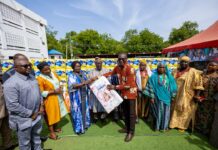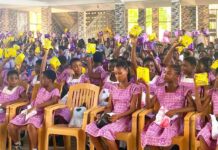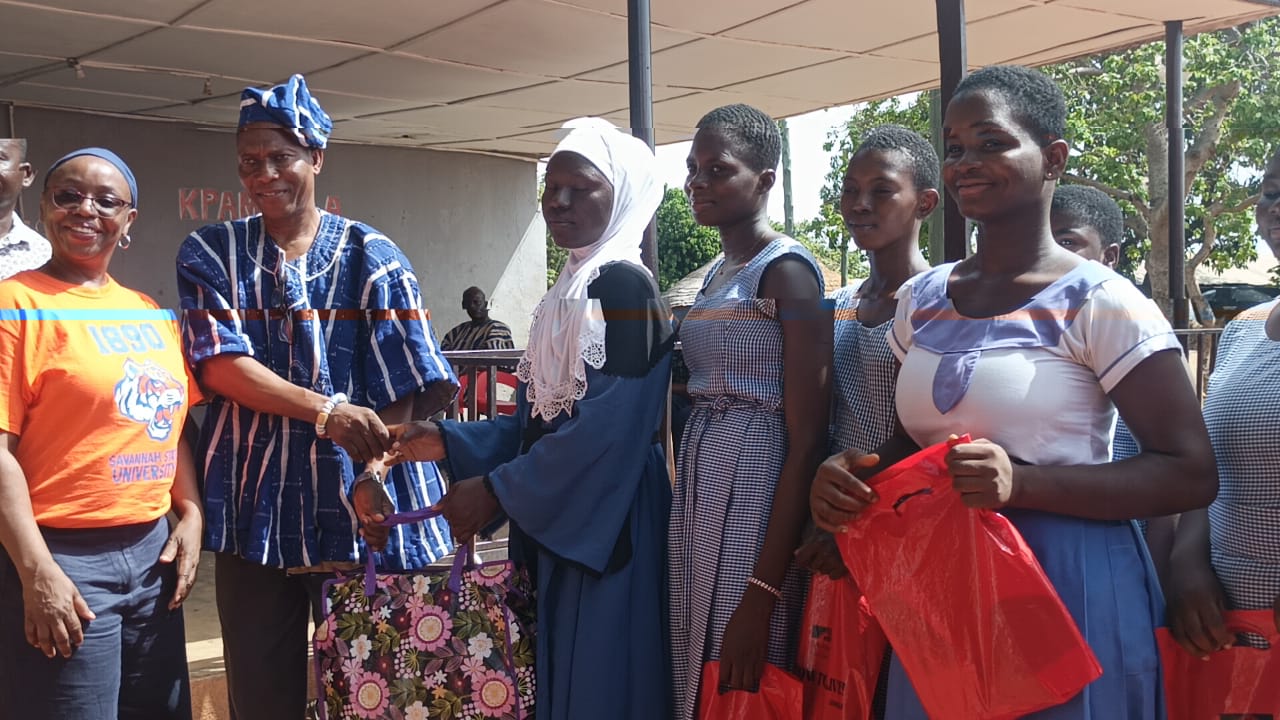

In a significant move to tackle period poverty and promote economic independence, the Network for Rural Missions has launched a transformative initiative in the Bunkprugu-Nakpanduri district, equipping over 200 young girls with the tools and skills to manufacture their own sanitary products.
The Bunkprugu-Nakpanduri district is among several areas in the North East Region facing significant developmental challenges.
For many young girls here, the monthly cycle is more than a biological process, it is a period of struggle. Lack of access to affordable sanitary pads and poor sanitation facilities often force these girls to miss school, leading to a cycle of educational and social setbacks.
To bridge this gap, Grace Fant Kombian, the Executive Director of the Network for Rural Missions, partnered with Savannah State University from the United States launched a life changing programme.
Over 200 young girls have been trained to manufacture reusable sanitary pads. They were also equipped with handheld sewing machines and materials to help them produce these essential items, turning a health necessity into a sustainable job opportunity.
Speaking to the Chiefs, Elders, Queen Mothers, and parents during the World Menstrual Hygiene Day celebration in Nakpanduri, Madam Grace Kombian challenged the stigma surrounding the topic.
Addressing the beneficiaries directly, she urged them to find their strength, stating: “Practice what you have learned about hygiene management, and allow your voices to be heard because silence must end, and your dignity must be protected.
Dr Roenia Deloach, Professor in the Department of Social Work and the Interim Dean of the College of Science and Humanities at Savannah State University, echoed this call for progress.
She emphasized that education remains the most powerful tool to change the narrative of poverty. She encouraged the students to take their studies seriously, while also tasking the beneficiaries to pay the gesture forward by teaching their peers, ensuring that every girl in the district has the opportunity to build a successful career.
Addressing the community, parents, and local leaders, the District Education Director for Bunkprugu-Nakpanduri, Hope Noble Kwashie urged the district to view the empowerment of the girl child as the primary engine for regional progress.
He emphasized that the community’s growth is fundamentally linked to how it treats its young women, stating, “development is impossible when half of society is held back by silence and inequality.”
The Director called for a decisive shift in how the district handles menstrual health, challenging the adults in the to take ownership of the environment they provide.
He urged stakeholders to move away from old prejudices, noting, “we must create environments where girls can speak openly, seek support freely and grow without fear or discrimination.”
He further encouraged leaders to replace harmful myths with education and compassion, stressing that wisdom must always guide the next generation rather than judgment.
Reflecting on the significance of the training initiative, the Director pushed for a long-term commitment from all present.
He insisted that the day’s event should not be viewed as a standalone achievement, but rather as the spark for a wider cultural shift.
“Let today’s gathering not end as just another event,” he urged. “Let it become the beginning of a movement, a movement of awareness, support, unity and transformation.”
By working together to protect and uplift the girl child, he concluded, the district can finally break the barriers that have hindered its development for generations.
By Solomon Kwame Kanaluwe