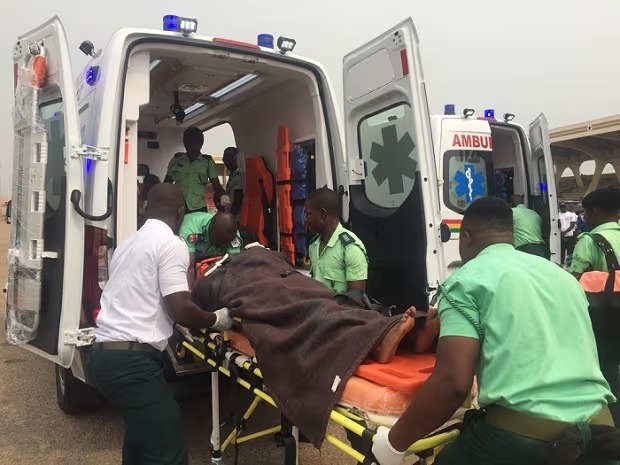

The Emergency Nurses Society of Ghana (ENSOG) has expressed concern over media reports of delayed emergency care, which resulted in the death of Mr. Charlse Amissah after being turned away due to the unavailability of a bed.
This is contained in a press release dated February 24 jointly signed by the National Chairman, Isaiah Adu-Gyamfi and National Secretary, Gertrude Nana Konadu.
“We extend our condolences to the family, emphasizing that no family should experience distress caused by systemic issues during a crisis.
ENSOG responds to the phenomenon known as “No Bed Syndrome,” noting that bed shortages are indicative of systemic pressures rather than solely operational failures,” a portion of the press release read.
ENSOG noted that, “Incidents such as hospital referrals, service refusals, missed assessments, and extended waiting times expose deficiencies in the emergency care system’s operations, coordination, and resilience, thereby highlighting failures in healthcare preparedness.”
It therefore expressed commitment to “partner with the Ministry of Health, Ghana Health Service, National Ambulance Service, teaching hospitals, professional associations, and development partners. ENSOG supports efforts to improve emergency care across Ghana, aiming to strengthen systems and ensure safe, timely treatment for all.”
Please read full statement below:
The Emergency Nurses Society of Ghana (ENSOG), operating under the Ghana Registered Nurses and Midwives Association (GRNMA), expresses concern regarding recent media reports of delayed emergency care, which resulted in the death of Mr. Charlse Amissah after being turned away due to the unavailability of a bed.
Incidents such as hospital referrals, service refusals, missed assessments, and extended waiting times expose deficiencies in the emergency care system’s operations, coordination, and resilience, thereby highlighting failures in healthcare preparedness. We extend our condolences to the family, emphasizing that no family should experience distress caused by systemic issues during a crisis.
ENSOG responds to the phenomenon known as “No Bed Syndrome,” noting that bed shortages are indicative of systemic pressures rather than solely operational failures.
The purpose of this statement is to promote dialogue, evidence-based planning, and coordinated efforts to enhance emergency healthcare, rather than to assign blame.
1. The Scope of the Issue Exceeds Bed Availability.
Emergency departments in Accra’s major hospitals, such as Korle-Bu and Ridge, have fewer than 1,000 beds, which is inadequate for the over 5 million residents. This causes prolonged boarding, delayed admissions, and lower care quality. WHO standards emphasize timely triage and treatment, but congestion, low nurse-to-patient ratios—worsened by nurse export—and worker burnout increase risks.
Ghana’s nurse-to-population ratio has improved, but Emergency Nurse Specialists are unevenly trained and distributed. Emergency departments need skills such as triage and trauma care, but high training costs and pay issues reduce the field’s attractiveness. Facility managers often rely on non-specialists, posing challenges.
Ghana lost over 10,000 nurses and midwives, including 3,000 in early 2022, with over 70% planning to migrate soon (Business Day Ghana, 2023; Boafo et al., 2023; Agyepong et al., 2024). This impacts staffing and emergency readiness, yet recruitment efforts stay inadequate.
2. Critical Care and Bed Capacity:
Limited ICU and HDU capacity causes emergency departments to hold patients longer, increasing workload and reducing capacity for new
emergencies. Strengthening HDU facilities could ease referral congestion and improve care continuity.
3. Prehospital Emergency Limitations:
Despite increased ambulance services, challenges such as limited advanced resuscitation equipment, variability in supplies, and inadequate early stabilization, especially in trauma cases, persist. Are our pre-hospital systems fully equipped? How many ambulances are in proper condition?
4. Need for Structured Emergency Operation Plans (EOPs)
A major system gap is the inconsistent implementation of emergency operation plans, surge protocols, and referral frameworks. Without clear EOPs, hospitals struggle to respond cohesively during surges, disasters, or high-volume periods.
5. Inter-Facility Coordination Challenges
Effective emergency care relies on coordinated patient movement, but real-time bed information is often unavailable, referral communication is fragmented, and ambulances spend longer searching for accepting facilities. Better coordination could improve outcomes and resource use.
A call to facilities might have changed the scenario. Instead of ‘scoop and run,’ a more targeted approach is preferable.
6. Resource Constraints in Emergency Departments
Emergency nurses face high patient volumes, staffing shortages, limited equipment, and infrastructure issues, causing stress and burnout. Despite this, they remain dedicated to stabilizing patients and providing compassionate care.
7. Improving referral coordination. Aligning with WHO emergency care standards.
Strengthening peripheral health facilities.
OUR COMMITMENT
The Emergency Nurses Society of Ghana remains a committed partner with the Ministry of Health, Ghana Health Service, National Ambulance Service, teaching hospitals, professional associations, and development partners. ENSOG supports efforts to improve emergency care across Ghana,
aiming to strengthen systems and ensure safe, timely treatment for all.