
The Bank of Ghana is set to institutionalise Non-Interest Banking and Finance (NIBF), a move expected to be a game-changer for promoting financial inclusion and unlocking untapped banking potential for prospective customers and the nation at large.
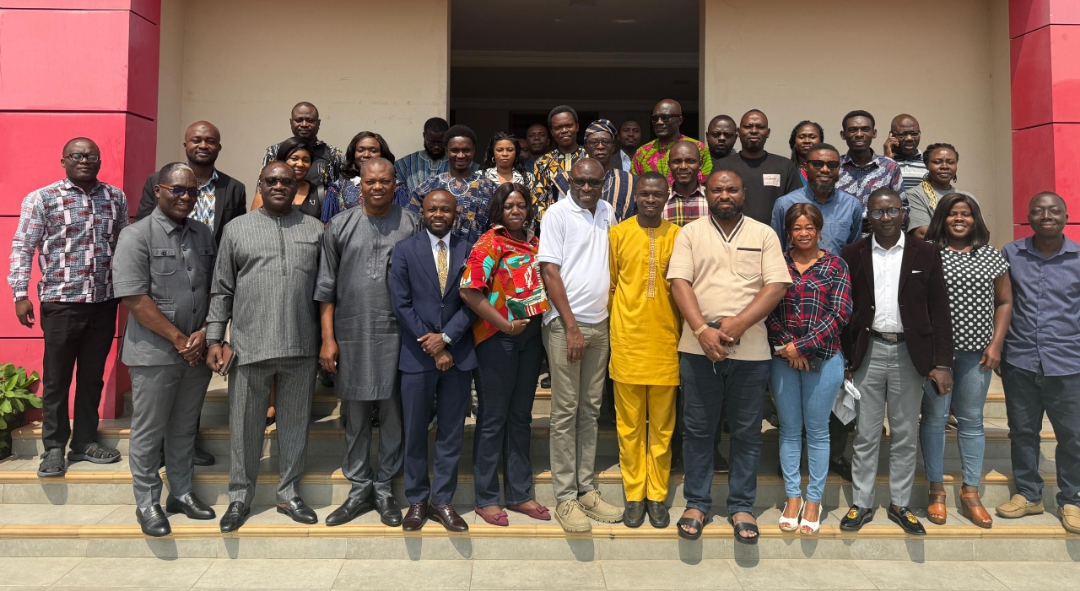
Speaking at a media engagement on July 19 in Koforidua, the Head of Banking Supervision at the Bank of Ghana, Ismail Adam, emphasized that Non-Interest Banking and Finance remains a largely unexplored financial opportunity.
“In light of the structural constraints in our economy ranging from graduate unemployment, slow GDP growth, significant infrastructure deficits, and limited fiscal space Non-Interest Banking and Finance presents a valuable opportunity to diversify both the financial system and our sources of financing for infrastructure development,” he stated.
He added, “The value proposition we are looking at is inclusivity. NIBF can broaden financial access, particularly for individuals who seek financing based on religious values. We are also focusing on financial development, as some of the products align with Islamic principles. For instance, Dubai’s airport expansion was financed through Sukuk. It is a viable avenue for us to explore in expanding infrastructure financing. Sukuk are equivalent to bonds in the conventional banking system.”

Mr Ismail Adam noted that collaborative efforts are crucial for the successful implementation of NIBF. “As we look into the future, the potential of NIBF to promote inclusivity, enhance financial stability, and contribute to sustainable development is undeniable. However, achieving this potential will require collaborative efforts among regulators, financial institutions, academia, and the media.”
He also addressed the issue of financial stability, stating that NIBF offers greater resilience through asset-backed financing and low leveraging. “NIBF would contribute to a more stable financial system, while profit-sharing and loss-absorbing instruments can enhance resilience in times of financial stress.”
In 2024, the global NIBF industry recorded assets exceeding five trillion US dollars, representing a growth in percentage points compared to 2023 and 2022 figures.
In the Africa Sub region, Countries such as Nigeria, South Africa, Kenya, and several others have already integrated Non-Interest Banking and Finance into their financial ecosystems.
Brief History of Non-Interest Banking and Finance
Non-Interest Banking and Finance, also known as Islamic Banking, operates strictly on the principles of Shariah-compliant banking.
Under Shariah principles, the payment and receipt of interest are prohibited. Instead, profits and business risks are shared between banks and customers.
Key characteristics of Non-Interest Banking include strict adherence to Islamic laws and engagement in permissible (halal) projects to help economic and developmental gaps.
Operating banks focus on investment-based transactions, such as buying and selling assets to generate revenue. Activities such as, gambling, speculation, interest base transaction, investing in haram industries, exploitative practices among others cannot attract investment from the Non – Interest Banking and Finance.
Products under NIBF
Key products and services under NIBF include:
Murabaha: A cost-plus financing model where the bank purchases an asset and sells it to the customer at a markup price.
Istisna: Designed to support customers who want to produce a specific asset. The bank selects a contractor and provides the necessary funds to deliver the asset as per the consumer’s specifications.
Salam, Ijara, Mudaraba, Musharaka, Takaful, and others: These are various other instruments used to facilitate Islamic finance through different structures of partnership, leasing, and insurance.
Sukuk
One major financial instrument is the Sukuk, also known as the Islamic equivalent of bonds. A Sukuk represents ownership in a tangible asset, service, or project and is structured to comply with Shariah law, which prohibits the collection or payment of interest.
Key characteristics of Sukuk include:
Asset-backed: Sukuk are supported by real, tangible assets such as real estate or infrastructure projects.
Ownership: Investors have a share in the ownership of the asset.
Return on Investment: Returns are derived from the performance of the underlying asset.
Sukuk are used for financing large projects, raising capital, and offering diversified investment opportunities.
In 2024, the global issuance of Sukuk reached 180 billion US dollars, with projections estimating a rise to one trillion US dollars by 2025.
Sukuk Key Benefits to the Country:
. *Financing infrastructure projects*: Sukuk can fund critical infrastructure projects, driving economic growth and development.
*Diversifying funding sources*: Sukuk attracts Sharia-compliant investors, reducing reliance on traditional debt instruments.
*Promoting financial inclusion*: Sukuk empowers average Ghanaians to invest in nation-building projects.
*Stimulating economic activity*: Sukuk-financed projects can create jobs, improve public services, and contribute to GDP growth.
*Addressing infrastructure deficits*: Sukuk can help bridge Ghana’s significant infrastructure gap.
Potential for Ghana:
With strategic collaboration between the Ministry of Finance, Securities and Exchange Commission, and international Islamic finance partners, Ghana can establish a credible and well-regulated Sukuk market. This can unlock new funding opportunities, drive economic growth, and promote financial inclusion.
Institutional Commitment
Advisor on Monetary Policy Committee at Bank of Ghana, Professor John Gartchie Gatsi, noted that advocacy for NIBF began in 2016. But the Bank of Ghana has now committed to operationalising it.
“We at the Bank of Ghana are committed to nurturing the growth of NIBF in a sound, resilient, and sustainable manner. This includes effective risk management to ensure financial stability. Our meeting with you, the media, forms part of a broader stakeholder engagement process as we work toward establishing the institutional, legal, and regulatory framework necessary for the implementation of NIBF in Ghana,”he said.

Other stakeholders have also been engaged already as part of the phase one of the implementation guidelines.
Professor Gatsi further stated that a robust governance structure would be put in place to ensure strict adherence to Shariah principles in project implementation.
He also sought to demystify certain misconceptions about NIBF, clarifying that it should not be misunderstood as promoting Islam, advocating secular democracy, supporting terrorism, functioning only as charity, or attempting to undermine conventional banking.
“Non-Interest Banking and Finance will soon create expanded banking, capital market, and insurance opportunities—including diversified sources for financing infrastructure and business development in Ghana. The Bank of Ghana is committed to deepening and diversifying the banking and financial sectors,” he said.
Professor Gatsi added that the rollout of NIBF would enhance socio-economic activities, support trade, advance the 24-hour economy, provide alternative financing models, attract foreign direct investment, and finance large-scale infrastructure projects, thereby boosting economic growth.
“The Bank’s focus is to collaborate with the Securities and Exchange Commission (SEC), real sectors, and the insurance industry to promote a healthy financial and banking ecosystem for economically development,” he concluded.
Challenges that may occur in the Operationalisation of NBIF include, regulatory gap, liquidity market tools, qualified human capital and limited public awareness.
Call to Action for Journalists
National General Secretary of the Ghana Journalists Association, Dominic Hlordzi, urged journalists to be committed to insightful and accurate reporting to encourage the public’s understanding and patronage of Non-Interest Banking and Finance.
“Many Ghanaians are looking for alternative banking options. They are relying on your informed reporting to guide them,” he emphasized.