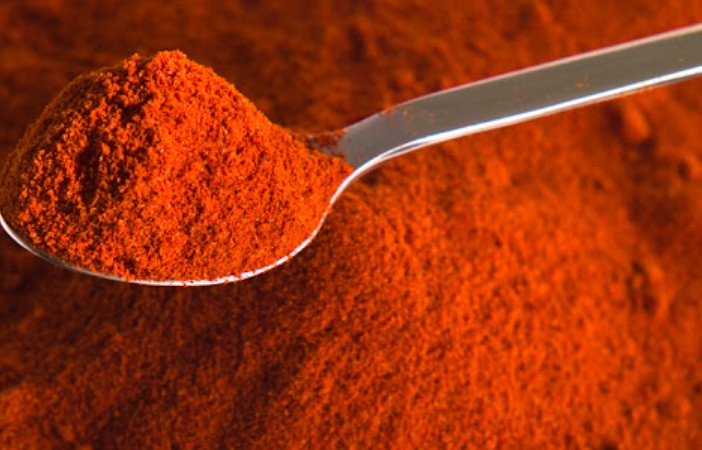

Toxicologist and scientist, Yakubu Adam has explained that maggots and kola used to adulterate pepper are unsafe, and the microorganisms they carry, can trigger sudden illnesses, sometimes leading to death.
Concerns have been raised over the quality of powdered pepper being sold in our markets. Reports reveal that some powdered pepper sold in our markets is mixed with spoiled wheat infested with maggots and flies, then packaged for unsuspecting families.
Yakubu Adam described the practice as wrong, urging consumers to be on the look out for such food ingredients in the markets.
“The maggots for instance are not supposed to be found in our wheat. I even heard that they use kola. They say when they blend it with their pepper it makes the pepper more, but you just need to even ask yourself what does kola contain? Kola contains caffeine, and caffeine is something we call sympathomimetic, meaning it can increase our heart rate, increase our blood pressure, and that can lead to hemorrhage.
“When the pressure in your blood becomes so high it can lead to restlessness and internal bleeding. So most people think that maybe when you are food poisoned and you exhibit the symptoms immediately it’s not really harmful, but sometimes the immediate effects you manifest can naturally lead to your death,” he noted in an interview with TV3.
In an interview with a pepper trader, she admits that everything is chemically treated to look fresh, but in reality, it is poisoning consumers.
“All the foods are sprayed, tomatoes, garden eggs, even okra,” she said.
According to her, “They use the remnant of the wheat which contains flies and maggots and it can harm the body. All this for the sake of money. So I will sell my things very expensive. If you like, buy it, it is correct. If not, go and buy the cheap one, you will get what you want.”
She explains that pepper mixed with other things can be detected when cooking.
“Sometimes you buy powdered pepper and use it for stew. You see the stew will look as if there is flour inside, it’s Garri. Now Garri is expensive so they no longer use it, they use wheat.”
Detecting how safe our food is, has become a daily struggle for many Ghanaians, as shocking revelations show that even our most basic foods are contaminated, harboring microorganisms that can silently cause fatal illnesses.
Another known fact: that bright red palm oil you see is not always natural.
During a visit to Malata Market in Accra, traders admitted that some palm oil is laced with Sudan dye, a chemical used to make it look more attractive but dangerously harmful to the body.
“They say it’s Sudan dye but it’s not Sudan dye. I don’t know the actual thing they use, even though I’ve never seen it before. Palm oil, if you see it, you will see that it’s very red, and if there is something inside you will know the original one and the one they’ve mixed.”
Another palm oil trader added, “Sudan dye is not good for consumption. It kills people. It shouldn’t be used with palm oil.”
Yakubu also gives an alternative for identifying adulterated foods or chemical contamination.
“When it’s a chemical adulterant there’s no way you can do anything about it in the house. It’s not very difficult for you to identify unless you leave it to stay for 24 hours and you see fungal growth or mold growing on them. That can give you a sense that the food is contaminated. Or when you leave the food for some time you realize that it starts forming bubbles. When these microbes start multiplying they produce gases, so you see that your stew or your soup starts forming bubbles after some time. That’s one of the indications. But ask yourself, when you are ready to eat, you don’t wait that long, you don’t wait for 24 hours to see whether it’s contaminated.”
He questions the Ministry of Food and Agriculture’s monitoring role, asking why excessive chemical use on farm produce continues unchecked.
“We normally put the burden on the FDA, forgetting about the Ministry of Food and Agriculture. The Ministry must also make sure that the crops planted follow sustainable agronomical practices. If poor oversight responsibility is done by the Ministry of Food and Agriculture, then what will happen is going to put a burden on the FDA, and the FDA may not be able to ameliorate all the problems. The food will end up in our food chain, on the consumer’s dining table, and consumption will happen.”
The warning is clear, adulterated food is not just a health risk, it is a silent killer.
Consumers are urged to exercise caution when buying food, because one careless purchase could mean a lifetime of untreatable disease.
By Beatrice Sowah