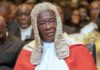
Legal practitioner Martin Kpebu has served notice to organise a demonstration to press for financial benefits to Ghana in relation to reparative justice.
He makes the point that the apology from the colonial masters is good, but it must also come with financial benefits to Ghana.
“The demonstration is to conscientise the Ghanaian people that we should get behind Mahama to push for payment of compensation. We need to push for financial benefits; the apology is good,” he said on the Key Points on TV3 Saturday, October 31.
President John Dramani Mahama has outlined three pillars he says should guide the next phase of the global reparative justice agenda following the United Nations resolution recognising the transatlantic slave trade as the gravest crime against humanity.
Speaking at a side event on the sidelines of the 81st United Nations General Assembly in New York, President Mahama called for a permanent and institutionalised global system to facilitate the return of African cultural artefacts held abroad.
He said the process should move beyond isolated acts of goodwill by countries holding African artefacts and establish clear legal and diplomatic mechanisms for restitution.
“Today, on the sidelines of the 81st UN General Assembly, I present to you the three pillars of our NEXT STEPS to transform this vision into global reality,” he said.
The first pillar, he said, was to build on progress already made while establishing a standardised international system for the return of cultural property.
He cited the Netherlands’ cataloguing of 2,000 Ghanaian artefacts for return, Germany’s engagement with the Kpando traditional area, France’s legislative frameworks and the return of the Djidji Ayokwe talking drum to Côte d’Ivoire.
“But moral justice cannot rely on piecemeal generosity or isolated acts of goodwill. Our NEXT STEP is to build a permanent, institutionalised global system,” President Mahama said.Read Ethics Books
He called on the United Nations and countries holding African artefacts to establish “clear, standardised legal and diplomatic mechanisms” to streamline provenance research, improve access to archives and reduce legal barriers to unconditional restitution.
He said the process should begin with the unconditional return of human remains.
The second pillar, according to President Mahama, is to reject the argument that the return of African artefacts should be delayed until African countries have developed modern facilities to preserve them.
“Let us reject this narrative. Capacity constraints must never be used as a justification for continued possession. Capacity must serve as a bridge to return, not a barrier to justice,” he said.
He said Africa was already investing in infrastructure to receive, preserve, research and exhibit returning cultural heritage.
President Mahama cited the African Union’s Agenda 2063 flagship project to advance the Great African Museum, the AU-EU Museum Partnership and Ghana’s construction of modern national and traditional institutions as examples of ongoing efforts.
He said gaps in technology, digitisation and conservation should instead be addressed through multilateral partnerships.
“Where gaps in technology, digitisation, or conservation exist, the solution is simple: Invest in them through genuine multilateral partnership,” he said.
The third pillar, he said, was to recognise cultural heritage as an important driver of economic and social development rather than an issue to be addressed only after economic development had been achieved.
“Cultural heritage is not a luxury item to be addressed after economic development. Heritage is an engine of development,” President Mahama said.
He said properly preserved and showcased cultural heritage could contribute to education, national identity, international tourism and the creative economy.
President Mahama also rejected suggestions that African countries lacked the capacity to receive and preserve artefacts returned from abroad, arguing that such concerns should not be used to justify their continued retention outside the continent.
On March 25, the UN General Assembly took a historic step. By adopting Resolution 80/250, 123 Member States declared the trafficking of enslaved Africans as the gravest crime against humanity and called for the prompt and unhindered restitution of our cultural property, sacred artefacts, and national archives.