
Efforts to combat illegal mining in Ghana’s forest reserves are facing renewed challenges, with authorities pointing to a critical shortage of frontline technical staff as a major obstacle to effective forest protection.
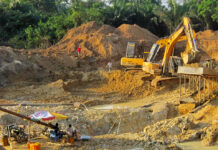
Illegal mining, widely known as galamsey, continues to wreak havoc on Ghana’s forests and water bodies. Despite multiple interventions, vast sections of protected lands are being destroyed daily.
According to experts, one of the key hindrances to progress is the lack of trained technical personnel capable of responding swiftly and effectively on the ground.
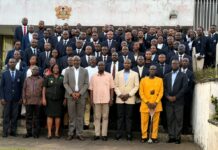
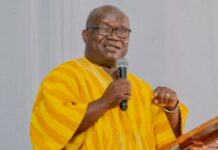
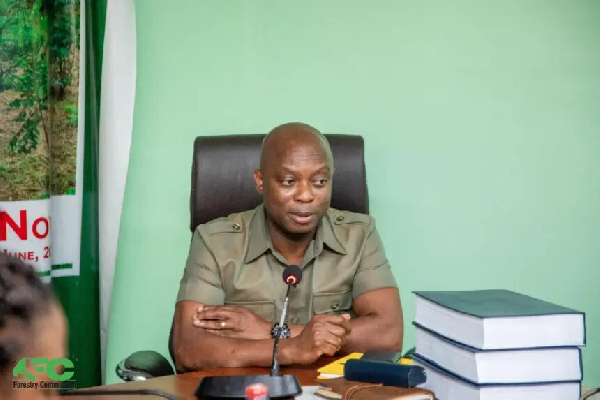
Speaking at a ceremony to induct 81 trainees from the Forestry School into a capacity-building program, the Acting Chief Executive Officer of the Forestry Commission, Dr. Hugh C.A. Brown emphasized the urgency of strengthening human resource capacity to safeguard Ghana’s natural resources.
He explained that the Forestry Commission operates through three main divisions; the Forestry Services Division, the Timber Industry Development Division, and the Wildlife Division.

The training, he said, aims to equip recruits to serve across these departments. Forestry Commission is rolling out training to address shortage of frontline technical staff.
The Forestry Commission is addressing the challenge with shortage of frontline technical staff to step up measures in fighting illegal mining and forest degradation.
In recent years, there have been shortage of persons with technical expertise in natural resources management, impeding the effectiveness of the Commission.
Acting CEO of the Forestry Commission, Dr Hugh Brown indicated the need to equip the youth with the needed expertise to help protect forest reserves.
The certificate program in Natural Resources Management Programme has taken in its second batch of students for the program.

81 students of the 330 applicants of the program gained admission with 46 percent of freshers being females. The program is being rolled out by the Forestry Commission Training Center in collaboration with the University of Energy and Natural Resources.
About eight percent of the cost is absorbed by the Forestry Commission.
By Benjamin Aidoo