
Jeff Otoo is a driver and a father of two. He believes family planning should be a shared responsibility between men and women, rather than one left solely to women.
“Currently making ends meet is tough so if you don’t plan your family, it becomes extremely difficult. I would prefer to share in the responsibility of family planning with my wife to reduce the burden.”
Among the two contraceptive options available to men, Jeff says he would choose vasectomy over condoms.
“I have heard about the vasectomy though but I don’t really know much about it. Either way, I would prefer that instead of condoms.”
But not all men share Jeff’s views.
While some are open to male contraceptive options, others remain hesitant, preferring to leave family planning decisions largely to their partners.
Leonard is one of them.
“Always the focus is on women, but we also have our options as men, which are condoms and vasectomy. It is because the vasectomy is a permanent process that is why many men don’t like it because we like to enjoy.”
For Albert, if there is no side effect, then he is all for it so far as it prevents pregnancy.
Either way, condom is totally fine.

“Everything has a side effect. Someone may consider it now and may regret later. I would rather weigh the disadvantages before else, the condom is fine.”
Some women, however, believe that although they have a wider range of contraceptive options, the idea of men sharing in the responsibility for family planning is not far-fetched.
Patience explains that she would appreciate her husband joining in the family planning responsibility because of the side effects.
“Men must share in the responsibility of family planning because some of our options us women have side effects. A cousin of mine did one and later had fibroid because her menstrual flow was obstructed.”
The reluctance among men remains evident.
Senior Midwifery Nurse at the Ridge Hospital, Abigail Amoako Baah Anwti says men’s refusal of the vasectomy is no news.
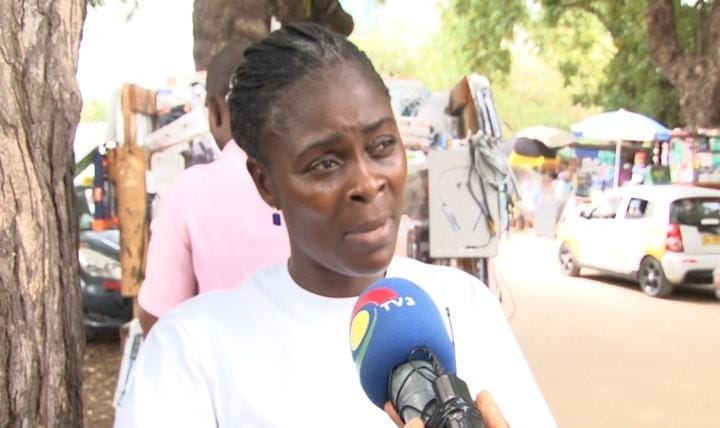
“In my practice for about 16 years I have witnessed about five men do vasectomy. When you do health education on family planning and you tell them they say let the women do it. One of the reasons why they are afraid of it is because they think when they do it, they will not be able to have erection. And for the condom use it is zero among the married men. It’s only the young people and single men who buy into that.”
But what exactly is vasectomy?
Professor Matthew Kyei is a genitourinary surgeon at the Korle Bu Teaching Hospital.

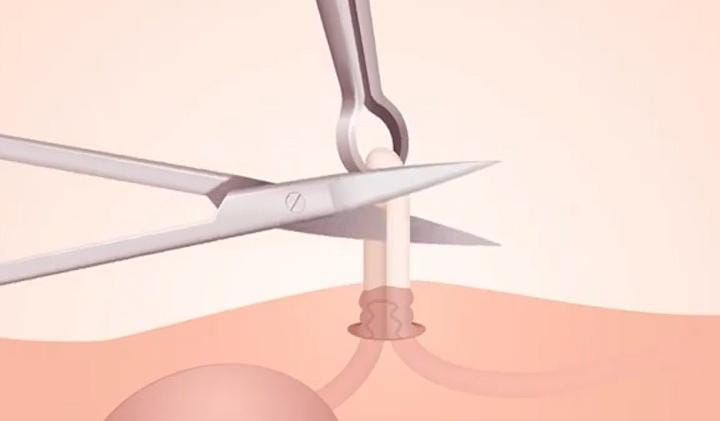
“So we go into the scrotum, somewhere on top of the scrotum, make a little cut to retrieve a wormlike tube that carry the sperms and then tie it and cut it off. So there’s no connection at all. The sperms are made but they can’t flow out because we have disconnected it and we have tied it.”
He says concerns that vasectomy affects masculinity or sexual performance are misconceptions.
“It doesn’t affect the semen volume. It doesn’t cause changes in the orgasm. You get orgasm as well. And it doesn’t cause erectile dysfunction at all. So, when you do a vasectomy, if you’re not careful, you can’t even tell anything has happened at all.”
Although vasectomy is intended to be a permanent method of contraception, some men may later wish to have children again.
“Vasectomy is a permanent procedure. When we tie it off and cut it off, we don’t intend to come back and reverse it. So, we normally advise if people have finished their family and have had all their children then we can come and do your vasectomy. A few times people have come for us to reverse it. In fact, what we know is that after five years of having done a vasectomy, if you come back that we should reverse it, sometimes the chances of getting a reversal can be quite low.”
United Nations estimates indicate that about 17 million women worldwide rely on their partners’ vasectomies as a contraceptive method, compared with 219 million women who have undergone female sterilization, based on 2020 estimates.
Research also shows that vasectomy use remains negligible across much of sub-Saharan Africa, with prevalence rates well below one per cent.
Also, the Ghana Health Service says uptake of vasectomy in Ghana also remains low.
Dr Doris Amarteifio is the programme manager, family planning program at the Ghana Health Service.
“The Ghana Demographic and Health Survey and then other studies that have been conducted around 2006-2009 suggest that only about 0.5% of men are using vasectomy in Ghana. So, the figures are very low.”
She says addressing misconceptions, improving education and making services more accessible to men are essential to increasing uptake.
“We already have what we call male involvement at our family planning units, at our antenatal care clinics where we involve the males. But we are going to do it more.
We will involve some of these men who have undergone the procedure so that all the myths and misconceptions can be challenged. We need to also have good referral systems. Also, where we are also having the services available, we rather have to increase the service provided, that is the doctors who perform the vasectomy.”
As calls grow for greater male involvement in family planning, the question remains whether increased education, awareness and access will encourage more men to consider vasectomy.
Stakeholders call for uninterrupted supply of Family Planning commodities
By Samuel Yeboah Adams