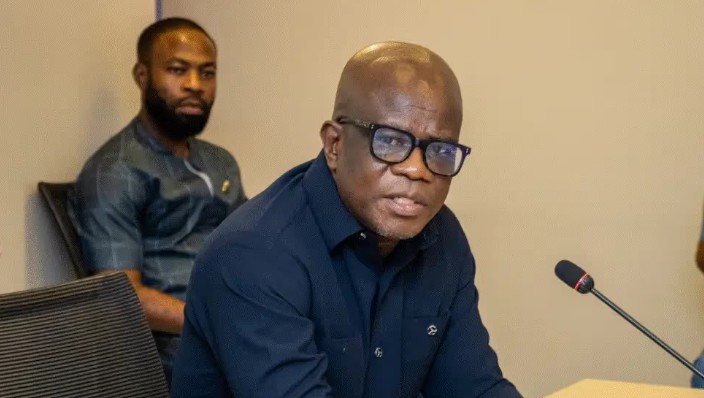

The Director-General of the State Interests and Governance Authority (SIGA), Michael Kpessa-Whyte, has cautioned state-owned enterprises (SOEs) against financial indiscipline, urging chief executives to exercise prudence in the use of public funds and avoid paying bonuses while recording losses.
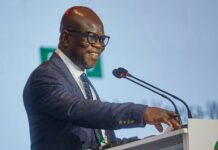
Addressing executives and board members at the SIGA Stakeholders’ Conference 2026 in Accra, Prof. Kpessa-Whyte stressed that public funds must be treated as a responsibility rather than a privilege.
He warned that wasteful spending, avoidable travel, and poor procurement decisions undermine the credibility and sustainability of state enterprises.
“Public funds are not comfort. They are duty. Spend to deliver results, to maintain assets, to improve service quality, and to expand productive capacity,” he told participants, adding that decisions that create future liabilities should be avoided.
He also described the payment of bonuses by loss-making SOEs as unacceptable and contrary to basic business principles. According to him, SIGA closely monitors the financial activities of all specified entities and can track revenue and expenditure patterns, making it difficult for such practices to go unnoticed.
“You are doing business. You are not making any profits—in fact, you are making losses—and then you are paying yourself bonuses. Nobody would do that in a private business,” he said, warning that such actions constitute a breach of established financial directives.
The Director-General used the platform to outline broader reforms being pursued by SIGA to strengthen the performance and governance of SOEs. Chief among these is the development of a 10-year portfolio management strategy aimed at repositioning state enterprises from being a fiscal burden to becoming financially sustainable national assets.
The strategy, he explained, will benchmark Ghana’s public enterprises against global best practices while strengthening business models, governance systems, and financing policies. The ultimate objective is to enable SOEs to contribute more consistently to national economic growth, including GDP expansion, employment creation, foreign exchange generation, and increased dividends to the state.
Prof. Kpessa-Whyte further called on boards and management teams to prioritise corporate governance, enforce internal controls, and eliminate conflicts of interest in procurement and recruitment processes. He noted that weak controls often lead to financial leakages, reputational damage, and declining public trust in state institutions.
He also revealed that SIGA is developing dividend payment guidelines to create a more transparent and predictable framework for remitting earnings to the state, in line with the country’s public financial management laws.
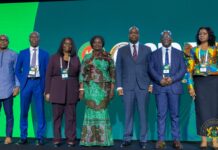
The conference brought together heads of specified entities, policymakers, and development partners to review the performance of public enterprises and discuss strategies for improving efficiency, profitability, and accountability across the sector.