
Amnesty International Ghana has called on the government to urgently pass legislation criminalising witchcraft accusations, six years after the lynching of 90-year-old Akua Denteh.
In a statement issued on Wednesday, July 23, the human rights organisation said the continued delay in enacting the Anti-Witchcraft Accusations Bill has left hundreds of victims without adequate legal protection.
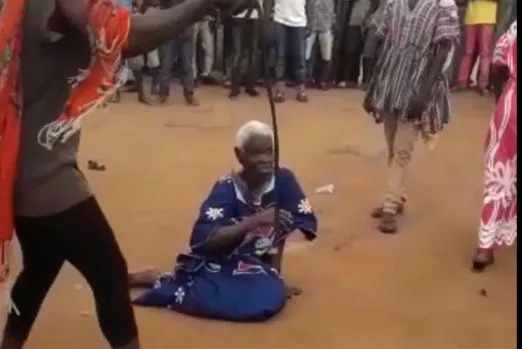
Akua Denteh was beaten to death on July 23, 2020, after being accused of witchcraft in Kafaba in the Savannah Region. Two women captured in a widely circulated video assaulting her were convicted of manslaughter and sentenced to 12 years’ imprisonment in 2023.
According to Amnesty International, many other women accused of witchcraft have since been forced to flee their communities for fear of violence, with some seeking refuge in camps overseen by religious leaders.
“Akua’s case is just one of the heart-wrenching examples of the dire consequences of witchcraft accusations. This tragic anniversary is a stark reminder of the urgent need to prevent further atrocities and ensure that innocent lives are protected,” Lamnatu Adam, Executive Director of Songtaba, an Amnesty International partner organisation, said.
Amnesty noted that Parliament passed the Anti-Witchcraft Accusations Bill in July 2023. The proposed legislation seeks to criminalise witchcraft accusations, establish protection and support mechanisms for victims, and provide legal avenues for justice and compensation.
However, the bill did not receive presidential assent before former President Nana Akufo-Addo left office. According to Amnesty, the former President raised constitutional concerns because it had been introduced as a private member’s bill rather than a government-sponsored bill.
The organisation said no new version of the legislation has since been reintroduced in Parliament.
“The Ghanaian authorities must no longer delay protection, justice and reparations for women accused of witchcraft. We believe that the bill, once adopted, could significantly enhance the protection of human rights in Ghana,” Hannah Osei, Interim Country Director of Amnesty International Ghana, said.
Victims still living in camps
Amnesty said women accused of witchcraft often end up in informal camps after fleeing attacks and ostracism from their communities.
It cited its 2025 report, Branded for Life, which documented poor living conditions in four camps, including limited access to healthcare, food, clean water, housing and livelihood opportunities.
The organisation also shared testimonies from camp residents.
“If we had had a bill in place when this happened to me, I would be at home right now, looking after my grandchildren,” Aishetu Magi, a resident of the Gambaga camp, said.
Another resident, Poona Nantogmah of the Kuoko camp, expressed hope that the legislation would deter future accusations.
“With a bill, the government would be dealing with the accusers and preventing other people from being accused. I really hope that they will pass it,” she said.
Addressing the root causes
Beyond legislation, Amnesty International urged the government to tackle the underlying social and cultural factors that fuel witchcraft accusations through sustained public education and support programmes.
The organisation called for long-term national awareness campaigns, as well as social and economic reintegration programmes, protection and reparations for victims.
According to Amnesty, Ghana ratified the Convention on the Elimination of All Forms of Discrimination against Women (CEDAW) in 1986 and the Convention on the Rights of the Child in 1990, with both treaty bodies recognising witchcraft accusations as a harmful practice.
The organisation also disclosed that a petition it launched in November 2025 calling for the passage of the Anti-Witchcraft Accusations Bill has attracted nearly 19,000 signatures.
By Joseph Armstrong Gold-Alorgbey