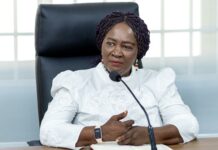
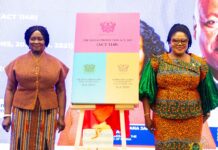
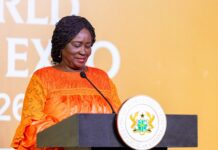
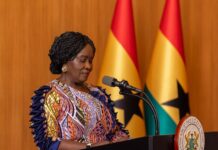
The Progressive Organisation for Women’s Advancement (POWA) says Professor Naana Jane Opoku-Agyemang should be assessed as a national leader rather than held disproportionately responsible for issues affecting women and girls.
POWA criticised what it describes as growing attempts to subject the Vice President to disproportionate criticism over issues affecting women and girls because she is the country’s first female Vice President.
In a press statement signed by its Founder and President, Dr. Victoria Lakshmi Hamah, the organisation argued that the Vice President’s gender should not make her the default person held responsible for every challenge confronting women and girls in Ghana.
POWA stressed that although protecting the rights and welfare of women and girls remains a national priority, the Vice President must be recognised and assessed within the broader responsibilities of her office.
“Professor Jane Naana Opoku-Agyemang is the Vice President of Ghana, not merely the Vice President for women and girls,” the statement said.
The organisation noted that the Vice President’s responsibilities extend beyond gender-related issues to include economic transformation, education, institutional development, social protection, international relations and other matters of national importance.
POWA maintained that the historic significance of Professor Opoku-Agyemang’s election to the vice presidency should expand opportunities for women in leadership rather than limit the scope of their responsibilities.
According to the organisation, it would be contradictory to celebrate the achievement of the first female Vice President while expecting her public identity and leadership to revolve exclusively around issues concerning women.
It argued that women must be recognised as capable of leading across all sectors of national life and should not be confined to responsibilities traditionally associated with their gender.
The organisation acknowledged that women in leadership have an important role to play in advancing gender equality and protecting vulnerable groups.
However, it emphasised that such responsibilities must be exercised within the broader framework of institutional mandates, collective governance and the rule of law.
POWA further argued that attaining high political office should not expose a woman to additional expectations that would not ordinarily be imposed on her male counterparts.
The organisation also called for greater recognition of the institutions mandated to address challenges affecting women, children and vulnerable persons.
It identified the Ministry of Gender, Children and Social Protection, the Domestic Violence and Victim Support Unit (DOVVSU) of the Ghana Police Service, the Commission on Human Rights and Administrative Justice (CHRAJ), and the courts as key institutions responsible for addressing such concerns.
POWA called for these institutions to be empowered, adequately resourced and held accountable for the effective discharge of their responsibilities.
While acknowledging that the Vice President can provide leadership, support policy reforms, promote institutional coordination and advocate stronger protections for women and girls, the organisation said she should not be expected to perform the functions of institutions legally mandated to investigate complaints, protect victims, enforce the law and administer justice.
It stressed that institutional responsibilities must be respected to ensure effective governance and accountability.
POWA urged members of the public and political actors to distinguish between the legitimate expectation that national leaders should support women’s rights and what it considers an unreasonable demand for one individual to personally account for every incident affecting women and girls.
The organisation maintained that public officials must remain open to legitimate scrutiny but insisted that accountability should be evidence-based and proportionate to the responsibilities of the office concerned.
It warned that imposing gender-specific expectations on the Vice President simply because she is the first woman to occupy the position would be neither fair nor progressive.
According to POWA, the welfare of women and girls is a shared national responsibility that requires the involvement of government, Parliament, law enforcement agencies, the judiciary, civil society organisations, traditional authorities, families and communities.
The organisation called on political parties to place the protection and advancement of women above partisan considerations.
It also urged political actors and the public to promote a political culture in which women leaders are assessed fairly, public institutions are held accountable, and public debate contributes meaningfully to national development.
By Evelyn Tengmaa