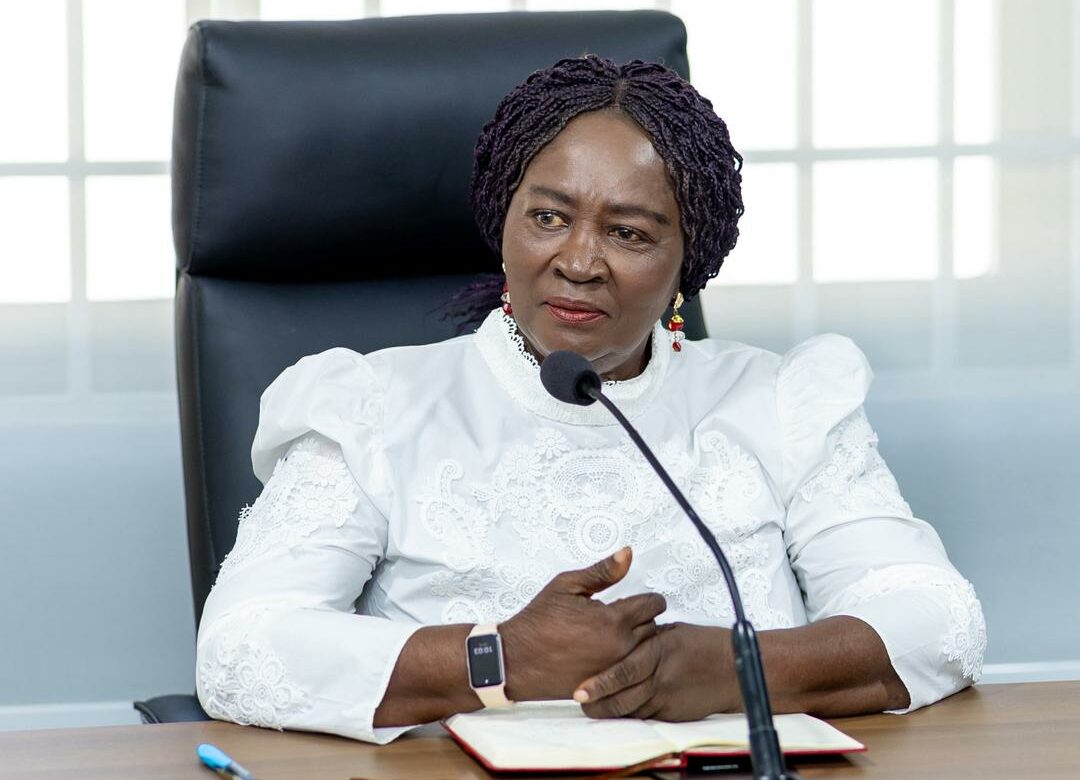

Vice President Professor Naana Jane Opoku-Agyemang has called on Chinese investors to support Ghana’s industrialisation drive by investing in local processing and manufacturing to create jobs, strengthen industries and increase the value derived from the country’s natural resources.
Addressing Chinese business executives in Shanghai, she highlighted investment opportunities in cocoa, shea nuts, cashew nuts, coconut, timber and other raw materials, urging investors to support efforts to transform these commodities into finished and semi-finished products.
She said Ghana must move beyond exporting raw materials and focus on building a strong manufacturing sector capable of generating employment, improve productivity and retain more economic value locally.
Professor Opoku-Agyemang cited timber processing as an example, noting that Ghana could earn greater returns by manufacturing furniture and other finished wood products rather than exporting logs.
According to her, investments in local processing would not only boost industrial growth but also create sustainable employment opportunities for the country’s growing
The Vice President also stressed the need to align technical and vocational education and training with the demands of industry to ensure that young people acquire skills relevant to available jobs.
“Training people for jobs that do not exist is training them for unemployment,” she said.
She noted that expanding investment in productive sectors was essential to creating opportunities for technically trained young people to apply their skills and contribute to national development.
Without sufficient employment opportunities, she warned, the growing number of trained young people could become frustrated.
Professor Opoku-Agyemang reaffirmed Ghana’s readiness to establish mutually beneficial partnerships with Chinese businesses, particularly in manufacturing, logistics and other productive sectors that can support sustainable economic growth.
She also drew attention to opportunities under the African Continental Free Trade Area (AfCFTA), which provides a framework for expanding trade across the continent.
She said Ghana’s strategic position as a gateway to the wider African market offered Chinese investors an opportunity to establish businesses that could serve customers across Africa.
The Vice President, however, emphasised that investment partnerships must deliver tangible benefits to both countries, including job creation, increased productive capacity and stronger business opportunities for Ghanaians.
Professor Opoku-Agyemang also raised concerns about the level of participation by Ghanaian traders in businesses linked to China.
She questioned the opportunities available to Ghanaian traders operating in the Chinese market, particularly whether they could secure ownership stakes in the businesses they support.
Her remarks highlighted the importance of ensuring that economic cooperation between Ghana and China creates opportunities for local entrepreneurs to participate more meaningfully in international trade and investment.
The engagement forms part of Ghana’s broader efforts to deepen economic relations with China and attract investments into sectors that can transform the country’s raw materials into higher-value products.
Ghana produces commodities such as cocoa, cashew, shea and timber, as well as mineral resources including bauxite, lithium and diamonds.
Expanding domestic processing and manufacturing could help create jobs, strengthen local industries, reduce dependence on raw material exports and increase the share of economic value retained within the country.
The Vice President’s engagement with Chinese business executives underscores Ghana’s push for investment partnerships that prioritise industrial development, skills utilisation, local participation and sustainable job creation.
Veep Opoku-Agyemang pushes for a global financial system that does not deepen vulnerability
By Evelyn Tengmaa