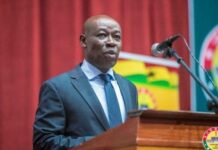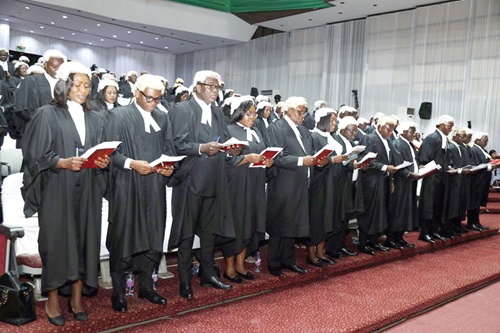

Legal practitioner and law lecturer, Thaddeus Sory, is advocating for a review of the admission process to the Ghana School of Law.
He argues that the current system fosters favouritism and creates unfair advantages in the process of calling individuals to the bar.
Sory contends that the legal system’s perceived lack of transparency raises concerns, suggesting that some individuals being called to the Ghana Bar may not fulfill the requisite academic and attendance criteria.
He points out that the timelines associated with certain individuals’ calls to the bar appear incompatible with meeting the standards established by the Ghana School of Law, prompting him to question the mechanisms enabling their progression.
He explains that students are required to attend lectures regularly and participate in academic activities a certain number of times. However, he notes that there are individuals being called to the Bar who seemingly haven’t met these attendance and participation requirements, leading him to question the processes that enable such persons to qualify as lawyers.
“You suddenly hear that somebody has been called to the bar, and you are wondering at what point in time that person went through the law school,” he said on JoyNews Monday, October 20, 2025.
“Because the person has a schedule which by no miracle the person could have attended that school regularly. By the policy of the school, which says you must attend a number of lectures and participate in a particular way, no miracle could have allowed that person to do it. But yet, they are calling people to the bar. You see the person there,” he explained.
He expressed concerns about the existing system where law faculties across Ghana recommend students for admission to the Ghana School of Law through entrance examinations and interviews.
He contends that this model lacks transparency, consequently undermining its fairness and merit-based principles.
Moving forward, he has advocated for a unified national bar examination that all law graduates must undertake to determine their eligibility to practice law, replacing the current arrangement which he criticises for fostering discretionary practices.
“The law school could still train lawyers,” he explained, “but rather than take people from various universities and say they should write an entrance exam and come for an interview, let them all write one exam. Let there be an overall body to assess which of them is a lawyer. That’s a bar exam.”
Mr. Sory opines his proposal will expunge suspicions of favouritism or unfair advantage in the process of calling people to the Bar.
“At the end of the day, you have to write a national bar exam,” he said. “So I think that it will allow some transparency.”
When asked whether such a move would strip the General Legal Council (GLC) of its powers, Mr. Sory disagreed, saying the Council already has enough responsibilities.
“The GLC has a lot of things to do. They should focus on that and leave the school education,” he said.
Gov’t to introduce National Bar Exam to replace Ghana School of Law system – Attorney-General