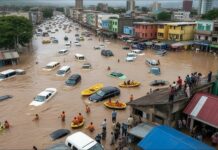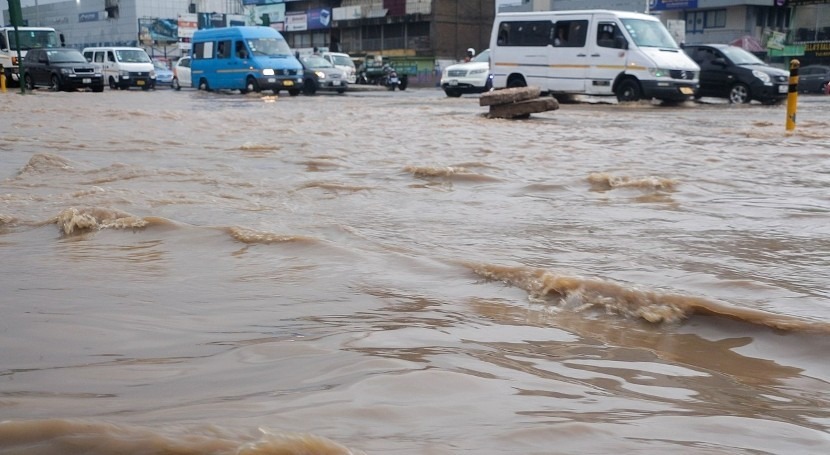

The morning after Wednesday’s catastrophic downpour, Accra woke up to a familiar, painful post-mortem.
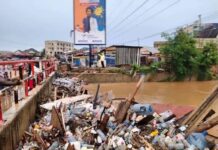
We saw the heartbreaking images of the structural collapse at Adenta New Site, heard the frantic accounts of the fire crews dealing with dual flood-and-fire emergencies in Oyarifa, and commuters who spent a quarter of their day trapped at the submerged Ashaiman Underbridge.
And, right on cue, the blame game began. The public blames the government for poor drainage, the government blames the public for dumping trash, and activists blame real estate developers.
The truth is, everyone is right, and everyone is wrong. Accra’s perennial flooding is not a single-issue problem; it is a three-headed monster fueled by obsolete engineering, state regulatory indiscipline, and widespread civic lawlessness. To fix the capital, we have to look into the mirror and dissect all three layers of this structural failure.
Let’s start with the literal foundations of the city. The most glaring, undeniable truth is that Accra’s drainage infrastructure is fundamentally broken, hopelessly outdated, and vastly undersized. Much of Accra’s core underground drainage network was conceptualized decades ago, and since then, the city’s population has exploded exponentially.
We are trying to channel the stormwater runoff of a massive, paved metropolis through channels designed for a suburban 1970s landscape. As the city has grown, green spaces and hillsides have been paved over, meaning rainwater that used to slowly soak into the earth now instantly hits concrete.
Civil engineers call this a flash runoff. Because our primary drains, like the Odaw basin, are shallow and narrow, they reach maximum capacity within twenty minutes of a heavy downpour, forcing the excess water onto our roads and into our homes.
However, engineering can only do so much when the state itself acts with profound indiscipline. The chaotic nature of Accra’s urban sprawl is a direct result of weak enforcement and regulatory corruption at the municipal level.
Municipal Assemblies routinely issue building permits to wealthy developers and individuals to construct massive commercial plazas, gated estates, and multi-storey complexes right in known floodplains and natural retention basins.
This lack of zoning enforcement means that when individuals build without permits and block vital drainage paths, enforcement agencies look the other way for years. These natural wetlands and retention ponds are not empty, wasted spaces; they are thousands-of-years-old ecological infrastructure designed by nature to hold millions of gallons of excess water until it can safely recede.
When they are systematically filled with sand and replaced with concrete, the water doesn’t simply disappear because someone has a land title. It finds the path of least resistance, which happens to be the living rooms of ordinary citizens.
Furthermore, we cannot talk about the failures of the state without talking about the culture of our streets. The finest, most advanced engineering in the world will fail if the populace treats the drainage system as a public waste bin.
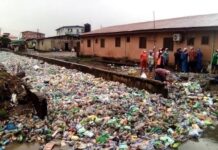
The moment the sky darkens, a deeply troubling phenomenon occurs across many neighborhoods in Accra: households rush out to dump bags of domestic refuse, plastics, and solid waste into open, rushing gutters, hoping the rain will wash it away.
This trash doesn’t vanish. It migrates down the network, accumulating at critical culverts, bridges, and underpasses. By the time the heaviest volume of stormwater arrives, the drains are already physically blocked by mountains of plastic bottles and compacted silt, causing the water to violently back up into residential areas.
The hard truth is that while a permit-holder blocks the floodplains with concrete, the ordinary citizen chokes the existing arteries with plastic.
Accra is trapped in a vicious cycle because we refuse to tackle all three sides of this triangle simultaneously. Desilting gutters weeks into the rainy season is like using a teacup to bail water out of a sinking canoe. Fixing this crisis requires a massive, coordinated three-pronged strategy.
First, we need an engineering overhaul that transitions from open, narrow gutters to deep, subterranean, high-capacity drainage systems coupled with engineered storm-water retention ponds.
Second, we must enforce absolute regulatory zero-tolerance, blacklisting and criminally prosecuting municipal officials who sign off on permits in waterways, while carrying out immediate, uncompromised demolitions of structures blocking natural channels.
Finally, we need a civic awakening that moves past polite sanitation campaigns and enforces strict, punitive legal fines or community service sentences for littering and illegal dumping.
Until we accept that our floods are a joint venture between an unequipped infrastructure, a compromised state, and an undisciplined public, Wednesday night will keep repeating itself.
The clouds will gather, the rain will fall, and Accra will continue to pay for its shared indiscipline in property, tears, and human lives.
By Gideon Agyemang