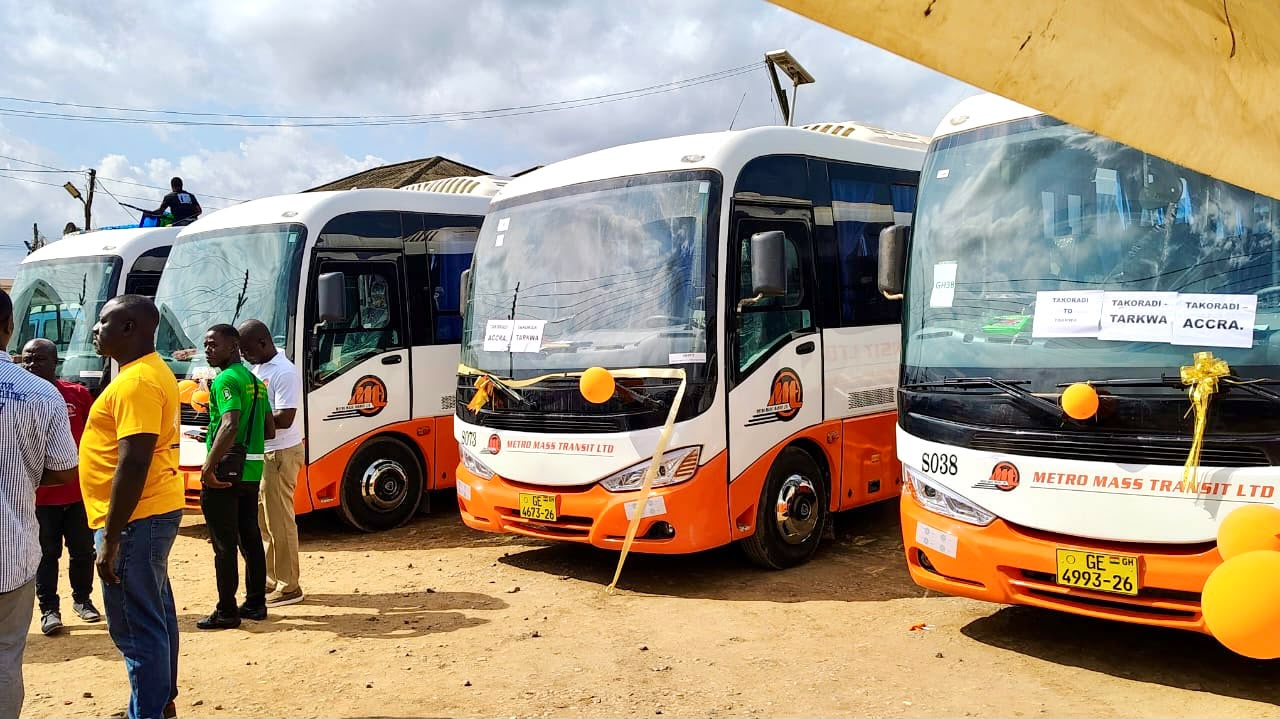

The Western Regional Office of Metro Mass Transit (MMT) has taken delivery of 11 brand-new buses as part of a nationwide fleet renewal programme aimed at restoring the fortunes of the struggling state-owned transport company.
The buses, unveiled in Sekondi-Takoradi, form part of the first batch of 100 new buses recently procured by the government to bolster Metro Mass operations across the country.
The acquisition is expected to improve service delivery, expand route coverage and provide affordable transportation to commuters, particularly in underserved communities.
For more than a decade, Metro Mass Transit has grappled with severe operational challenges that have significantly diminished its once dominant position in the public transport sector.
Aging and broken-down buses, inadequate maintenance regimes, shortages of spare parts, financial constraints and declining fleet capacity have forced the company to suspend several routes, leaving commuters increasingly reliant on private transport operators.
Recent figures indicate that the company’s operational fleet had dwindled dramatically from its peak years, severely affecting service reliability and public confidence.
The John Mahama administration has identified the revitalisation of Metro Mass Transit as a key component of its transport sector reset agenda. Plans are underway to procure hundreds of additional buses and restructure operations to restore efficiency and profitability.
The broader programme is intended to enhance mobility, improve access to affordable transportation and reconnect Metro Mass with its core mandate of serving ordinary Ghanaians.
Speaking at the commissioning ceremony, Western Regional Minister Joseph Nelson emphasized on the need for managers to justify government’s investment.
“This is an express manifestation of government’s promise to reset Metro Mass onto a new and sustained path. You are too familiar with what led to your inability to function. You have been given a second chance and the onus lies heavily on you to justify this new opportunity.”
He cautioned Management and staff against the culture of neglect often associated with state-owned enterprises.
“Often, the impression is that because it belongs to government, there is little or no care. Remember, it is your ability to keep your operations right that will encourage government to do more. There is no joy in you coming to work and sitting idle. I will therefore entreat you to handle the buses as though you bought them with your own money. Work diligently and government will have a good reason to add more.”
The Regional Minister further urged Metro Mass Management to adopt innovative strategies to win back passengers who have migrated to competing transport services.
“Orientate the drivers and conductors to demonstrate good human relations and effective communication skills in dealing with passengers. The travelling public must see a renewed Metro Mass Transit.”
Prior to the arrival of the new buses, Metro Mass in the Western Region had only eight operational buses, with several others grounded at the regional depot due to mechanical faults and years of neglect.
Regional Manager Albert Asahen said the additional buses would immediately improve operations and allow the company to reactivate suspended routes.
“Before the buses arrived, the Management team and I held a series of engagements to devise new and proven strategies to ensure our operations reflect the confidence government has reposed in us. There will be regular refresher training programmes to improve customer engagement and ensure the buses are properly maintained to stand the test of time.”
Mr. Asahen also disclosed plans to modernise the company’s terminal facilities to improve competitiveness and enhance the passenger experience.
“We intend to take full control of our terminal, undertake the necessary modifications and upgrade it to meet modern transport terminal standards.”
The arrival of the new fleet has already generated excitement among commuters, many of whom remember Metro Mass as one of the country’s most reliable and affordable transport services.
However, passengers have also cautioned that the long-term success of the intervention will depend on strict maintenance schedules, effective supervision and a commitment to customer service, factors many believe contributed to the company’s decline in recent years.
By Eric Yaw Adjei