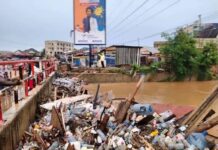

The National Disaster Management Organisation (NADMO) says it has not received any distress calls following continuous rainfall across parts of the country on June 6, 2026, but is maintaining full alert as weather conditions point to possible flash floods.
The Director of the NADMO Inspectorate Unit, Richard Amo Yartey, says response teams have been deployed to the field and are actively monitoring developments across flood-prone communities.
Speaking on the recent rains, he noted that the intensity has varied across locations, with some areas experiencing light drizzle while others recorded heavier downpours.
“As I speak, our teams are on the field assessing the situation to determine the next line of action. We are ready,” he said on June 6 on The KeyPoints.
He explained that although the rainfall in the morning of June 6 did not trigger emergency distress calls, the agency is particularly concerned about the risk of flash floods if rains persist over several days.
According to him, earlier rainfall patterns already indicated the possibility of flooding in low-lying and saturated areas.
“We have had no distress calls so far, but we are monitoring closely. If the rain continues for two or three days, the ground becomes saturated and that is when flash floods become likely,” he said.
Mr. Yartey also referenced coordination with the Ghana Meteorological Agency, saying forecasts suggest continued rainfall throughout June and July, though patterns remain unpredictable due to climate variability.
“We are expecting more rainfall based on the outlook, but climate change has altered the patterns. Sometimes you expect rain and it doesn’t come, other times it comes heavily when not expected,” he explained.
He stressed that NADMO remains in constant communication with field officers and emergency response teams to ensure rapid action when needed.
Addressing recent images and videos of flooding in areas such as Lakeside, he attributed the situation largely to poor drainage systems, encroachment on waterways, and the loss of wetlands.
“Flood control is not only about response. It starts with proper planning. Many wetlands that used to absorb excess water have been built on or reclaimed,” he said.
He added that indiscriminate waste disposal and construction on waterways continue to worsen flooding incidents in urban communities.
“When people dump refuse into drains or build too close to drainage channels, it blocks the flow of water. That is a major contributor to the flooding we see,” he noted.
Mr. Yartey emphasized that while NADMO plays a key role in emergency response, responsibility for planning and enforcement lies largely with local assemblies and planning authorities.
He called for stronger collaboration between agencies to clear drainage channels and enforce building regulations to reduce future flooding risks.
“Development control rests with the assemblies. We only come in when there is a disaster. We must all work together to keep drainage paths clear,” he said.
By Christabel Success Treve