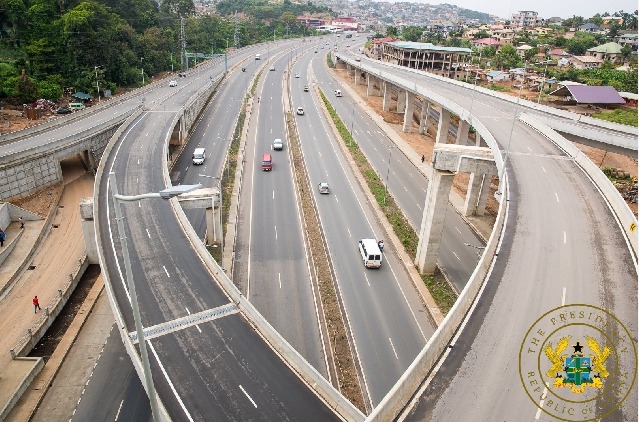

A road project does not fail only on paper. It fails in the life of a pregnant woman trapped on a muddy road, a farmer watching food rot because trucks cannot reach the farm, a driver spending his profit at the mechanic shop, and a schoolchild walking through dust every morning.
That is why Ghana’s Big Push cannot be treated as just another government programme. If it succeeds, communities will breathe. If it fails, the poor will pay first.
Ghana does not lack big infrastructure promises. What the country lacks is the discipline to complete many of them. That is why the government’s Big Push infrastructure programme has attracted both hope and caution.
On paper, the idea is attractive. Ghana needs better roads, bridges, drainage systems, markets, health facilities and other public infrastructure. No serious country can grow when farmers struggle to transport food, drivers destroy their vehicles on bad roads, communities flood after heavy rains, and businesses lose time and money because of poor transport networks.
So, in principle, the Big Push is not the problem. The real question is whether Ghana has learnt enough from its long history of abandoned projects, delayed payments, weak supervision, political procurement, and poor contractor performance.
Government has described the Big Push as a major infrastructure drive intended to close Ghana’s infrastructure gap and support long-term economic growth. In 2025, the Ministry of Finance said government planned to invest about GH¢13.9 billion in priority infrastructure projects under the initiative. That ambition is welcome. But ambition alone does not build roads.
Ghana has seen too many sod-cutting ceremonies, too many signboards, too many contract announcements and too many communities left waiting while contractors vanish from sites. The danger is that the Big Push may become another beautiful political slogan if it is not backed by reliable funding, strict supervision, transparent procurement and real punishment for failure.
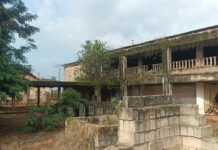
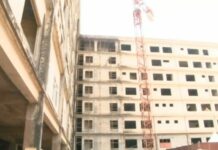
Ghana is already full of infrastructure ghosts: roads started and abandoned, drains half-built, bridges promised but never completed, and signboards standing like tombstones over failed contracts. The Big Push must not add more names to this graveyard of unfinished projects.
One of the biggest concerns is funding. Ghana has a painful history of awarding contracts before securing the money to complete them. When that happens, contractors move to site, do a little work, leave the road worse than before, and later blame government for non-payment. Communities then suffer twice: first from the original bad road, and again from the abandoned construction site.
This concern is not imaginary. Roads and Highways Minister Governs Kwame Agbodza has said that 23 road projects valued at about GH¢14.88 billion, previously abandoned because of funding challenges, had been absorbed into the Big Push programme.
On one hand, this may be good news because abandoned projects could finally be completed. On the other hand, it raises a serious question: is the Big Push solving the original problem, or simply repackaging old failures under a new name?
If abandoned projects are being moved into the Big Push, citizens deserve to know why those projects failed in the first place. Was it because government did not pay? Was it because contractors lacked capacity? Were the projects overpriced? Were contracts awarded for political reasons? Without honest answers, Ghana risks repeating the same mistakes with even larger sums of money.
Another concern is the prioritisation of local contractors. Supporting Ghanaian contractors is good. It can create jobs, build local technical expertise and keep more money in the Ghanaian economy. But local participation must not become an excuse for poor performance.
Ghana should support local contractors, but it must support competent local contractors. A contractor should not win a public contract simply because the company is Ghanaian or politically connected. The contractor must have the machines, technical staff, financial strength and track record to deliver.
A contractor who wins a public road contract and fails to deliver is not merely disappointing government. He is betraying the community. Every abandoned site is a broken promise to traders, farmers, drivers, students and patients.
If the Big Push rewards contractors who are politically connected but technically weak, then the programme will not build Ghana. It will only expose Ghana’s old disease in a new uniform.
There is also the hidden danger of political speed: the pressure to complete projects quickly so they can be commissioned, photographed and used as evidence of performance. Deadlines are important because they prevent unnecessary delays and force contractors to take projects seriously.
But roads do not survive on political timelines. They survive on proper drainage, strong foundations, quality materials, good engineering and honest supervision.
A road is not just asphalt spread on the ground. It requires drainage, soil preparation, compaction, quality materials and proper testing. If contractors are pressured to meet unrealistic deadlines, they may cut corners.
The road may look beautiful on commissioning day, but after one or two rainy seasons, potholes appear, shoulders collapse, drains fail, and the country returns to square one. A rushed road may win applause on commissioning day, but the potholes will eventually tell the truth.
Ghana does not need roads that look good only for cameras. It needs roads that can survive heavy trucks, floods, heat and years of daily use. A road completed quickly but poorly is not progress. It is delayed failure.
This is why strict timelines must go hand in hand with strict quality control. Engineers must be allowed to do their work without political interference. Materials must be tested. Supervisors must reject poor work, even if a deadline is approaching. It is better for a road to take a little longer and last many years than to be rushed, commissioned and destroyed within a short time.
Procurement and accountability are also major concerns. The Ghana Institution of Engineering has called for an independent technical audit of Big Push road projects, citing public concern over procurement practices and project delivery.
That call should not be dismissed. Engineers understand that infrastructure is not just about contract values and political speeches. It is about durability, safety, design quality and value for money.
The public must be able to track every Big Push project. Citizens should know the contractor’s name, contract amount, funding source, start date, completion date, amount paid, percentage completed and reason for any delay.
Publishing project lists is useful, but publication alone is not accountability. Ghana needs active monitoring, public reporting and sanctions when contractors or officials fail.
The most frightening part is that failure will not end with today’s politicians. If billions are committed and projects are poorly executed, future governments will inherit the debts, future taxpayers will pay the bills, and future communities will still be driving on broken roads. Ghana cannot afford to borrow today, build badly tomorrow, and repair the same roads again next year.
The Big Push can succeed, but only if it is managed differently from past projects. Government must avoid spreading money thinly across too many roads. It is better to complete fewer strategic projects properly than to start many and abandon them halfway.
Contractors must be selected based on competence, not connections. Officials who award contracts to weak companies must also be held responsible.
Ghana needs infrastructure, but it also needs honesty. The country does not need another grand announcement that ends in disappointment. It needs roads people can actually drive on, bridges people can safely cross, and projects that improve daily life.
The Big Push is not wrong. What is problematic is the familiar Ghanaian pattern around big projects: weak funding plans, political pressure, questionable procurement, poor supervision, contractor indiscipline and little accountability.
The success of the Big Push will not be measured by the number of contracts awarded. It will be measured by whether ordinary Ghanaians can finally travel without suffering on roads their own taxes paid for.
The Big Push must not become another national story where the contracts were signed, the money was spent, the speeches were made, but the people were still left with dust, mud and excuses.