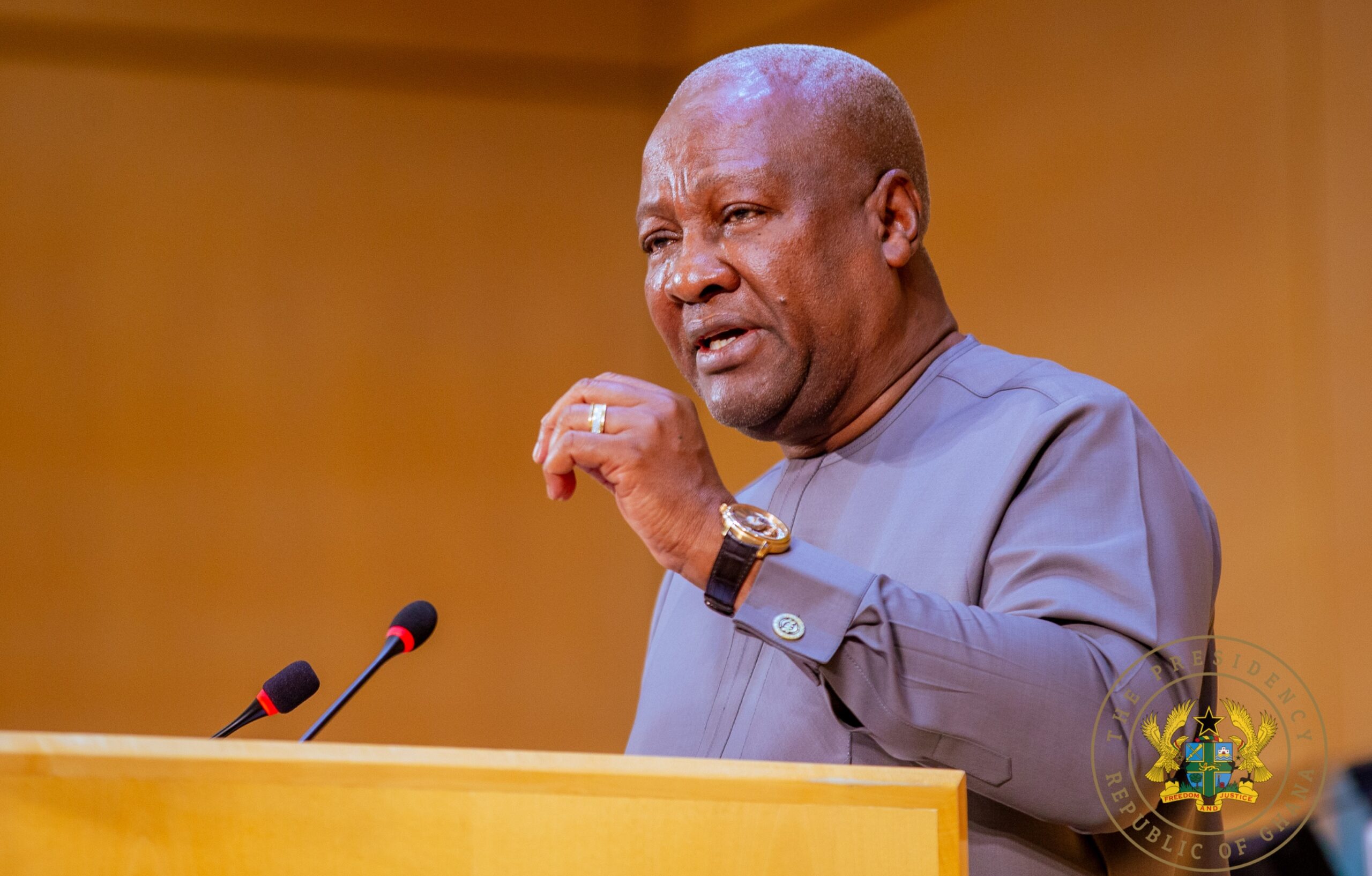

President John Dramani Mahama has disclosed that the United States’ withdrawal of aid programmes made Ghana lose about US$78 million in health support, affecting the country’s healthcare services.
The cut in aid, the President notes, has particularly impacted care for malaria, HIV/AIDS and maternal healthcare services.
According to him, the development has placed additional pressure on parts of the country’s healthcare system, including malaria interventions, maternal and child healthcare, nutrition programmes, HIV testing and the supply of antiretroviral drugs.
Addressing the 79th World Health Assembly in Geneva on Monday, May 18, 2026, President Mahama remarked that the decline in donor support showed that African countries needed to strengthen domestic healthcare financing and reduce dependence on foreign assistance.
“The old system of donor dependency is past its sell-by date,” the President noted.
He added that the withdrawal of support from some Western countries had disrupted healthcare financing across Africa and exposed weaknesses in national health systems.
President Mahama said the World Health Organization had also scaled down some programmes and reduced staff numbers following the withdrawal of US assistance.
These, he noted, will push about 5.7 million people into poverty by the end of 2026.
In response to the development, President Mahama says his administration has increased local investment in the health sector, saying the removal of the cap on the National Health Insurance Fund released an additional GH¢3 billion for healthcare spending, while the 2026 Budget allocated GH¢34 billion to the sector.
Also, Government, President Mahama added, is also deploying digital systems, including artificial intelligence tools, to detect fraudulent claims under the National Health Insurance Scheme.
He further stated that Ghana has started implementing a free primary healthcare programme aimed at widening access to basic healthcare services, particularly in rural communities.
The President said the National Health Insurance Scheme currently covers about 66 per cent of the population, leaving about one-third of Ghanaians outside the system.
Mr Mahama said Ghana was also working towards reducing dependence on vaccine support programmes and hoped to transition away from GAVI assistance by 2030.
He called for reforms within the global health system, warning against reform processes that protected existing institutions without addressing inefficiencies.
“We cannot prioritise institutional comfort over human survival,” he added.
FULL TEXT: Mahama’s address at the 79th World Health Assembly in Geneva, Switzerland