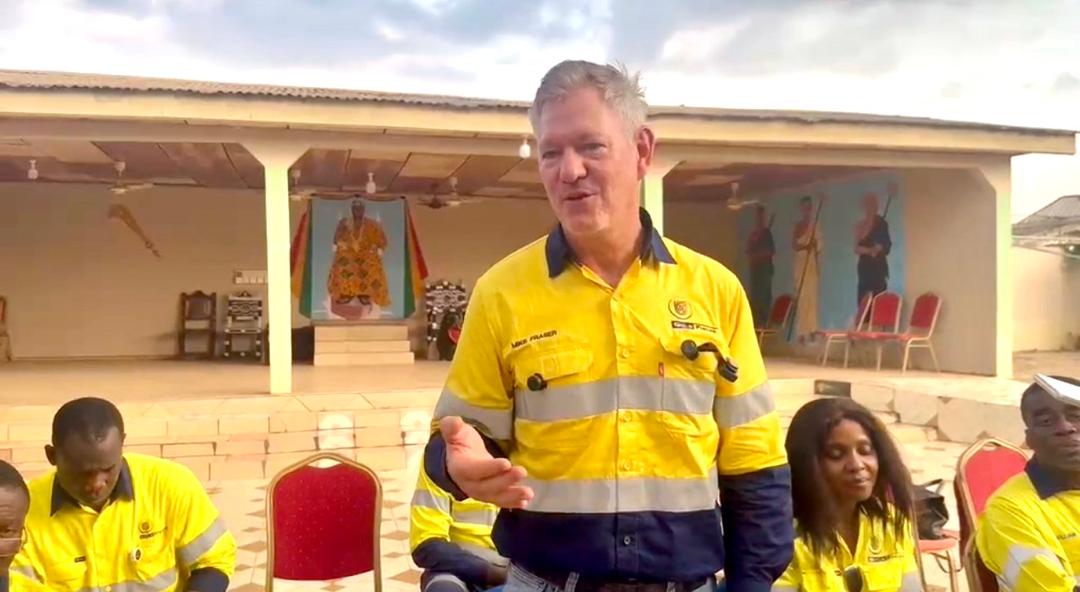

Group Chief Executive of Gold Fields, Mike Fraser says the company is leaving the Damang Mine with the joy that it has been positioned for a robust and sustainable future, capable of maintaining its relevance within Ghana’s extractive sector.
Of significance, he noted, is the mine’s capacity to continuously sustain the local economy, support businesses, and protect the livelihoods of scores of residents whose existence is intrinsically linked to its operations.
Within mining-dependent districts such as the Prestea-Huni Valley Municipal Assembly, such continuity as shown by Gold Fields often underpins a broader socio-economic stability, given the sector’s role in employment, procurement linkages, and local enterprise development.
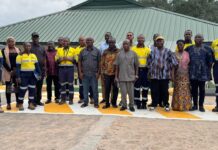
“What we are proud of is that we have set the mine up for a robust and sustainable future… and when we started the conversation with the government about what the future of the mine was, we were very clear that the most important thing for us is that all of those jobs and livelihoods that depended on the Damang mine continue,” he said during a courtesy call on the Apinto Traditional Council at Awudua in the Prestea Huni Valley Municipal Assembly of the Western Region.
Even with the knowledge that the government was taking over the Damang Mine, Gold Fields’ strategy of leaving a defined operational and socio-economic footprint in its host communities remained and supersede any central consideration.
“So, we invested quite a lot in ensuring that we had a plan for the sustainability of Damang and was willing to hand the asset over to ensure the asset was sustainable… what we have seen today is that the work over the last 12 months means that we’ve now got a mine that continues without interruption, and that to us was the most important thing,” he added.
He did not hide the company’s disappointment that the Damang Mine is no longer part of its portfolio, particularly considering a relationship spanning over three decades, marked by sustained production, capital investment, and an established operational footprint within the Western Region and the country at large.
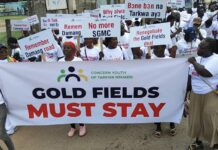
Nevertheless, he gave firm assurance that Gold Fields remains committed to maintaining its operational depth in the country, particularly at the Tarkwa Mine, which continues to serve as a strategic asset within its global portfolio.
“When I think about Tarkwa, it is a really important part of our business. In fact, 25 percent of our production comes out of Ghana… we are not going to give up anyway on Tarkwa,” he said.
Gold fields has submitted a lease extension application for the Tarkwa Mine, seeking to secure at least an additional 20 years of mining. Such long-term extensions are typically aligned with the capital-intensive nature of large-scale mining, where reinvestment in equipment, exploration, and expanded operations is tied to extended operational certainty.
The plan, he explained, will further open up Tarkwa and its environs, reinforcing its position as a hub for gold mining and related economic activity.
“This will require quite a significant amount of reinvestment… additional manpower… over the next 20 years,” he noted, adding that the strategy is designed to position Tarkwa as a world-class asset while creating scope for further life extension beyond the initial lease period.
Already, Gold Fields is engaging relevant authorities on the role it can continue to play in advancing the frontiers of gold mining in the country, reflecting ongoing alignment with national regulatory and investment frameworks.
These sustained investments and engagements, he indicated, are consistent with the company’s broader operational philosophy: “We don’t just mine gold for the sake of our stakeholders… a key part of our strategy is to make a meaningful difference in the host communities in which we operate.”
By Eric Yaw Adjei