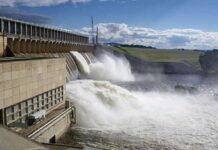
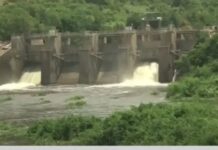
The Weija Dam spillage is a controlled release of excess water by Ghana Water Limited (GWL) to prevent structural failure during heavy rains.
Built in 1977 and operationalized in 1978 on the Densu River, the Weija Dam supplies about 80% of potable water to Accra and its environs.
The Dam features five spillway gates used when water levels exceed safe operating limits (typically above 46 to 47 feet).
On 9th September, Ghana Water officially commenced controlled spillage after water levels rose to 45.2 feet, just below the 46/47-foot threshold.
Some reports even suggested that the spillway was opened a day before.
Now it is clear this is a routine that has taken place for years, but because of encroachment in the downstream area, attention has turned to settlers and the level of risk they may face should there be excess spill.
In an official release ahead of the spillage, GWL mentioned that it has already engaged residents living downstream of the dam to evacuate in case of an emergency.
The directive for these community members to evacuate now hangs at the expense of their lives and properties.
Gloria is a resident within the New Weija Community.
She explains that when the water rises, her place is always at high risk.
“When the water overflows, it comes into our room, destroys our properties and appliances, but we have no option. Rent here is affordable, and that is why we are here.”
Josephine further notes that, even though she has nowhere to go, she has put some measures in place, in case the Ghana Water has to open the other four spillways.
“When it happens like this, I always have to find a place for the children to seek refuge. All my life is here, and I wouldn’t have capital to go and rent another place. What I have done in preparation is to fill my compound to prevent excess water from entering.”
These concerns are not new.
Communities downstream of the Weija Dam have experienced flooding linked to the dam spillage on several occasions.
Somewhere in October 2022, flooding following the release of excess water from the dam left residents stranded and displaced several people.
During the incident, a 55-year-old resident, Kwashe Addi, died after becoming trapped in floodwaters at Tetegu.
This renewed concerns about development within the areas originally intended to serve as buffers for excess water from the dam.
Now, as development expands around the dam and along the Densu River, these natural buffers and waterways for excess water have been encroached upon, increasing the vulnerability of communities when water is released.
While the controlled spillage remains an important part of protecting the Weija Dam, the recurring damage suffered by communities downstream raises a larger question: how long can a routine dam-management exercise continue to pose a recurring threat to people living in its path?
The assembly member for the New Weija West, David Osagyefo Ohene Gyan, believes it is high time the government takes stringent action.
“One thing is, when they move, other people will come. They don’t care whether the water will come and destroy their things or whatever. They don’t care about that. They only care that this place is a very cheap area. Some of them, they are very, very stubborn. When you tell them to leave, they will stay there till the water comes and meets them.”
Meanwhile, the National Disaster Management Organisation says permanent relocation may require political will.
Although it acknowledges that some of the areas beneath the dam were originally intended to serve as buffers, they say there is little they can do about that.
“When the dam was being built, those places beneath the dam area were supposed to serve as buffers, but today, people have encroached on those areas. What we have to do as a disaster management organisation is to try to reduce the risk and save lives and property. For permanent relocation of the people downstream, it becomes a long-term issue. And maybe a time will come that there will be that political will to do resettlement.”
This position rather underscores the gap between short-term disaster response and the longer-term need to address settlements in high-risk areas along the Weija Dam waterway.
Following an assessment tour of some areas which may be adversely affected, the Greater Accra Regional Director for NADMO, Dennis Nartey Adjannor, said measures have been put in place, including machinery which will be positioned at the Densu Estuary to help clear possible obstructions and allow water to flow into the sea.
“We are going to set up one machine here, ready to open up the extra, should we experience heavy flow from the dam area. The communities are now well informed about the possible flooding in the area. Those who are at the low points, we have educated them. For now, everybody is safe, and we will continue to offer 24-hour surveillance in the area.”
According to reports, the Weija-Gbawe Municipal Assembly has announced a $350 million Dam Spillage Flood Control Project, which is expected to begin in December.
The project, they say, is expected to include a high-level reinforced concrete canal from the Weija Dam to the Atlantic Ocean.
Also, it will include a permanent estuary and other infrastructure designed to provide a controlled route for excess water and reduce flooding in downstream communities, all in two years.
The spillage has entered its fourth day, and as communities wait keenly, with the hope that the water will maintain its current level without any excess, their lives hang in the balance.
The immediate priority may be to protect lives and property, but a lasting solution will depend on effective enforcement of buffer zones, appropriate land-use planning, possible relocation of residents in high-risk areas, and the successful implementation of the proposed flood-control infrastructure.
The days that ensue will tell whether changes can be seen.