


Education remains one of the most important pathways through which individuals can escape poverty, acquire knowledge and improve their social and economic circumstances.
For many Ghanaian families, sending a child to university represents years of sacrifice and the hope of a better future. Education, therefore, should not be treated as a luxury accessible only to those who can afford it.
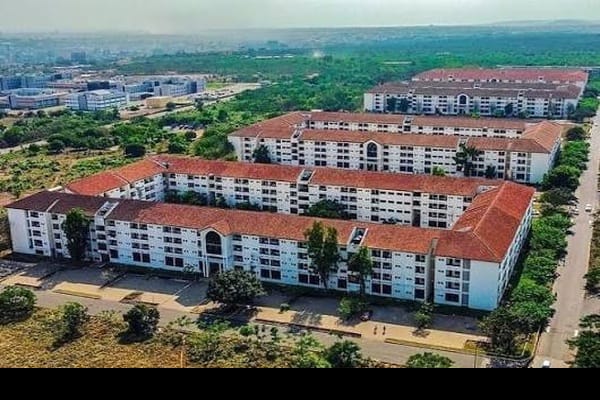
Yet, the rising cost of university education is threatening this aspiration. At the University of Ghana, increasing hostel fees have intensified concerns about affordability, particularly following reports of a proposed 26 per cent increase by the University of Ghana Enterprise Limited (UGEL).
The controversy raises a fundamental question: whether accommodation at a public university should be left to the invisible hands of demand and supply.
Since UGEL assumed responsibility for managing some traditional and diaspora halls on campus, accommodation charges have become a subject of growing concern. When accommodation is treated primarily as a commodity and subject to competitive tendering, students from wealthier households are better positioned to secure available spaces, while those from lower-income families may be forced to seek cheaper accommodation farther from campus or endure less suitable living conditions.
For parents and guardians already struggling with tuition-related expenses, food, transport ation and learning materials, rising accommodation costs create an additional financial burden. Some may resort to borrowing to support their wards, while others risk being unable to sustain their children’s education.
The danger is that access to higher education may increasingly depend not only on academic ability but also on the financial capacity of a student’s family.
To understand the historical context of this debate, Ghana’s experience with the Structural Adjustment Programme (SAP) deserves closer examination.
A declassified World Bank document provides insight into the economic thinking that informed education financing during the structural adjustment era. Paragraph 84, on page 31 of the report, outlines reforms intended to improve efficiency, reduce costs and redirect public expenditure.
It states that “the subsidy costs of education at secondary and university level (feeding and boarding) would be largely shifted to parents who can afford it, making the system more equitable.”
This statement is significant. It envisaged transferring a substantial proportion of feeding and boarding costs from the state to parents who could afford to pay. Although the stated objective was to improve equity and cost-effectiveness, the policy raises an important question: how equitable is a system that transfers educational costs to households whose incomes differ considerably, and whose incomes are swallowed by inflation and exchange rate differentials?
When the cost of education shifts from the state to families, the ability to pay becomes increasingly important. This is particularly concerning in a country where household incomes are often stretched by the rising cost of living. Without adequate financial support, students may struggle to meet accommodation expenses despite possessing the academic qualifications required for university education.
This illustrates an earlier policy orientation towards cost recovery and greater parental responsibility for certain educational expenses. That historical context provides a basis for examining the continuing tension between commercial sustainability and educational equity.
UNESCO’s Education 2030 framework identifies indicative benchmarks of allocating approximately 4–6 per cent of GDP to education, or 15–20 per cent of public expenditure. Ghana’s performance against these benchmarks is approximately 3.1%. The central issue remains: when public funding is insufficient to meet the needs of the education system, how much of the financial burden should be transferred to students and their families?
UGEL may have legitimate operational costs, including maintenance, utilities and investment in hostel facilities. These costs should be examined transparently. However, financial sustainability must be balanced against the university’s educational mission and its responsibility to promote access for students from different economic backgrounds.
Students are entitled to clear explanations of proposed increases, meaningful consultation and evidence that accommodation charges reflect reasonable costs and that students actually experience the services they are paying for.
The University of Ghana and policymakers must therefore explore ways to preserve affordable accommodation. These could include greater transparency in fee calculations, consultation before substantial increases, targeted assistance for financially disadvantaged students and sustainable financing arrangements that distribute costs more fairly.
Ultimately, the controversy surrounding UGEL is about more than hostel prices. It concerns the role of the state, the place of private enterprise in public education and the extent to which families should bear the cost of developing the country’s human capital.
The historical record shows that shifting certain education costs to parents formed part of the policy thinking articulated during Ghana’s structural adjustment era. Whether and to what extent that orientation continues to influence education financing today deserves serious scrutiny.
Ghana must decide whether higher education will remain a pathway to social mobility or become increasingly constrained by the ability to pay. For a country that depends on education to reduce poverty and transform its economy, financial sustainability cannot be pursued at the expense of fairness and opportunity. Education must remain an investment in the nation’s future, not a privilege reserved for those who can afford its rising costs.
By Ishmael Oduro-Acheampong