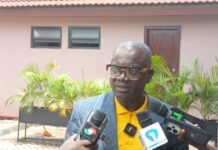

Political Science lecturer at the University of Ghana and member of the New Patriotic Party (NPP), Dr. Joshua Jebuntie Zaato, has questioned the impact of the government’s intention to purify polluted water bodies with nano technology.
Dr. Zaato says although the waters might be clean after the technology is applied, that won’t totally eradicate the ramifications of galamsey on society.
According to him, the chemicals used by illegal miners have already gotten into the soil and affected the crops grown on it.
Speaking on the BigIssue segment of the NewDay morning show on TV3 Wednesday, February 25, 2026, Dr. Zaato suggested that the issue of galamsey should be addressed head-on, since purifying the water bodies will not solve the challenges posed by galamsey.
“The water might be clean, what about the kontomire, what about the cassava, banana? So, you may clean the water but I’m questioning the water that has gotten to the food. The food system is now saturated, now poisoned with galamsey,” he stated.
His comment comes on the back of a revelation by the Chief Executive Officer of the Environmental Protection Authority (EPA), Professor Nana Ama Brown Klutse, that her outfit requires an estimated amount of US$35 million to completely clean up River Birim, which has been heavily polluted by illegal mining activities.
The River Birim, just like many other major rivers in the country, has suffered significant degradation in recent years due to illegal mining, which has severely affected water quality, disrupted aquatic ecosystems, and reduced access to safe water for surrounding communities.
After a pilot application of an Ionic Nano Copper Technology at Kyebi-Adukrom in the Eastern Region on Tuesday, February 24, 2026, Professor Klutse explained that while early results show visible improvement in treated sections of the river, scaling the intervention across the entire stretch will demand substantial funding.
According to her, it costs about US$200,000 to procure enough of the technology to clean one kilometre of a flowing river body, adding that the authority would need about $35 million to restore the river.
“It took us about $200,000 to procure an amount that will clean one kilometre of every flowing river body. Birim River is about 175 kilometres, so you can do the mathematics — we are talking about $35 million,” she said.