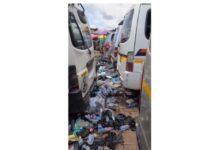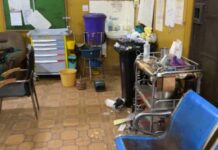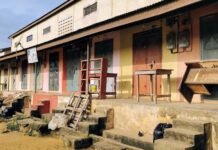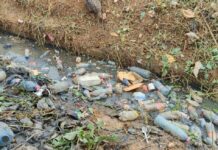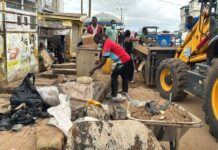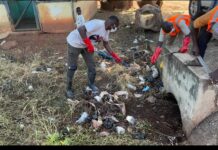

A wave of anger and strong disapproval has swept Sekondi–Takoradi following what was discovered after traders at the Takoradi Jubilee Park were removed and relocated to the Apremdo Central Market.
What was meant to be a simple relocation exercise has instead exposed a much deeper civic failure, highlighting the country’s wider sanitation crisis and, more alarmingly, the often-public health crisis, such as a cholera outbreak.
Among the many towering footprints of the erstwhile Kufour administration is a string of Jubilee Parks built in regional capitals to commemorate 50 years of independence. Their purpose was unambiguous: public recreation and national pride.
But the exigencies of COVID-19 changed that. The Takoradi Jubilee Park was converted into a temporary market, a necessary move at the time, as city authorities sought to decongest existing trading centres and reduce infection risks. It worked for a while. The park became a model intervention, a trading centre that ticked all the right boxes in preventing the spread of COVID-19.

Then, complacency set in. With time, a stark sense of political timidity and fear of retribution at the polls made it impossible for authorities to reclaim the park. Within a few years, the facility had morphed into a bustling, semi-permanent market, attracting traders and transport operators.

A market, by its nature, generates waste. At the Jubilee Park, it came in mountains. Skips were placed at vantage points, but the appearance of control was a disappointing façade. What was meant to be a public monument had unknowingly descended into a makeshift dump characterised by overflowing refuse and stagnant pools of water buzzing with mosquitoes only covered by the brisk trading activities. City authorities had dropped the ball.
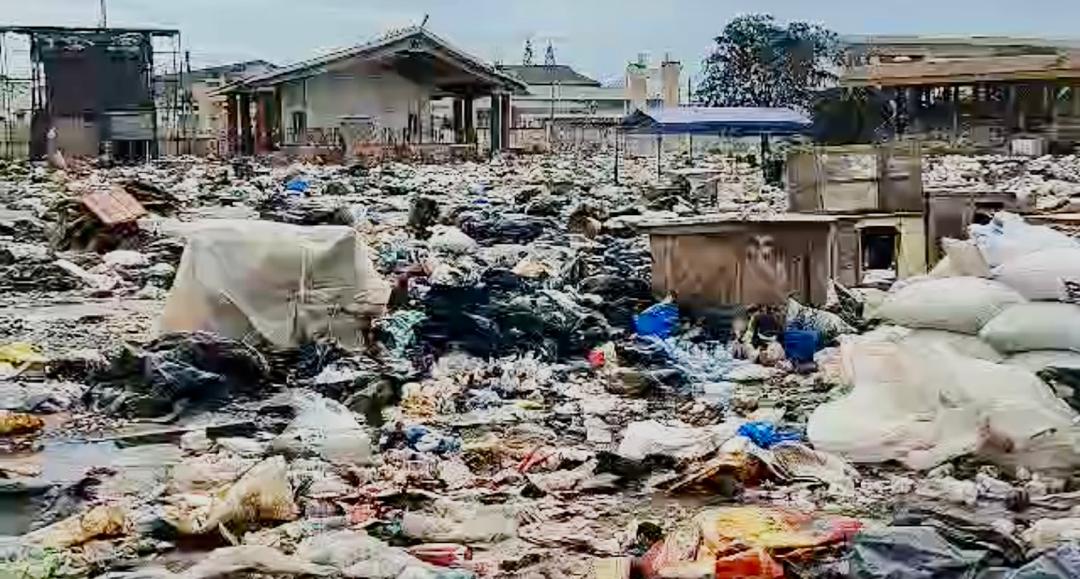
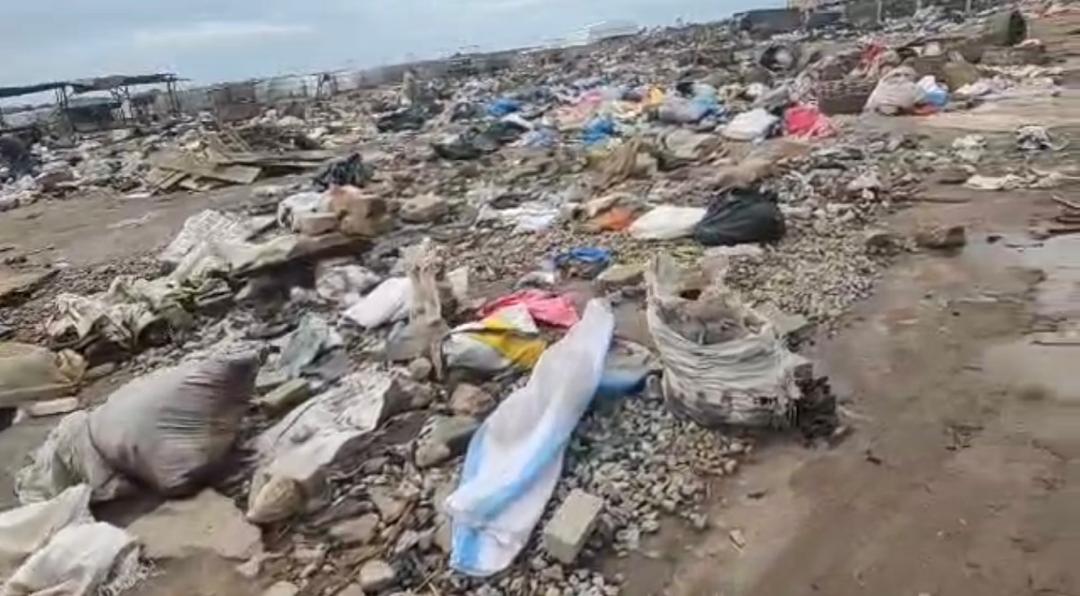
Under the leadership of Effia Kwesimintsim Municipal Chief Executive Abdul Majeed Iddrisu Nassam, and other stakeholders, the traders were finally cleared — though not without resistance. What followed was a scene that many residents described as “nauseating.”
When ConnectNews visited the Jubilee Park, every inch of it was carpeted in filth and dotted with mosquito-infested puddles. It was an eyesore.
“This is sad and a shame. If proper research had been done about the cholera outbreak in the region, it would have been traced to this filthy environment our mothers traded in,” one resident fumed.
Another added, “EKMA should have made the traders come back and clean the dirt before being allocated portions at the new market at Apremdo. This is unacceptable.”

The condemnation on social media has been fierce. Many of the posts and comments monitored by ConnectNews express collective disgust.
“The current state of the Jubilee Park is unfortunate. Looking at its strategic location close to the shopping mall and the Airport, what has been left behind brings the reputation of Sekondi-Takoradi to its lowest ebb. The stench around the area is unbearable.” For another resident, sanitation is another galamsey we don’t talk about.”

For others, the situation is not just a sanitation lapse but a moral failure. “Are we inherently irresponsible? Do we care about ourselves? Or do we just expect someone else to clean up after us?” a frustrated resident wrote. “The rubbish left at the Jubilee Park can best be described as a mountain of shame. Big shame on all who sold there — and bigger shame on the authorities who watched it happen.”
As the Takoradi Market Circle undergoes reconstruction, traders have been conducting business at a temporary market for nearly five years. The discovery at Jubilee Park has reignited public anxiety over what might be festering at these temporary sites. Residents are calling for a sanitation audit before the city finds itself facing another outbreak. The signs are clear: the conditions that, likely, bred cholera at Jubilee Park are beginning to repeat themselves at other trading centres.

However, others argue that the filth seen at these temporary markets and even other well-established ones reflects a disturbing culture of institutional neglect. “City authorities cannot keep blaming traders when skips overflow, drains remain clogged, and refuse is left to rot in the open. What do they use the tolls and other daily charges from the traders for?”
“…what are the lessons that city authorities are taking to the Apremdo Central Market following the discovery at the Jubilee Park? Nothing, if you ask me. Years from now, we will be talking about the same issue. It is a regrettable yet avoidable pattern. We can only hope that this time, city authorities prove us wrong by putting in place stringent deterrents and at the same time heavy punishment for those who litter indiscriminately,” a resident suggested.

The filth left at Jubilee Park presents a perfect yet avoidable scenario for an epidemic, where piles of refuse mix with rainwater, blocked gutters diverting waste into open drains, and traders handling food in unhygienic conditions.
“This is precisely how cholera spreads through contaminated water and poor sanitation. We cannot entirely blame the traders. City authorities must go to work,” another post read.
What is happening in Takoradi is not an isolated incident; it is part of a national pattern of neglect that continues to put lives at risk. While city authorities pretend to work, a much bigger public health crisis quietly lurks.