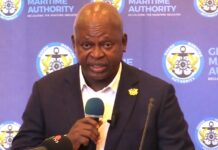

The Transport Minister, Joseph Bukari Nikpe is set to meet with the Ghana Private Roads and Transport Union (GPRTU) and commercial transport operators over the practice of renting vehicles and the creation of artificial scarcity in the transport sector.
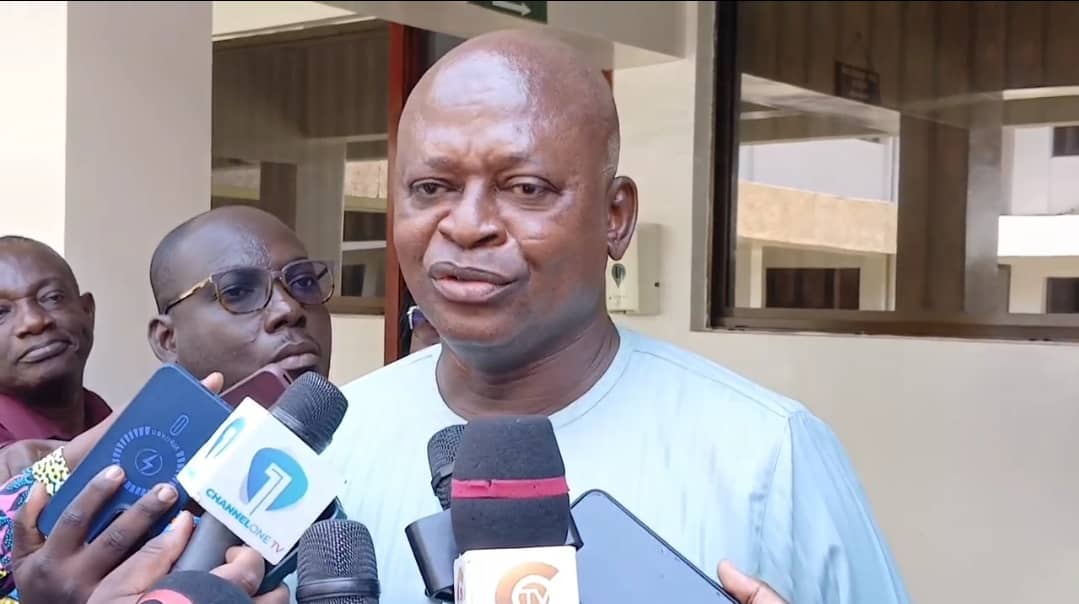
This was disclosed by the Minister for Government Communications, Felix Kwakye Ofosu at the Government Accountability Series on Wednesday, January 14, 2026.
Mr. Kwakye Ofosu claimed that despite decreases in fuel prices and import levies on spare parts, certain commercial vehicle operators are engaged in rent-seeking behavior by restricting vehicle availability to increase transport fares.
“The [Transport] minister also informs me that I think tomorrow or so, he has requested for a meeting with the GPRTU and other transport operators to address the issue of rent-seeking, to call those engaged in that activity to order so that the hardship is alleviated.
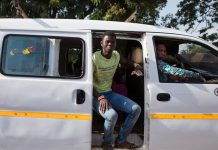
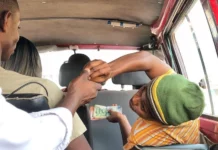
“Now, some of these operators do not go to the designated spots. They roam in the hope that the shortage that is created will compel passengers or commuters to part with more money than they should ordinarily pay.
“They are creating scarcity to drive up prices so that they can engage in rent-seeking behaviour. It is unlawful activity and it must be looked [into],” he said.
Mr. Ofosu stated that in order to increase profits, drivers frequently deliberately create scarcity within the transport system, particularly in urban areas during peak hours.
Accra’s transportation system has gotten worse recently, with commuters having to deal with lengthy queues and exorbitant fares, especially during rush hours.
The problem worsened during the 2025 festive season and still affects passengers in places like Madina, Amasaman, and Kasoa.
Mr. Kwakye Ofosu acknowledged the challenges, stating that morning and evening rush hour commuting within the capital has grown more difficult.
He assured that government is taking the initiative in order to deal with drivers who participate in these illegal activities.
“The case is that the transport sector is largely private-sector-led, so we have bodies such as the GPRTU and other transport unions who organise the systems that convey the public,” he said.
He explained that following successive reductions in fuel prices—which led to a 15% cut in transport fares—some operators have resorted to creating artificial shortages to maximise profits.
“After the persistent reduction in fuel prices, there are some operators who have decided to engage in undue practices by creating artificial shortages,” he said, citing cases where drivers deliberately avoided designated stations, including in areas such as Kwame Nkrumah Circle, instead roaming in search of desperate commuters willing to pay more.
“It is an unlawful activity, and the government is looking at it to ensure that those involved in such behaviour are dealt with,” he added.