
The debate surrounding Ghana’s National Cathedral has, for some time, been reduced to a simple question:
“Is it a church, and is Ghana justified in building it?”
I believe the question deserves a much broader and more informed discussion.
As a logistics and supply chain professional with more than two decades of experience across military logistics, international peace-support operations, humanitarian activities, academia and private-sector supply chain management, I have learned an important lesson about major projects:
A project should not be judged only by what is constructed. It should also be judged by the purpose for which it was conceived, the value it is expected to create, the resources committed to it, how it is governed, and what measurable outcomes it ultimately delivers.
That principle is equally relevant to the National Cathedral.
I am writing this not as a politician, not as a representative of the National Cathedral Secretariat, and not to tell Ghanaians what they must believe.
I am writing as a Ghanaian professional and citizen who believes that national projects deserve informed national debate.
My objective is therefore simple:
Let us understand the National Cathedral properly before we decide whether it is worth the investment.
1. First, What Exactly Is the National Cathedral?
The first misconception that needs to be addressed is that the National Cathedral is simply another large church.
The official project description presents it differently.
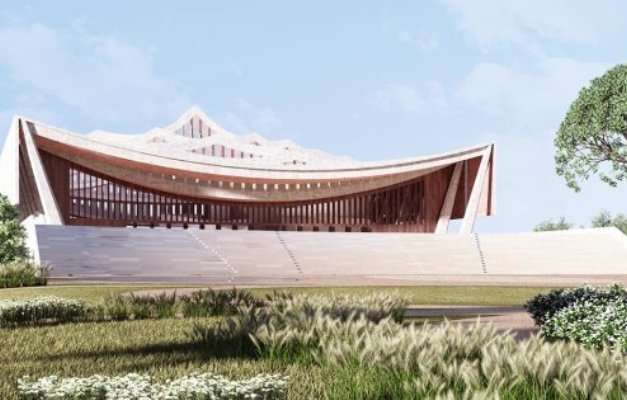
The National Cathedral is conceived as an interdenominational Christian institution intended for national purposes, including formal state occasions of a religious nature such as presidential inaugural services, state funerals and national thanksgiving services.
This distinction matters.
An ordinary church generally exists primarily to serve a congregation or denomination.
The National Cathedral is intended to provide a national space for Christian religious functions while also incorporating other facilities and programmes.
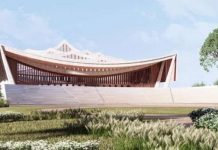
The project’s published plans include:
• A 5,000-seat permanent auditorium
• An auditorium expandable to 15,000 seats
• Chapels
• Prayer rooms
• Baptistery facilities
• Conference facilities
• Grand hall and ballroom facilities
• Restaurant
• Music and choir facilities
• National crypt
• Bible Museum of Africa
• Biblical Gardens
• Other visitor and programme facilities
Therefore, describing the project simply as “a church” does not fully capture what its proponents say they are attempting to create.
At the same time, calling it a “national institution” creates responsibilities.
The broader the national claim, the stronger the obligation to demonstrate value, accountability, sustainability and measurable results.
2. What Is the National Purpose?
According to the project’s official vision, the National Cathedral is intended to provide a sacred space and infrastructure for formal religious activities of national significance. It is described as an interdenominational house of worship and prayer and as a venue for state occasions of a religious nature.
That is an important distinction.
The project is not being presented merely as a facility for ordinary weekly worship.
It is intended to provide infrastructure for occasions that may involve the nation as a whole.
Whether one agrees with the project or not, that is the stated purpose that should be evaluated.
3. Why Should Non-Christian Ghanaians Care?
This is another question that deserves an honest answer.
Ghana is religiously diverse.
Christians form the majority of the population, but Ghana is also home to Muslims, adherents of African traditional religions, people belonging to other faiths and people who do not practise a religion.
Consequently, the word “national” must be treated seriously.
A Christian institution can have national historical, cultural and economic significance without becoming a state church.
The test should be whether it:
• Respects Ghana’s constitutional framework
• Respects religious diversity
• Avoids discrimination
• Contributes to national development
• Preserves heritage
• Supports education and research
• Creates legitimate economic opportunities
• Provides national services where appropriate
• Operates transparently
A national Christian institution should not communicate that Christians are more Ghanaian than other citizens.
Rather, it should demonstrate how a major part of Ghana’s religious and cultural heritage can contribute to the wider national interest.
4. It Is Also a Heritage Project
One of the most important aspects of the project is the proposed Bible Museum of Africa.
The official museum concept describes a facility of more than 100,000 square feet focused on themes including the Bible in the African Church, Africa’s influence on the Bible, Africa and the New Testament, and Africa and the Old Testament. It is also planned to include children’s educational facilities, lecture facilities, a library and temporary exhibition space.
This means the project has a potentially significant historical dimension.
Christianity has influenced Ghanaian history through:
• Education
• Healthcare
• Publishing
• Music
• Literature
• Social organisations
• Community development
• Political and civic life
• Architecture
• Scholarship
A serious museum could preserve documents, artefacts, photographs, manuscripts, oral histories and other records relating to African Christianity.
It could also provide opportunities for researchers studying:
• African Christianity
• Ghanaian religious history
• Bible translation
• Religious education
• African languages
• Music
• Colonial history
• Diaspora history
• Religion and nation-building
That is very different from merely constructing another worship centre.
5. The Museum Should Tell the History Honestly
If the Bible Museum of Africa is to become an important national and international institution, it should not present history only from one perspective.
The history of Christianity in Africa contains both inspiring and complicated chapters.
Christianity contributed significantly to education, healthcare, literacy and social organisation.
But Christianity also became intertwined with European colonial expansion and cultural transformation.
The Bible itself was historically used by some actors to justify slavery and colonial domination, while Christian ideas and institutions were also used by Africans in resistance, education, liberation and the development of civil-rights movements.
The official museum concept itself recognises the complicated relationship between Africa, Christianity and the African Diaspora.
That history deserves serious scholarship.
A world-class museum should therefore not be afraid of difficult history.
It should preserve evidence, encourage research and allow visitors to understand the complexity of Africa’s relationship with Christianity.
6. The Economic Dimension
Now we come to an aspect of the Cathedral that deserves much more public discussion: its potential economic contribution.
The project’s own published material describes an intended “economic engine” incorporating revenue-generating facilities such as multipurpose rental spaces, a large banquet hall, conference facilities, restaurant, café, shop and theatres. The stated objective is to create a model capable of supporting the institution’s financial sustainability rather than depending entirely on donations.
This is an important economic concept.
A major national institution should ideally not simply consume resources.
It should, where possible, generate economic and social value.
7. How Could the Cathedral Contribute to the Ghanaian Economy?
The potential economic benefits could extend across several sectors.
Hospitality
International conferences and religious gatherings can create demand for:
• Hotels
• Guesthouses
• Restaurants
• Catering
• Laundry services
• Hospitality workers
Transportation
Visitors require:
• Taxis
• Buses
• Ride-hailing services
• Tour vehicles
• Vehicle rental
• Airport transfers
Events
Major events require:
• Event managers
• Sound engineers
• Lighting specialists
• Security
• Cleaning
• Decorations
• Catering
• Media
• ICT services
Retail
Visitors may purchase:
• Books
• Religious materials
• Art
• Crafts
• Clothing
• Souvenirs
• Local products
Professional services
The institution could create demand for:
• Accountants
• Lawyers
• Engineers
• ICT professionals
• Researchers
• Tourism professionals
• Museum specialists
• Facility managers
• Security professionals
• Marketing specialists
• Logistics and supply chain management professionals
Small and medium-sized enterprises
SMEs could supply:
• Food
• Printing
• Maintenance
• Cleaning
• Transportation
• Event services
• Security
• Construction materials
• Digital services
This is where the economic concept becomes important.
The value of a major institution is not limited to the money that enters its own accounts.
Its broader value can arise from the economic ecosystem around it.
8. Understanding the Multiplier Effect
Suppose an international visitor comes to Ghana for a conference at the National Cathedral.
The visitor pays for a hotel. The hotel pays workers. The hotel buys food from suppliers. The suppliers purchase agricultural products. The visitor uses transportation. The transport operator buys fuel and maintenance services. The visitor buys souvenirs. The local producer earns income. The producer purchases materials.
One visitor’s expenditure therefore creates several layers of economic activity.
This is broadly the principle behind the economic multiplier effect.
However, we must be careful.
The multiplier effect is not a guarantee that every cedi spent will generate several additional cedis.
The actual impact depends on:
• Local procurement
• Domestic production
• Import dependence
• Visitor spending
• Employment
• Taxation
• Leakage from the economy
• Institutional efficiency
Therefore, the economic impact must ultimately be measured rather than assumed.
9. Religious Tourism: A Potential Opportunity for Ghana
The Cathedral project also presents a potential opportunity for Ghana to develop religious tourism.
Religious tourism is already an important component of international tourism.
People travel because of:
• Faith
• Pilgrimage
• Religious history
• Architecture
• Museums
• Sacred sites
• Religious conferences
• Music
• Cultural experiences
Ghana already has significant religious and heritage assets.
These include historic churches, mission settlements, museums, castles, traditional religious sites, festivals and other cultural attractions.
The National Cathedral could potentially become an anchor within a broader Ghanaian religious and heritage tourism network.
Imagine an international visitor arriving in Ghana for a Christian conference. The visitor attends the conference. Visits the Bible Museum. Visits historic churches. Travels to Cape Coast and Elmina. Experiences Ghanaian culture. Uses local transportation. Stays in a hotel. Eats at Ghanaian restaurants. Purchases locally produced goods.
The economic benefit is no longer confined to the Cathedral.
It spreads through the tourism ecosystem.
10. But Potential Benefits Must Not Be Presented as Guaranteed Benefits
This is where responsible public discussion becomes important.
The National Cathedral Secretariat has published projections regarding attendance and economic impact. For example, its published material refers to an estimated project cost and projected attendance and economic impact. Those figures should be understood as project estimates and projections, not as economic outcomes already achieved.
This distinction is essential.
There is a major difference between:
“The project expects to generate…”
and
“The project has generated…”
The first is a projection.
The second is a measurable result.
Ghanaians deserve to know both.
If the Cathedral is expected to attract hundreds of thousands of visitors, we should eventually be able to measure:
• Actual visitors
• International visitors
• Domestic visitors
• Visitor spending
• Employment created
• Local procurement
• Conference revenue
• Museum revenue
• Tourism revenue
• Tax contribution
• Operating costs
Only then can we properly determine its economic impact.
11. From Construction to Economic Productivity
There is an important lesson here for Ghana.
Construction is not the same thing as development.
A beautiful building can become an economic asset.
But it can also become an expensive liability if it is poorly managed.
The real test begins after construction.
Who manages it? Who markets it? Who attracts conferences? Who manages the museum? Who maintains the building? Who manages the hospitality facilities? Who measures performance? Who controls revenue? Who pays for maintenance?
These questions are just as important as the architecture.
12. The Facility and Asset Management Challenge
As someone who works in logistics, facilities and asset management, I would emphasise an issue that is often overlooked in public discussions: lifecycle cost.
The construction cost is only one part of the cost of owning a major facility.
A complex national institution will require continuous expenditure on:
• Electricity
• Water
• Air-conditioning
• Elevators
• Fire systems
• Security
• CCTV
• Cleaning
• Landscaping
• ICT
• Insurance
• Preventive maintenance
• Corrective maintenance
• Mechanical systems
• Electrical systems
• Plumbing
• Structural maintenance
The question is therefore not merely:
“Can Ghana build it?”
The more important question is:
“Can Ghana sustainably operate and maintain it for the next 30, 50 or 100 years?”
That is an asset-management question.
A national monument without a lifecycle maintenance strategy can eventually become a national financial burden.
13. Employment and Skills Development
The Cathedral could also create opportunities for Ghanaian professionals.
Potential areas include:
• Tourism
• Hospitality
• Facilities management
• Asset management
• Procurement
• Logistics
• Security
• Museum management
• Heritage conservation
• Event management
• ICT
• Finance
• Marketing
• Research
• Education
This presents an opportunity to develop young professionals.
Universities and professional institutions could potentially establish partnerships around:
• Internships
• Research
• Heritage management
• Tourism
• Hospitality
• Event management
• Facilities management
• Religious studies
In that sense, the Cathedral could potentially become not only a physical asset but also a human-capital development platform.
14. National Identity and Social Value
Economic value is not the only form of value.
A national institution can create:
Cultural value
By preserving historical records and artefacts.
Educational value
By providing learning opportunities.
Research value
By supporting scholarship.
Social value
By creating spaces for national dialogue.
Spiritual value
By providing a national Christian space for worship and prayer.
Tourism value
By attracting domestic and international visitors.
International value
By positioning Ghana as a centre for African Christian heritage and religious tourism.
The challenge is to make these values measurable wherever possible.
15. Can a Christian Institution Serve a National Purpose?
Yes, but the distinction must remain clear.
Ghana is not a Christian state.
The National Cathedral should therefore not be understood as establishing Christianity as Ghana’s official religion.
Its national role should instead be understood within Ghana’s constitutional and religiously plural environment.
That means: national does not mean exclusively Christian citizens.
A Muslim should be able to visit the museum. A traditional religious practitioner should be able to engage in an academic or cultural programme. A non-religious Ghanaian should be able to attend a conference. A foreign visitor should be able to study Ghanaian religious history. An academic should be able to conduct research. An entrepreneur should be able to provide legitimate services. A Christian should be able to worship.
That is a broader understanding of national relevance.
16. The Legitimate Concerns Must Also Be Heard
Supporting the potential benefits of the Cathedral does not mean ignoring legitimate criticism.
Ghanaians have raised questions about:
• Cost
• Public expenditure
• Financing
• Procurement
• Land
• Project management
• Transparency
• Governance
• Opportunity cost
• Maintenance
• Sustainability
These questions should not be dismissed as attacks on Christianity.
They are governance questions.
And governance questions are legitimate in every major national project.
17. Public Money Requires Public Accountability
The involvement of public resources makes transparency particularly important.
The Auditor-General’s public accounts have reported expenditure relating to the National Cathedral project. For example, the Auditor-General’s report on Ghana’s 2021 public accounts recorded expenditure associated with the project.
The lesson is straightforward:
Where public resources are involved, the public has a legitimate interest in knowing how those resources are used.
Citizens should therefore ask:
• How much has been spent?
• How much remains?
• What has been completed?
• What remains outstanding?
• What contracts have been awarded?
• What procurement procedures were followed?
• What variations have occurred?
• What is the current financing structure?
• What will the annual operating cost be?
• Who will pay for maintenance?
These questions are not anti-Christian.
They are the normal questions of public financial management.
18. Opportunity Cost: What Else Could Ghana Have Done?
This is perhaps the hardest question.
Every cedi committed to a major project has an opportunity cost.
Ghanaians may therefore ask whether alternative investments could have produced greater social returns.
For example:
• Hospitals
• Schools
• Water systems
• Sanitation
• Roads
• Public transport
• Agriculture
• Industrial development
• Digital infrastructure
• Youth employment
• Affordable housing
• Tourism infrastructure
But opportunity cost should not be used as a simplistic argument.
A hospital does not perform the same function as a cathedral. A road does not perform the same function as a museum. A university does not perform the same function as a national religious institution.
The proper economic question is:
Does the expected public value of the Cathedral justify the resources committed to it when compared with alternative uses of those resources?
That is a legitimate policy question.
19. Governance: The Bigger the National Claim, the Greater the Accountability
If the Cathedral were simply a private church project, its governance would primarily concern its owners and religious stakeholders.
But if it is presented as national infrastructure with national functions and public involvement, then its governance must meet a high standard.
That should include:
Transparent financial reporting
Annual accounts should clearly show income, expenditure, assets and liabilities.
Independent auditing
Financial activities should be independently audited.
Procurement transparency
Major contracts should follow applicable procurement requirements.
Professional management
Religious leadership should be complemented by expertise in finance, tourism, hospitality, facilities, heritage, law and administration.
Clear ownership
The ownership and control of land, buildings and other assets should be clearly documented.
Maintenance planning
There should be a long-term lifecycle and maintenance strategy.
Revenue transparency
Income from conferences, museum activities, hospitality, donations and other sources should be properly accounted for.
Conflict-of-interest safeguards
Individuals involved in decision-making should disclose relevant interests.
This is not about weakening the Cathedral.
It is about protecting it.
20. The Cathedral Should Survive Political Change
Another important principle is institutional continuity.
Governments change. Presidents change. Political parties change.
A genuinely national institution should survive political transitions.
The Cathedral should therefore not become identified permanently with one political party or administration.
Its long-term legitimacy should come from:
Professional management + national relevance + transparency + sustainability + service.
That is how institutions become national institutions.
21. What Could a Successful National Cathedral Look Like?
Imagine a properly managed institution where an international Christian conference brings visitors from Africa, Europe, North America and elsewhere.
Hotels benefit. Restaurants benefit. Taxi operators benefit. Tour companies benefit. Local suppliers provide goods and services. Ghanaian musicians perform. Universities conduct research. Students visit the museum. Historians use the archives. International scholars attend conferences. Ghanaian SMEs supply events. Religious leaders conduct national services. Interfaith groups participate in appropriate national conversations. Tourists visit the Cathedral as part of a broader Ghanaian heritage experience.
That is a much bigger economic and social proposition than simply constructing a church.
22. What Should Ghanaians Measure?
If we want an intelligent national debate, we need measurable indicators.
Tourism
• Total visitors
• International visitors
• Domestic visitors
• Visitor spending
• Average length of stay
Employment
• Direct employment
• Indirect employment
• Youth employment
• Professional training
Business
• Local procurement
• SME participation
• Conference revenue
• Hospitality revenue
Education
• Students reached
• Research programmes
• University partnerships
• Museum educational activities
Culture
• Exhibitions
• Performances
• Archives
• Heritage programmes
Finance
• Annual revenue
• Operating expenditure
• Maintenance expenditure
• Donations
• Commercial income
• Financial reserves
National service
• National religious ceremonies
• Public programmes
• Interfaith activities
• National commemorative events
Without measurement, claims of national benefit remain largely rhetorical.
23. Twenty Questions Ghana Should Ask
Whether you support or oppose the National Cathedral, I believe every Ghanaian should be comfortable asking these questions:
1. What exactly is the long-term purpose of the National Cathedral?
2. What functions distinguish it from an ordinary church?
3. How much has the project cost to date?
4. How much more is required?
5. What is the current financing structure?
6. What are the annual operating costs expected to be?
7. Who will pay for long-term maintenance?
8. Who legally owns the land and completed assets?
9. Who controls the institution?
10. How are board members selected?
11. How transparent are procurement processes?
12. What independent audits are available?
13. How many visitors are realistically expected?
14. What evidence supports the projected economic benefits?
15. How many jobs could reasonably be created?
16. How will Ghanaian SMEs participate?
17. How will non-Christian citizens be respected?
18. What is the opportunity cost?
19. What happens if projected revenues do not materialise?
20. What should success look like after five, ten, twenty and fifty years?
These are not hostile questions.
They are questions any serious national project should be able to answer.
24. My Position: Let Us Debate the Project Properly
I do not believe Ghana benefits from reducing this issue to “Support the Cathedral” versus “Oppose the Cathedral.”
There is a much more constructive position.
A Ghanaian can say:
“I support the concept, but I demand accountability.”
Another can say:
“I question the expenditure, but I am willing to examine evidence of the project’s potential benefits.”
Another can say:
“I am a Christian, but I still demand transparency.”
Another can say:
“I am not a Christian, but I recognise that the project may have cultural, historical and economic significance.”
That is what democratic national dialogue should look like.
Conclusion
The National Cathedral should not be reduced to the idea of “a church where Christians worship.”
The project has been conceived as an interdenominational Christian institution for national purposes, with proposed functions extending into national religious ceremonies, conferences, music, heritage, research, tourism and cultural programming. Its proposed Bible Museum of Africa and other facilities give it a potential role beyond ordinary congregational worship.
The economic argument also deserves serious consideration.
If properly completed, professionally managed and effectively integrated into Ghana’s tourism, conference, cultural and heritage sectors, the institution could potentially generate economic activity through tourism, hospitality, conferences, events, employment, local procurement and related services.
But potential is not performance.
Projected benefits are not the same as demonstrated benefits.
That is why Ghana must demand evidence.
We should measure visitor numbers. We should measure employment. We should measure local procurement. We should measure revenue. We should measure operating costs. We should measure tourism impact. We should measure social and educational outcomes.
And we should publish the results.
At the same time, legitimate questions about public expenditure, procurement, financing, governance, opportunity cost and long-term maintenance must not be dismissed as hostility towards Christianity.
They are questions of responsible citizenship.
Accountability should not be seen as the enemy of faith. Accountability is part of responsible stewardship.
The ultimate test of the National Cathedral will therefore not be the size of the building.
It will not be the beauty of its architecture.
It will not even be the number of Christians who worship there.
The real test will be:
What measurable value does this institution create for Ghana?
Does it preserve history? Does it educate? Does it support research? Does it attract visitors? Does it create legitimate employment? Does it support Ghanaian businesses? Does it contribute to tourism? Does it provide appropriate national religious infrastructure? Does it respect Ghana’s religious diversity? Can it maintain itself financially? Is it transparently governed? Can it remain relevant for generations?
If the answer to these questions is yes, then Ghana will have achieved something considerably larger than the construction of another church.
Ghana will have created a national institution.
But if we make the national claim, we must also accept the national responsibility.
The project must therefore be judged by what it delivers, not merely by what was promised.
A Final Word to Ghanaians
We should stop shouting at one another long enough to ask better questions.
Let Christians support it. Let critics question it. Let economists examine it. Let historians study it. Let tourism experts assess it. Let procurement professionals examine the contracts. Let auditors follow the money. Let facilities and asset-management professionals examine its lifecycle sustainability. Let academics test its claims. Let citizens demand transparency.
And let the evidence speak.
The National Cathedral may ultimately prove to be a significant religious, cultural, tourism and economic institution for Ghana.
But that outcome will not happen simply because we gave the project a national name.
It will happen only if Ghana turns the vision into measurable public value, manages the asset professionally, protects it through strong governance and ensures that its benefits extend beyond the walls of the building.
That is the conversation Ghana deserves.
Not “church versus no church.”
By Raymond Koffie
About the Author
Raymond Koffie, CMILT, MBA, BSc, is a Ghanaian logistics and supply chain professional, lecturer, researcher and practitioner with more than 25 years of experience spanning military logistics, international peace-support operations, humanitarian logistics, academia and private-sector supply chain management.
He holds an MBA in Logistics & Supply Chain Management, a BSc in Logistics & Supply Chain Management, and is a Chartered Member of the Chartered Institute of Logistics and Transport (CMILT).
His professional interests include logistics and supply chain management, procurement governance, supply chain risk management, logistics forensics, facilities and asset management, public-sector accountability, humanitarian logistics and digital supply chain transformation.
He is particularly interested in examining how strong governance, professional management, accountability and operational discipline can transform major projects and assets into sustainable national value.
The views expressed in this article are those of the author and are intended to contribute to informed public discussion. They do not represent the official position of any political party, government institution, church or organisation.