

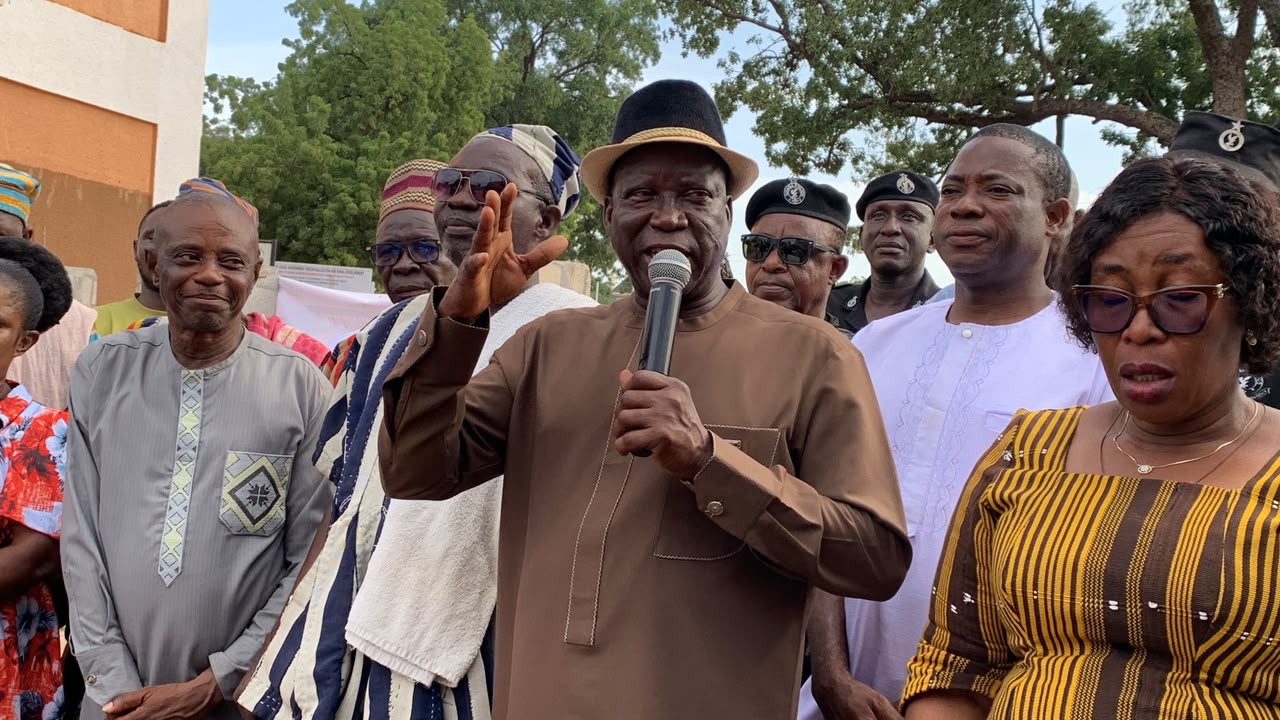

The Upper East Regional Minister, Akamugri Donatus Atanga, has outlined an ambitious development agenda for the region, including plans to mobilise approximately GH¢8.6 billion in public and private investment over the next decade.
He made this known during the 2026 Accounting to the People Forum, being held from October 5 to 13 across the region’s 15 municipal and district assemblies.
The forum aims to promote transparency, strengthen public accountability and update residents on government projects, resource utilisation and development priorities.
Atanga stressed that public office is a position of trust and that government institutions must demonstrate how public resources are being translated into tangible improvements in people’s lives.
He said the exercise must go beyond expenditure presentations to address completed projects, ongoing interventions, outstanding commitments and challenges affecting development.
The minister urged the assemblies to prioritise the completion of existing projects, ensure value for money and establish realistic timelines for unfinished works.
PEARL framework targets GH¢8.6 billion in investment
Atanga highlighted the Regional Coordinating Council’s 10-year development blueprint, known as PEARL — Prosperity through Enterprise, Agriculture, Resilience and Livelihoods — which covers the period from 2026 to 2035.
The framework seeks to mobilise approximately GH¢8.6 billion in public and private investment to unlock the region’s potential in agriculture, tourism, culture, enterprise and human capital development.
He urged the assemblies to identify local investment opportunities, support businesses and agriculture, create jobs and ensure that development interventions reflect the needs of their communities.
Under the government’s Agriculture for Economic Transformation Agenda (AETA), the minister said efforts were underway to promote agricultural modernisation, agribusiness, food security and sustainable employment.
He also announced that five districts in the region — Builsa South, Bongo, Kassena-Nankana Municipal, Garu-Tempane and Talensi — had been earmarked to benefit from the first phase of the Farmer Service Centres initiative.
The initiative is expected to provide modern agricultural machinery to selected districts nationwide to improve farming operations and productivity.
Atanga emphasised that agriculture must go beyond production to encompass processing, storage, value addition and improved market access to create viable businesses and employment opportunities, particularly for young people.
Upper East airport expected to begin construction in 2026
The proposed Upper East Regional Airport remains a strategic infrastructure project for the region, with a sod-cutting ceremony expected before the end of 2026 following the President’s inspection of the proposed site.
According to the minister, construction is projected to take 24 months.
He said the airport could improve connectivity and strengthen the region’s position as a commercial gateway to the Sahel, supporting trade, tourism, investment and regional integration.
Atanga also disclosed that a temporary passport office had been opened in Bolgatanga, while work on the permanent facility was nearing completion.
Roads and education infrastructure receive attention
The minister identified road infrastructure as critical to economic activity and social development, noting that work was ongoing on several roads across the region.
The projects he mentioned included the Bongo-Balungu-Namoo Road, the Yorogo Chief Palace-Dua-Feo Road and the Akayonga-Bongo Road.
He said improved roads would connect communities to markets, schools, healthcare facilities and economic centres, reduce travel difficulties and improve livelihoods.
With the festive season approaching, he urged motorcyclists, tricycle operators and other road users to avoid speeding and reckless driving and to observe road safety regulations.
On education, Atanga disclosed that 102 GETFund projects across the region were at various stages of completion.
He called for bottlenecks affecting the projects to be addressed to ensure their completion and effective use.
Healthcare delivery and regulation
The minister reaffirmed the government’s commitment to improving access to healthcare through the Free Primary Healthcare initiative, which is being rolled out across all 15 municipal and district assemblies.
He said the initiative was intended to bring essential services closer to communities, encourage disease prevention and early detection, and reduce the financial burden on families.
He also highlighted MahamaCares, implemented through the Ghana Medical Trust Fund, as a programme designed to provide additional support for people living with chronic diseases.
To strengthen healthcare regulation, Atanga disclosed that the Health Facilities Regulatory Agency (HeFRA) had established an office at the Regional Coordinating Council.
The office is expected to support the monitoring of health facilities, promote compliance with applicable standards and regulations, and identify service delivery gaps to improve the quality of healthcare.
He stressed that health facilities must be functional, accessible and adequately equipped, with sufficient health professionals, medicines and essential services to meet residents’ needs.
Sports development and youth employment
Atanga also highlighted the importance of sports development in creating opportunities for young people.
He disclosed that an inspection team was expected to assess the available space at the Bolgatanga Sports Stadium and determine its suitability for the proposed redevelopment.
The initiative, he said, could support talent development, youth engagement and employment opportunities.
He further called for stronger interventions to address drug and substance abuse among young people, advocating prevention, public education, early intervention and law enforcement, alongside opportunities in skills development, sports, entrepreneurship and employment.
Responsible mining and peacebuilding
The minister said the Regional Coordinating Council was engaging the Minerals Commission and the Ministry of Lands and Natural Resources to facilitate youth participation in mining through a proposed Cooperative Mining Scheme.
Communities identified for consideration include Teshie, Sapeliga, Santeng, Tarkwa, Bongo, Kadema, Naaga, Bechisi and Nabdam.
He urged young people to exercise restraint as efforts continued to create lawful and sustainable opportunities in the mining sector.
Atanga also acknowledged ongoing efforts by the Regional Security Council to resolve mining-related disputes in Talensi, including the unresolved matter involving Nanlamtaaba Mining Enterprise and Earl International.
He called for dialogue and constructive engagement to address outstanding concerns, promote responsible mining and safeguard peace in mining communities.
On broader security matters, the minister commended security agencies and other stakeholders for their efforts, including the reported reduction in armed robbery and motorbike snatching.
He stressed the need to sustain these gains through intelligence-sharing, community engagement and peaceful coexistence.
Sanitation and national identification registration
Atanga expressed concern about inadequate participation in the monthly National Sanitation Day exercise, calling on households, businesses, schools, public institutions, religious leaders and traditional authorities to make cleanliness a daily responsibility.
He disclosed that the Regional Coordinating Council had resolved at its September 30, 2026, meeting that public officers should clean their offices and immediate surroundings on the last Friday of every month.
He also urged the assemblies and other stakeholders to support the National Identification Authority’s 21-day mass registration exercise for children aged six to 14, which began on October 5, 2026, primarily through basic schools.
He said efforts must be made to ensure that eligible children, including those who are out of school, are not left behind.
Land availability and public service accountability
The minister called on traditional authorities, landowners, community leaders and residents to cooperate with the assemblies by making suitable land available for essential public projects and priority investments through lawful and transparent processes.
He warned against encroachment and the unlawful occupation of public lands, urging stakeholders to resolve land-related matters through dialogue and due process.
He also called for a new culture of public service in which public resources are managed responsibly, performance is measured, citizens are heard, wrongdoing is sanctioned and good performance is recognised.
According to Atanga, accountability must be continuous rather than an annual exercise, with every commitment assigned to a responsible institution and supported by clear timelines.
Call for collective responsibility
Atanga reaffirmed the importance of peace, security and social cohesion to sustainable development in the Upper East Region.
He urged traditional authorities and communities to resolve boundary-related disputes through dialogue and appropriate institutional processes, emphasising that administrative boundaries should not be confused with traditional boundaries.
He also called on the assemblies to document concerns relating to roads, schools, healthcare, water, sanitation and livelihoods, and ensure that the relevant institutions take responsibility for addressing them.
The minister maintained that the success of the region’s development agenda would depend on transparency, effective public service delivery and the active participation of citizens.
The Accounting to the People Forum provides a platform for local authorities to account for their stewardship, engage residents on development priorities and strengthen public confidence in governance across the Upper East Region.