
The Centre for Democratic Development (CDD-Ghana), has revealed deep-seated challenges within Ghana’s local governance system, with calls for urgent reforms to improve efficiency, accountability, and inclusiveness.
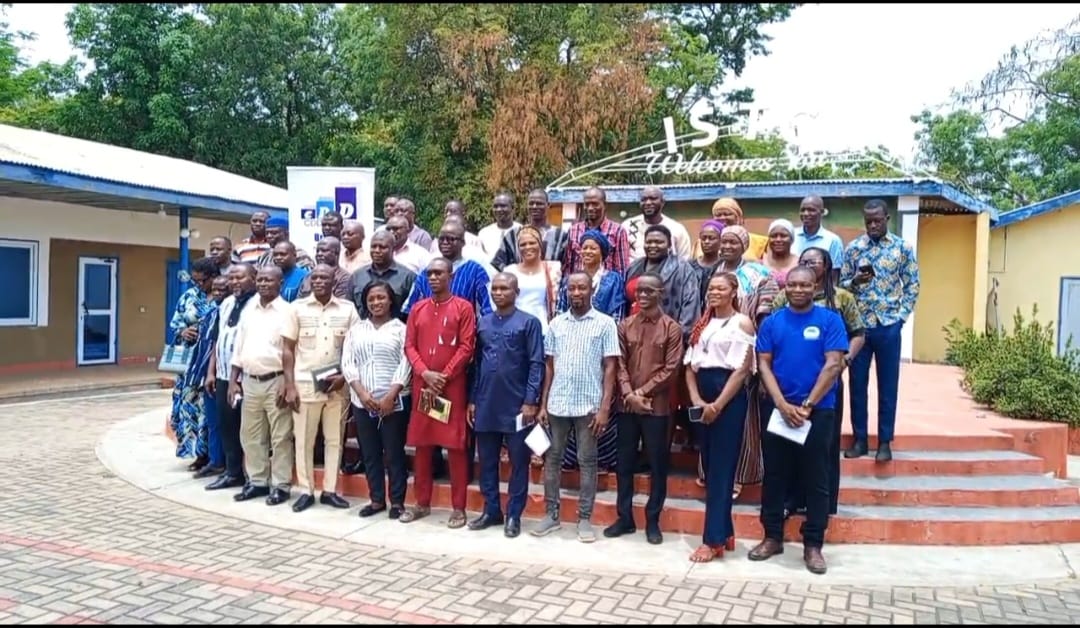
The one-day stakeholder forum, held at the In-Servicing training centre in Wa, brought together key actors in local governance, including District Chief Executives, District Coordinating Directors, Presiding Members, Queens, and media practitioners, to validate findings from a nationwide survey conducted across selected districts.
Paul Nana Kwabena Abrampah Mensa, Programs Manager for Local Governance, and Security Sector at CDD-Ghana said the exercise formed part of efforts to gather stakeholder input on proposed reforms to the country’s decentralisation framework.
“We are here to share findings from a survey we conducted on the call to reform local governance systems in Ghana,” he said.
He stated that two key reports were presented with one outlining recommendations from the Constitutional review process, and another based on field studies conducted in 24 districts across the country.
According to him, the research assessed 12 thematic areas, including recruitment and appointments, financial management, accountability systems, and the functionality of sub-district structures such as youth committees.
Among the major findings, Mensa indicated that many assemblies remain financially weak and overly dependent on the District Assemblies Common Fund, with some generating as little as one per cent of their Internally Generated Funds (IGF) relative to annual revenue.
He further revealed concerns about the non-functionality of key local structures, alleging that in some cases, assembly staff deliberately undermine bodies like youth committees to avoid interference in revenue mobilisation.
Traditional authorities also expressed dissatisfaction with consultation processes, noting that they are often only engaged during implementation stages rather than planning, despite being custodians of land.
“There were also complaints of the inability of assembly members to consult their constituents prior to assembly meetings,” he added.
The Programs Manager further highlighted structural ambiguities in staff control and discipline within assemblies, explaining that while district coordinating directors are expected to manage staff, recruitment and disciplinary authority lies with central bodies creating accountability gaps.
“In some cases, staff are seen as untouchable due to political backing,” he said, pointing to growing concerns about politicisation within local governance structures.
On reforms, he disclosed that CDD Ghana supports recommendations for decentralising recruitment to the assemblies but acknowledged concerns about the financial capacity of districts to sustain such changes.
The engagement also captured divergent views on the election of Metropolitan, Municipal, and District Chief Executives (MMDCEs), with participants rejecting proposals for phased elections, describing them as discriminatory.
Some stakeholders suggested that only members of the ruling government should be eligible to contest local elections, a proposal CDD-Ghana described as new and subject to further review.
Meanwhile, the Presiding Member for the Wa Municipal, Nuhu Abdul-Wahab, called for reforms in the election of presiding members to avoid delays, waste of resources, and administrative inefficiencies.
He recommended the adoption of a simple majority voting system instead of the current two-thirds requirement, arguing that the existing process often leads to repeated inconclusive elections.
“If it is just conducted one day, people can get it using simple majority. But with the two-thirds requirement, sometimes no candidate meets the threshold, forcing repeated elections and wasting time,” he stated.
The outcomes of the engagement are expected to be consolidated into a final report by CDD Ghana and submitted to the Constitutional review process to inform policy decisions on local governance reforms in the country.
By Ibrahim Abubakari Wangara