
The Upper West Regional branch of the National Association of Graduate Teachers (NAGRAT) has called for stronger support systems and policies to address menstrual health challenges affecting girls in schools.
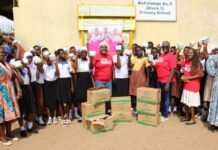
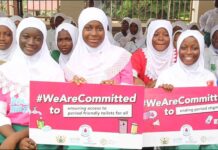
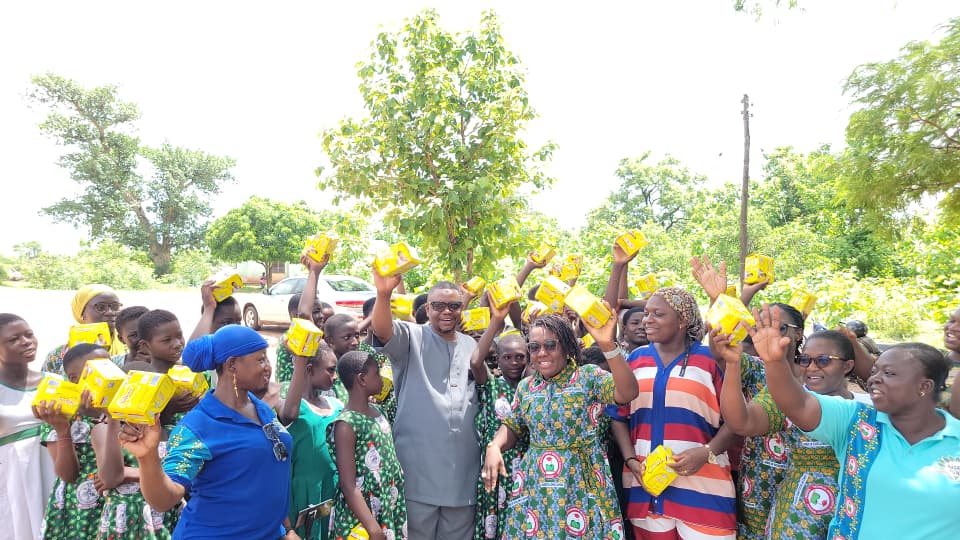
The call was made during this year’s World Menstrual Hygiene Day celebration held at Sagu R/C JHS in the Upper West Region, where the Association donated sanitary pads to female learners and educated them on menstrual hygiene management.
Speaking on the sidelines of the short ceremony, the Upper West Regional Gender Desk Coordinator of NAGRAT, Suurweh Joan, said the union considered the welfare and health of both teachers and learners as a priority, which informed the decision to commemorate the day with learners in the school.
She said menstruation-related challenges continue to affect the confidence, attendance and academic performance of many girls, especially in deprived communities.
“Many girls do not come to school because of menstrual issues. Some soil themselves in school, become ashamed and lose confidence. This should not be the case,” she stated.
According to her, menstruation should no longer be treated as a hidden issue but rather as an open conversation that involves both boys and girls to reduce stigma and support female students during their menstrual periods.
“This time around, I want it to be an open conversation so that even the male students understand that it is a normal thing every girl goes through and they support them instead of stigmatising them,” she added.
Madam Joan referenced a 2023 study conducted in Northern Ghana, which revealed that many female students absent themselves from school because of menstruation-related difficulties.
She warned that such absenteeism negatively affects the academic progress and future prospects of girls.
“NAGRAT is worried about the future of these female learners because they hold tomorrow for us,” she noted.
She explained that the Asociation’s intervention sought to equip girls with knowledge on proper menstrual hygiene practices while also encouraging them to embrace menstruation as a normal biological process.
“We have been telling them to embrace the process and menstruate with confidence because it is a sign of growth and development,” she said.
The Gender Desk officer, further appealed to government to strengthen policies that address menstrual health needs in schools, including the provision of safe and hygienic facilities for girls and female teachers.
“If I have to change my pad in school, where do I go? There is no safe place, no clean place and no water. That is what leads to absenteeism,” she lamented.
She also called for sanitary pads to be made more affordable, arguing that many parents struggle to purchase them for their daughters.
“Government cannot continue to distribute these things forever. Prices of pads should be made affordable so parents can comfortably buy them for their daughters,” she appealed.
The Headmistress of Sagu R/C Primary School, Ruby Soyelleh, commended NAGRAT for supporting the girls in the school with sanitary pads.
She said many parents in the community face economic difficulties, making it hard for them to provide menstrual hygiene products for their children.
“In the village, it is difficult for our girls to easily access pads because some parents even struggle to feed their families,” she said.
Madam Soyelleh disclosed that some girls miss between three and five days of school during their menstrual periods due to a lack of sanitary pads.
“Sometimes when you ask them why they are absent, they say they are sick, but later you realise it is because of menstruation,” she explained.
She noted that the school already benefits from a pad bank initiative by Plan Ghana and said the donation from NAGRAT would further strengthen support for the girls.
Some beneficiary students, including Bangdoma Dorithy and Domopielee Daniella, expressed gratitude to NAGRAT for the gesture and said the support would help them stay comfortable and remain in school during their menstrual periods.
By Ibrahim Abubakari Wangara