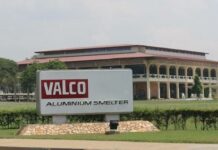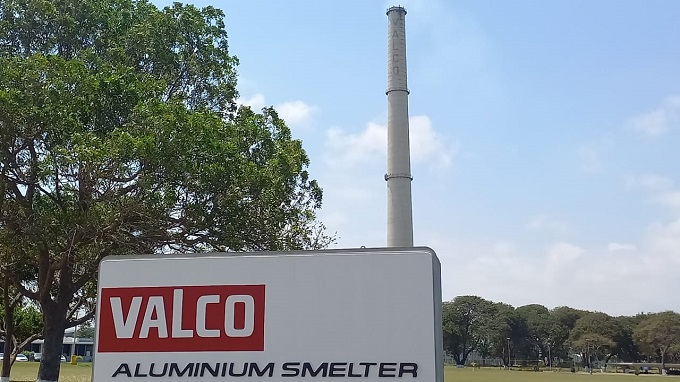

The Volta Aluminium Company (VALCO) is set to add to its production capacity by increasing its idle cells from 122 to 200.
The additional 78 cells will make two port lines fully operational, pushing the factory’s current 23 per cent capacity to 40 per cent.
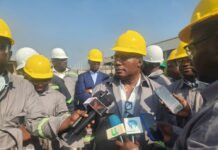
Chief Executive Officer of VALCO, Dr. Robert Makila Sambian, speaking to the media after a tour of the plant by the members of the Board of Directors on Monday, January 5, 2026, noted that they found 114 cells operational at the time they took over barely a year ago.
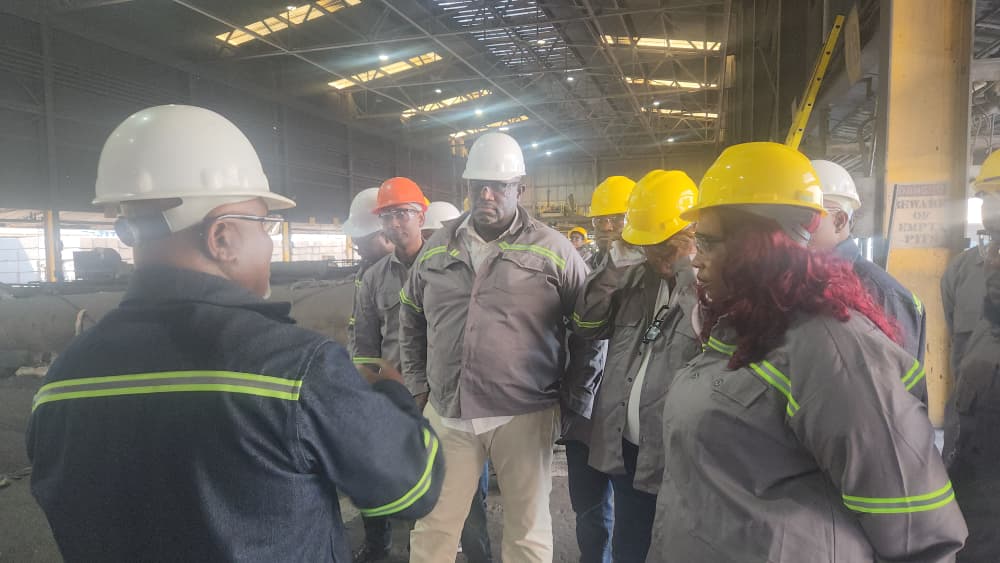
He noted that they’ve added eight cells since taking over, and plan to add the 78 as part of the short-term expansion, with plans to gradually get all port lines operational.
“We have moved it from 114 cells to 122 as we speak today and we keep bringing the idle cells up gradually. Currently, the deployable capacity is two port lines and the two port lines have 200 cells but we are doing 122 today and moving further to re-energize the 78 cells. Then we will have extra volumes to pass through the value-added production line that we have just toured,” the CEO disclosed.
The VALCO plant, established in 1964 and operational since 1967, had an initial production capacity of 200,000 tons of primary aluminium annually.
This capacity was maintained for over three decades until Kaiser Aluminium and Chemical Corporation, the largest shareholder, exited in 2005, handing over to the government of Ghana.
However, production had dropped prior to Kaiser’s exit, mainly due to power shortages – a challenge the Ghana government also faced, leading to below-capacity production after the takeover.
According to Dr. Sambian, VALCO has operated at 23 per cent capacity for the past decade and a half, but are aiming to hit 40 per cent to break even.
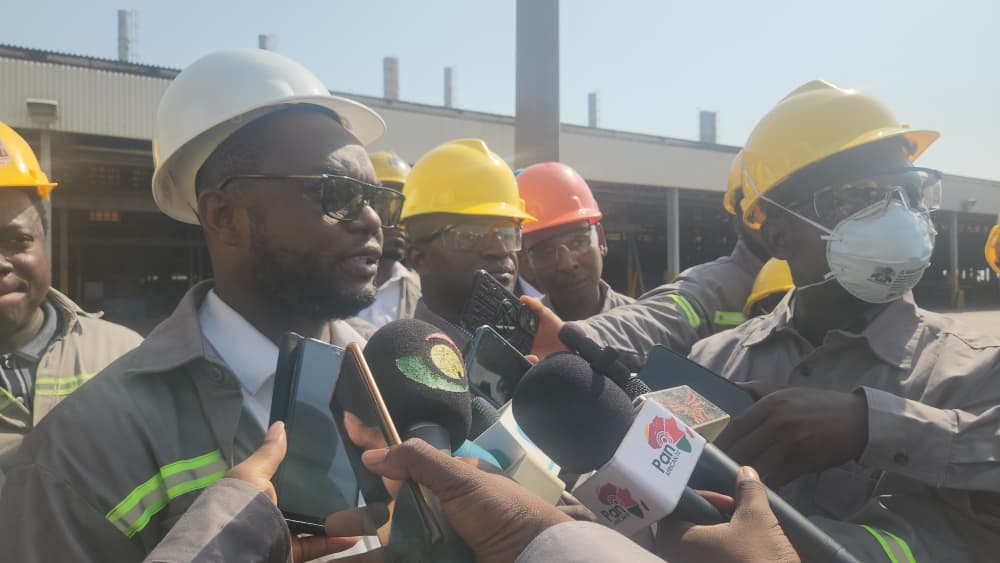
“When we took over early last year, our mandate was to boost capacity – it’s currently below break-even. So we’re targeting 40 per cent from 23 per cent,” he stated.
“When we took over office early last year our charge was to quickly bring the capacity up because where it is at the moment, [it] is below break-even level. So, the aim is to move it from the 23 per cent to 40 per cent,” he stated
He stressed that “the support systems need to be right”, including functional mobile equipment and other machinery. The first phase of the plant’s transformation, he noted, will create 25,000 direct and indirect jobs by maximizing the two cell lines’ capacity.
“That one being done we will be able to add the cumulative addition [which] would be around 100 [thousand]. But the bigger transformational project, we are talking about 5,000 direct employment and by a factor of four in the industry that is for indirect employment we are talking about 20,000. Then you add to the direct employment [making] 25,000 direct and indirect employment”
He added that hitting 40 per cent capacity will push the plant’s annual revenue over $1 billion, and boost Ghana’s GDP by over one (1) per cent.
“By the modeling we have done the annual revenue is above a billion dollars [and] the contribution to GDP is above one per cent per annum and these exclude multiplier effects,” he stated.
After outlining the first phase – turning around existing operations – the CEO added that the next phase is “the big transformational project” which will either be “the modernisation of the remaining idle three port lines in addition to the existing one or a green field with the state-of-the-art technology to transform the place and the country.”