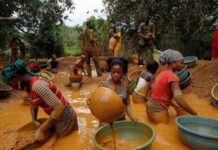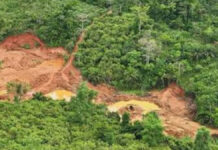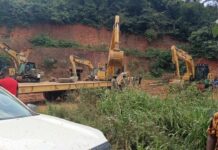

Illegal mining is spreading across Ghana’s northern regions, raising growing concerns over water pollution, food security and public health.
Scientists warn that if the trend continues unchecked, the impact on food production and human health could become severe.
Experts say pollutants associated with illegal mining have been detected in the Upper West, Upper East, Savannah, North East and Bono East regions.
They caution that the damage could eventually reach levels comparable to the devastation recorded in the Ankobra and Tano river systems.
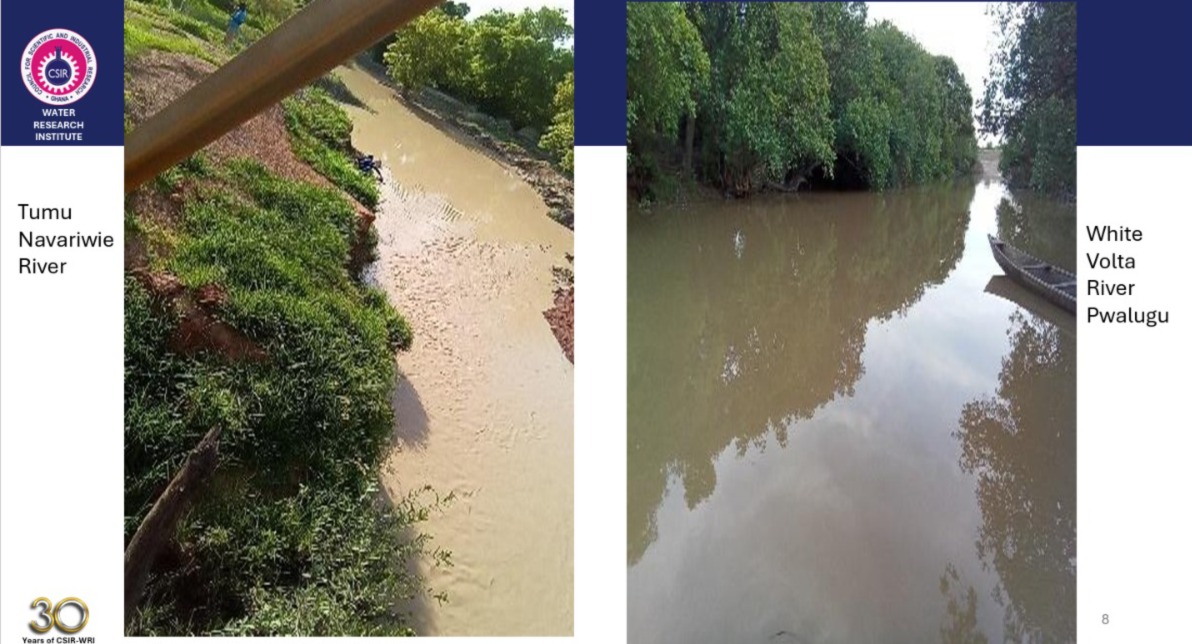
Research Scientist Dr. Zita Naangmenyele Abuntori says high levels of cadmium, cyanide and lead have been detected in parts of the Volta River system, a major source of water for farming and domestic use.
“We found chromium, lead, cadmium and cyanide showing up in the waters. The highest level we found was cadmium. This information needs to go out to help people understand that illegal mining in our water resources is still happening and polluting our water bodies.”
Speaking in an interview on August 12, 2026, during the CSIR-WRI mid-year review, Dr. Abuntori says although the Volta River system has not yet reached the level of degradation seen in some southern rivers, the situation could worsen without urgent action.
“What we have seen in the south, especially with the Ankobra and the Pra, we haven’t reached that level on the Volta River system. But if we don’t stop it, gradually the entire Volta will catch up, and we don’t want that.”
She is calling on government and all stakeholders to act immediately to prevent further pollution.
“We are encouraging government and all those involved to wake up. It is serious. Though we may have this gradual pollution coming up in the Volta system, it can increase over time if it is not stopped. It starts bit by bit, and with time and negligence, the effects become greater.”
Scientist Dr. Sylvester Afram Boadi warns that unless Ghana changes its approach to illegal mining, food production and public health could face serious consequences.
“Our waters are still being destroyed. The environment is still being destroyed. If we don’t change our approach, our food system will be affected. It will not be sustainable, and we will have limited food production.”
He says the continued destruction of natural resources could worsen food insecurity and drive-up food prices.
“We are crying over the high cost and unavailability of food when we can produce per unit volume of water and per unit space of land. If we don’t change and transform our approach, we will be hungry in the nearest future.”
Vast acres of farmland have already been degraded and polluted across the Western, Western North, Central, Eastern, and Ashanti regions, as illegal miners use cyanide and other hazardous chemicals to extract gold.
The activities have also affected major rivers and water bodies, threatening aquatic life and increasing the cost of treating water for human consumption.
Despite various efforts by successive governments over the past two decades to tackle illegal mining, concerns remain over the lack of sustained and decisive action to end the menace.
By Beatrice Sowah